
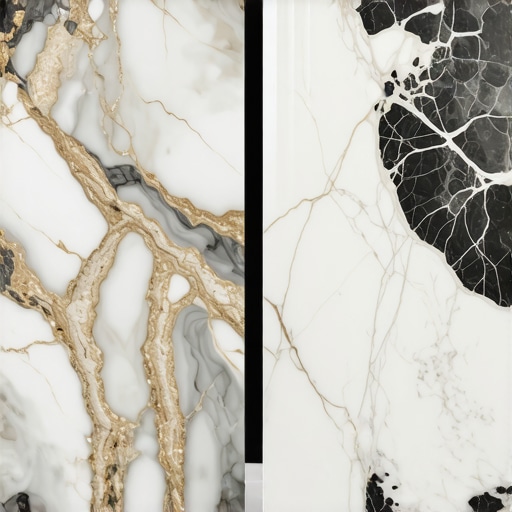
Why Quartzite Is Often Mislabeled as Marble in Luxury Showrooms
The high-end kitchen industry operates on a dangerous cocktail of aesthetic desire and mineralogical ignorance. Walk into any boutique showroom from Manhattan to Miami and you will see slabs of stunning white stone with sweeping grey veins. The tag says marble. The price tag says premium. But if you take a piece of that stone back to a lab, the chemical reality often tells a different story. I have spent twenty years installing these surfaces and I can tell you that showrooms frequently mislabel quartzite as marble because the latter carries a romantic weight that sandstone-derived metamorphic rock simply lacks. It is a branding play that leaves homeowners with surfaces they do not actually understand.
Mislabeling is not always a conscious fraud. Sometimes it is systemic laziness. The sales staff often cannot distinguish between a calcium carbonate-based stone and a silica-based one. This matters. A lot. If you treat quartzite like marble, you are fine. If you treat marble like quartzite, you will destroy your investment within a week of making your first vinaigrette. The stakes are purely financial. Replacing five linear meters of custom-fabricated stone because of deep etching is a five-figure mistake that no one wants to own. My team has seen it happen repeatedly. The client thinks they bought a hard, non-porous tank of a stone. In reality, they bought a soft, acid-sensitive sponge.
The Mineralogical Fraud at the Sales Desk
Quartzite is a metamorphic rock that started its life as pure quartz sandstone. Through heat and pressure, the individual quartz grains recrystallize. The result is a stone that sits at a 7 on the Mohs scale of mineral hardness. Marble is metamorphosed limestone. It is composed of calcite. Calcite sits at a 3 on that same scale. When a showroom labels a hard quartzite as ‘soft marble’ or ‘durable marble,’ they are mixing terms that have no business being together. This confusion often stems from the fact that certain stones like Super White or Fantasy Brown occupy a geological grey area. They contain both quartz and calcite. The industry calls them marble because it is easier to explain the maintenance requirements that way. But for the homeowner, this lack of precision is a trap.
The cost-benefit of true quartzite is staggering when you look at the lifecycle of a high-use kitchen. Unlike marble, which will etch if you even think about a lemon wedge, true quartzite resists chemical reactions with household acids. It is the countertop material that actually survives a hot cast iron pan without immediate thermal shock failure. However, it is significantly harder to fabricate. Diamond blades that scream through marble will dull and smoke when hitting a dense quartzite slab. Showrooms might downplay this difficulty to keep the installation quote looking competitive, but the labor cost is legitimately higher for a reason. You are paying for the density.
Testing the Surface Integrity
You cannot trust the label on the rack. I tell my clients to bring a glass tile and a lemon to every stone yard. If the stone is truly quartzite, it should easily scratch the glass tile. If the glass tile scratches the stone, you are looking at marble or a very soft dolomite. The acid test is even more definitive. A drop of lemon juice left for five minutes on a sample will reveal the truth. If it leaves a dull, matte spot, the stone contains calcite. It is marble. The sensory experience of a failed stone is visceral. You can feel the roughness where the acid has eaten away the polish. It is a permanent change in the stone’s topography. No amount of cleaning will fix it.
We recently swapped out a massive island in a local estate because the owner was told the stone was ‘Hard Marble.’ It was actually a beautiful, albeit porous, Calcatta. Within six months, the area around the sink looked like a topographical map of a disaster zone. We replaced it with a honed Taj Mahal quartzite. The difference was immediate. The weight of the stone felt different during the carry. The clank of the tools against the surface had a higher, more metallic pitch. We even discussed why we swapped our polished marble for honed granite countertops in similar high-traffic scenarios, but for this client, only the look of quartzite would suffice. The result? A surface that actually handles the rigors of a working chef’s kitchen.
Supply Chain Pressures and Market Realities
The global stone market is currently flooded with Brazilian quartzites that look remarkably like Italian marbles. This has created a valuation crisis. Authentic Italian Statuario is becoming rarer and more expensive. Brazilian quarries are filling the gap with stones like White Macaubas. While these quartzites are superior in performance, the market still clings to the ‘Marble’ name as the gold standard of luxury. This is a mistake. According to standards set by the Natural Stone Institute (NSI) and testing protocols from ASTM International (specifically ASTM C615), the physical properties define the stone, not the marketing name. We are seeing a shift where savvy buyers are specifically asking for quartzite, but showrooms are slow to update their catalogs.
Poor lighting in these warehouses also plays a role in the deception. Warm, overhead halides can mask the slight grey-blue undertone that many quartzites possess. This is the lighting error that makes your quartz countertops look cheap and yellow or hides the true crystalline structure of a quartzite slab. When you get that stone home under your 3000K LED under-cabinet lights, the color shift can be jarring. You need to see the slab in natural light or under a controlled color-balanced environment before the check is signed. The mineral structure of quartzite reflects light differently than the cloudy, opaque nature of marble. It has a depth that looks almost like glass when polished correctly.
Executive Verdict
My recommendation for any homeowner or designer is simple: ignore the name on the tag. If you are looking for a stone that will handle the heat of a professional range and the acidity of a busy kitchen, you must verify the silica content. Buy quartzite for its performance. Buy marble only if you are prepared to accept ‘patina’—which is just a fancy word for permanent damage. If a showroom refuses to let you perform a scratch or etch test on a sample of the exact lot you are buying, walk out. They are either hiding the stone’s true identity or they are ignorant of it themselves. Either way, they are a risk to your budget.
For those in the middle of a renovation, the actionable strategy is to demand a mineralogical data sheet. Any reputable importer can provide the ASTM test results for the specific quarry block. Look for the absorption rate and the C97 density. If those numbers don’t align with the characteristics of quartzite, you are being sold a dream that will end in an insurance claim. Stick to the hard science of the stone.
Frequently Asked Questions
Is quartzite more expensive than marble?
Generally, yes. While the raw material cost can be similar, the fabrication labor for quartzite is significantly higher due to its hardness and the wear it puts on cutting tools.
Can I use marble in a kitchen if I seal it?
Sealing only prevents staining (liquids soaking in). It does absolutely nothing to prevent etching (chemical burns from acid). If you use marble, expect it to etch.
How can I tell if my quartzite is actually a hybrid stone?
Perform a lemon test on a scrap piece. If it reacts even slightly, there is calcite present. This means it will perform more like marble than true quartzite in daily use.