Why 58mm E61 Groups Still Dominate 2026 Home Espresso Bars
The 58mm E61 group head is an engineering fossil that refuses to go extinct. While 2026 tech brochures scream about AI-assisted extraction and instant-heat thermoblocks, the high-end market remains anchored to a patent from 1961. Why? Because physics doesn’t care about your touchscreen. After fifteen years of tearing down boilers and rebuilding hydraulic circuits, I’ve seen the ‘next big thing’ fail while the nine-kilogram chunk of chrome-plated brass keeps pulling shots. The stake is simple: do you want an heirloom tool or a countertop appliance destined for a landfill in thirty-six months?
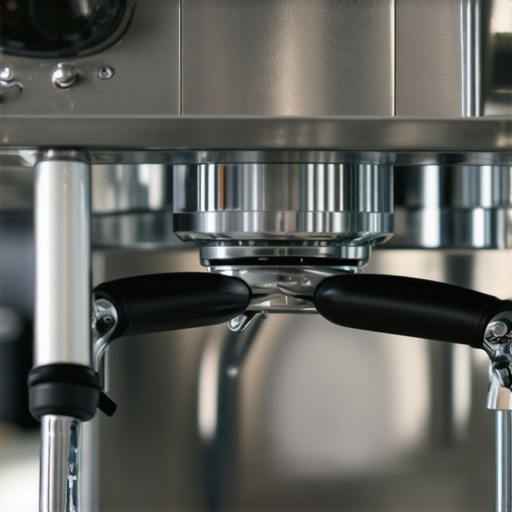
The dominance of the E61 isn’t nostalgia. It is about thermal mass. When you lock that portafilter in, you are engaging a system that utilizes a thermosyphon. Hot water constantly circulates from the boiler through the group head. The result? Unrivaled temperature stability. Most pro espresso machines built to last a decade rely on this exact mechanical reliability. If the group head isn’t hot, the shot is sour. The E61 solves this with brute force and brass.
The Engineering Reality
Let’s talk about the 58mm standard. It is the industrial baseline. Using a 54mm or 50mm basket is a recipe for frustration. A wider 58mm basket allows for a thinner puck depth at the same dosage, which reduces the distance water must travel through compressed coffee. This minimizes channeling. It is why many thermal stable espresso machines stay within this diameter. The market of accessories—precision baskets, distribution tools, and calibrated tamps—is built around 58mm. Straying from this is a tactical error for any serious home barista.
The cost-benefit matrix of the E61 is heavily weighted toward long-term ownership. Integrated ‘super-automatic’ machines use plastic internal gears and proprietary brewing units. When those break, the machine is a brick. An E61 is fully serviceable with a wrench and a few five-dollar gaskets. You are buying a hydraulic system, not a computer. The mechanical pre-infusion is another hidden win. As you lift the lever, the cam opens a valve, allowing a small amount of water to saturate the puck at low pressure before the full nine bars hit. This softens the coffee, preventing the high-pressure blast from fracturing the puck structure.
What Breaks and Why It Matters
No system is perfect. The E61 is a heat sink. It takes twenty to thirty minutes to reach thermal equilibrium. If you try to pull a shot five minutes after turning it on, the water will flash-boil in the group, resulting in a bitter, ashy mess. This is the reality of pro espresso machines for home bars. You can’t cheat the warm-up time. Another risk? Scale. Because of the thermosyphon’s narrow copper tubes, calcium carbonate buildup is a silent killer. I’ve seen thousand-dollar machines choked to death by hard water in under a year. You smell the metallic tang of a dry-fired heating element before the machine finally dies. It’s a gut-wrenching sound for any owner.
Implementation risks often involve the lever mechanism itself. The internal cams are wear items. Over five years of daily use, the friction of metal-on-metal will eventually necessitate a rebuild. This isn’t a failure; it’s maintenance. According to the Specialty Coffee Association (SCA) technical standards, consistency is the primary metric of quality. The E61 provides that consistency because it is a closed-loop thermal environment once heated. It doesn’t fluctuate like the cheap thermocoils found in big-box retailers.
Market Corrections Ahead
The next twenty-four months will see a divergence in the luxury kitchen space. We are seeing a massive pushback against ‘smart’ appliances that require a subscription or a constant Wi-Fi connection. Consumers are rediscovering the value of analog controls. The manual lever espresso machines and E61 variants are gaining ground because they offer ‘digital-free’ longevity. Regulatory changes regarding ‘Right to Repair’ are also favoring these modular designs. If you can’t fix it in your garage, it’s not a premium tool.
We are also seeing the integration of PID (Proportional-Integral-Derivative) controllers into the E61 workflow. This is the hybrid future. We keep the heavy brass group for stability but use digital sensors to manage the boiler temperature to within 0.1 degrees. It is the best of both worlds. It stops the ‘heat surfing’ required by older HX (Heat Exchanger) designs and allows for precise brewing of light-roast specialty beans that demand higher temperatures. VST Lab reports confirm that stable temperature is the single biggest factor in high extraction yields.
The Executive Verdict
My recommendation is a ‘Buy’ on any 58mm E61 platform for the serious enthusiast. Avoid the all-in-one ‘convenience’ machines if you value shot quality and machine lifespan. If you are a high-volume user who hosts guests, look for a dual-boiler E61. If you are a solo drinker who mostly drinks straight espresso, a single-boiler PID E61 is the move. The strategy is simple: invest in the iron and brass, not the screen.
Frequently Asked Questions
Is the E61 group head too old for 2026 standards?
No. Physics doesn’t age. The thermal mass of 9kg of brass is still the most effective way to stabilize water temperature during a thirty-second extraction.
Why is 58mm better than 54mm?
The 58mm standard offers more surface area and a wider range of high-performance aftermarket parts, making it easier to troubleshoot and improve your coffee.
How long does an E61 machine actually last?
With proper water filtration and annual gasket changes, these machines easily last twenty years. Most are fully rebuildable, unlike modern integrated units.
Does a PID controller make the E61 modern?
Yes. A PID removes the guesswork of temperature management while retaining the mechanical benefits of the E61’s pre-infusion and stability.