
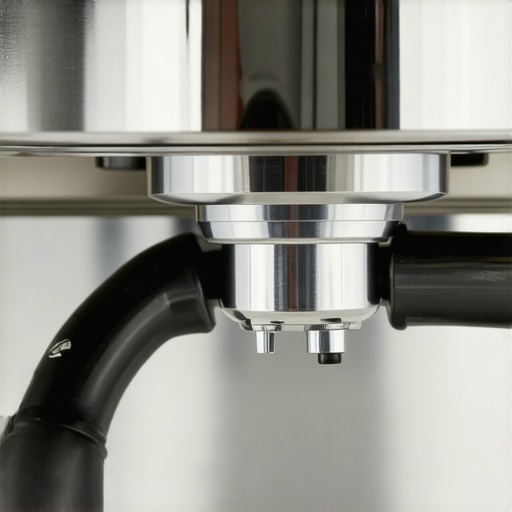
Static hydraulic pressure is the silent killer of flavor in any high-end luxury kitchen. You spend thousands on espresso machines, sourcing single-origin beans and precisely calibrated premium cookware, only to end up with a shot that tastes like burnt rubber and disappointment. After 15 years of dismantling boilers and recalibrating pump curves, I have identified the primary culprit. It is not your grind size. It is not your water temperature. It is the factory-set Over Pressure Valve (OPV). Most consumer-facing machines leave the warehouse set to 12 or 15 bars of pressure. This is a relic of the E.S.E. pod era. For real espresso, this setting is a disaster. The result? Total extraction failure.
The Engineering Reality
Why does 15 bars of pressure ruin your coffee? It is physics. High pressure compresses the coffee puck too tightly, creating microscopic channels. Water finds the path of least resistance. It blasts through these channels, over-extracting the surrounding grounds while leaving the rest of the puck dry. This is called channeling. You taste the bitterness of charred cellulose because the water is essentially sandpapering the bean fibers. If you find that your machine is struggling to perform, you might wonder why your espresso pressure gauge never reaches nine bars or, conversely, why it is pegged at the maximum. The industry standard, established by the Specialty Coffee Association (SCA), dictates that 9 bars is the sweet spot for a reason. It provides enough force to emulsify oils into crema without shredding the flavor profile.
Adjusting the OPV redirects excess water back to the reservoir or the drip tray. It acts as a bypass. Imagine a garden hose with a thumb over the end; the harder you press, the more violent the spray. By backing off that internal screw, you allow a gentler, more uniform flow. This is technical precision, not guesswork. In a world of stand mixers and air fryers, we often expect ‘set it and forget it’ convenience. Espresso demands more. It requires an understanding of fluid dynamics.
Why Standard Methods Fail
The manual tells you to change your grind. The ‘influencers’ tell you to buy a distributer tool. Both are wrong if your pump is pushing 12 bars. No amount of perfect tamping can withstand the brute force of an uncalibrated vibratory pump. I have seen enthusiasts buy the most expensive premium cookware and stand mixers for their luxury kitchen, yet they treat their espresso machine like a black box. You must be willing to look under the hood. A faulty seal can also mimic these issues, so it is wise to learn how to tell if your espresso machine group gasket is leaking before you start turning internal valves. If the gasket fails, your pressure readings are junk anyway.
The Implementation Risks
Opening a machine carries scars. I have the burns to prove it. When you adjust a brass OPV while the machine is hot, you risk steam scalds and electrical shorts. The hiss of escaping steam is a warning. If you over-tighten the adjustment screw, you can crack the valve housing. This leads to a slow drip that eventually causes the scale buildup error that kills espresso machine boilers. I once saw a $5,000 Italian machine turned into a paperweight because a homeowner used a generic wrench on a soft brass nut. Use the right tools. Use a portafilter pressure gauge to verify your changes. Don’t trust the built-in face gauge; they are notoriously inaccurate, often off by 1.5 bars.
Market Corrections Ahead
The industry is shifting. We are seeing a move away from static pumps toward needle valves and flow profiling. High-end brands are finally realizing that the home barista is more sophisticated now. In the next 24 months, expect ‘smart’ OPVs that adjust via app based on the bean density. This is the same logic that transformed air fryers from simple heaters into multi-stage convection tools. However, for those with existing hardware, manual intervention remains the only path to quality. You can explore more about these advancements in our guide on espresso machines unveiled craft perfect coffee in your luxury kitchen today. Regulatory changes regarding energy consumption in the EU are also forcing manufacturers to use smaller, more efficient pumps, which ironically might lead to better default pressure settings for the US market.
The Executive Verdict
If your espresso is consistently bitter despite using fresh beans and a quality grinder, your pressure is too high. Buy a portafilter gauge. Measure the static pressure. If it is over 10 bars, adjust your OPV. This is a ‘Buy’ on technical maintenance and a ‘Sell’ on the myth that 15 bars equals better coffee. Precision is the only currency that matters in a luxury kitchen. Stop blaming the beans. Fix the hydraulics.
FAQ
Q: Will adjusting my OPV void the warranty?
A: Generally, yes. Manufacturers prefer you drink bitter coffee than risk an amateur touching the internals. Proceed with caution. Q: Can I achieve 9 bars just by grinding coarser?
A: No. Grinding coarser will decrease resistance, but the pump will still attempt to reach its bypass limit. You will just get a fast, sour, and bitter mess. Q: Does this apply to rotary pumps?
A: Yes, but rotary pumps are much easier to adjust via an external screw. Vibratory pumps usually require opening the casing. Q: How often should I check the pressure?
A: Once every six months. Vibration can cause the setting to drift over time.