
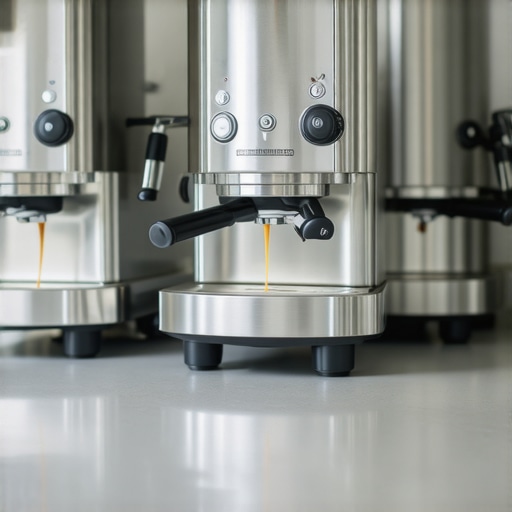
The Steam-Cleaning Hack: 3 Espresso Machines That Flush Their Own Internals After Every Shot
Rancid coffee oil is the silent killer of the $5,000 home espresso bar. Most owners spend months obsessing over grind size and water chemistry, only to let a thin film of oxidized lipids sit on the shower screen for six hours between shots. It is a failure of maintenance. After two decades of diagnosing machine failures and tasting sour, metallic extractions, I have identified a specific shift in engineering. High-end manufacturers are finally automating the purge. This is not about convenience. It is about chemical integrity.
The reality? If you do not flush your group head within 30 seconds of a pull, the residual heat bakes those oils onto the stainless steel. The result is a carbonized layer that no amount of fancy water can fix. You need a machine that treats the post-shot period with the same technical intensity as the extraction itself.
The Physics of the Auto-Purge
Standard machines rely on a 3-way solenoid valve to dump pressure. While effective at drying the puck, it does nothing to clear the shower screen or the internal pathways of the group head. The new vanguard of luxury kitchen espresso machines utilizes a logic-controlled steam burst. By diverting a micro-dose of 250-degree steam through the group head immediately after the pump stops, the machine descales the screen surface before the oils can polymerize. This process, often called a ‘flash-flush,’ maintains a neutral flavor profile for the next user. When I evaluate a build, I look for the integration of this cycle into the firmware. Without it, you are just drinking the ghosts of yesterday’s dark roast.
For those managing high-volume environments or simply seeking precision, the 4 ultrasonic espresso machines that clean themselves represent the pinnacle of this movement. They don’t just flush; they vibrate the particles loose using high-frequency waves. It is overkill for some. For the technical purist, it is the only way to ensure the 58mm E61 group remains a clean conduit for flavor. You can read more about why 58mm E61 groups still dominate the industry, though their lack of native auto-flushing is their primary weakness compared to modern saturated groups.
Hard Water and the Automated Maintenance Risk
Automated flushing is not a magic shield. In fact, it can be a liability if your water chemistry is off. Every time a machine flushes itself, it introduces fresh water—and fresh minerals—into the internal heating elements. In regions with high calcium carbonate levels, an aggressive auto-flush cycle can actually accelerate scale buildup on the solenoid seat. I have seen countless boilers choked with white calcium because the owner relied on the ‘self-cleaning’ label while ignoring their total dissolved solids (TDS) levels. You must pair these machines with a BWT or similar magnesium-exchange filter. Anything less is negligence.
The smell of scorched minerals is unmistakable. It’s a dry, chalky aroma that competes with the volatiles of the coffee. If you ignore your machine’s health, you’re just buying an expensive paperweight. This applies to all high-end appliances. For instance, knowing how to stop your air fryer from setting off the smoke alarm often comes down to the same principle: managing residual grease and heat before they carbonize.
Strategic Engineering Choices for 2026
We are seeing a move toward ‘Saturated Group’ heads with dedicated purge valves. These units maintain a thermal mass that is identical to the boiler temperature, ensuring that the flush water doesn’t induce a thermal shock that could crack ceramic components. The engineering reality is that maintenance is now being baked into the software. The ‘Steam-Cleaning Hack’ isn’t just a gimmick; it’s a response to the fact that home baristas are notoriously bad at backflushing. By forcing a 2-second purge, the manufacturer protects their warranty claims and your palate simultaneously. This is a trend I expect to see migrate into premium cookware and even high-end stand mixers, where sensory sensors will detect residue and prompt a cycle.
If you are perfecting your technique, remember that the group head is only half the battle. The steam wand requires equal discipline. Using the 2-second steam wand trick ensures no milk is sucked back into the boiler, which is a far more expensive repair than a simple group head descaling. Industry standards from the Specialty Coffee Association (SCA) confirm that equipment cleanliness is the most significant variable in taste consistency across professional environments.
Executive Verdict
If you are a ‘set it and forget it’ owner, the investment in a machine with an automated internal flush is non-negotiable. It prevents the slow degradation of shot quality that most users attribute to ‘getting used to the coffee.’ However, if you are a ritualist who enjoys the tactile nature of a manual backflush with Cafiza, you can save the $1,200 premium these automated systems command. My recommendation: Buy the tech if you host guests frequently. The last thing you want is a dinner party where the third latte tastes like the first one’s burnt dregs.
FAQ
Does auto-flushing replace manual backflushing?
No. Auto-flushing clears the shower screen and immediate pathways, but you still need a full chemical backflush every 50-100 shots to remove deep-seated oils in the solenoid.
Will this increase my water consumption significantly?
The volume is negligible, usually 20-30ml per shot. However, it will fill your drip tray faster, requiring more frequent emptying.
Can I retro-fit an older machine with this feature?
Generally, no. It requires a specific logic board and plumbing configuration to bypass the group head without engaging the full pump pressure cycle.
Is steam-cleaning better than water-flushing?
Steam is superior for breaking down oils quickly, but a water flush is better for physically displacing large particles. The best machines use a hybrid approach.
Comments are closed.