
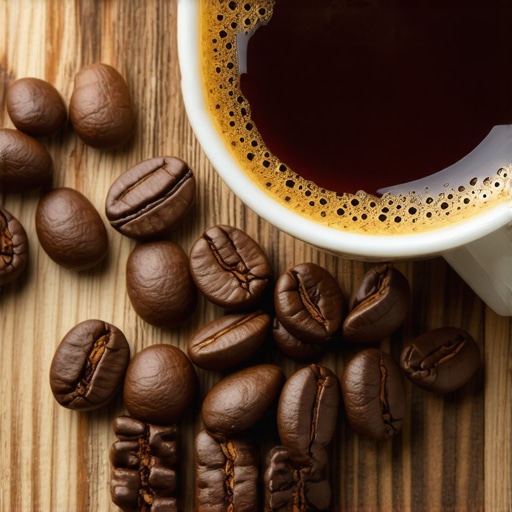
The Single Component That Stops Your Espresso From Tasting Like Vinegar
Stop blaming the bean. Most enthusiasts waste thousands on Gesha microlots only to have the final cup mimic a bottle of white wine vinegar. The culprit is not the acidity of the coffee; it is a failure of thermodynamic stability at the group head. After twenty years of rebuilding commercial grade gear and managing luxury kitchen installs, I can tell you that temperature delta—the difference between your boiler and your puck—is the silent killer of flavor. If your water temperature drops even three degrees during the nine-bar extraction, you have already lost. The result? Under-extraction. Sourness. Avoidable failure.
This is a technical reality that national retailers ignore because selling a sleek exterior is easier than explaining thermal mass. To fix the vinegar problem, you need a saturated group head or a highly calibrated thermal offset espresso machine. Without it, you are just pouring hot water over expensive dust and hoping for a miracle. The stakes are high for the home barista. You either master the heat or you continue to drink disappointment.
Thermodynamic Reality of Saturated Group Heads
Precision engineering beats aesthetic appeal every single time. A standard E61 group head, while legendary, relies on a thermosyphon. It is a slow, heavy beast. If you do not let it idle for thirty minutes, the cold brass acts as a massive heat sink, sucking the energy right out of the water. Imagine the shock of 200-degree water hitting a 150-degree block of metal. The water reaches the coffee puck at a tepid 175 degrees, leaving the sugars locked inside the grounds while the acids run wild. This is why why 58mm E61 groups still dominate the market, but only when handled by those who understand the wait time.
The saturated group head changes the game by making the group an extension of the boiler itself. Water surrounds the group. Metal and liquid maintain a singular, unified temperature. There is no drop. No variance. When you engage the pump, the temperature you see on the PID is exactly what the coffee experiences. This level of 0.1C stability ensures that the chemical reaction inside the portafilter remains predictable. You are not just brewing; you are conducting a controlled laboratory experiment. For those who refuse to wait thirty minutes for a warm-up, modern dual boiler machines provide the necessary independent control to stop the sourness before it starts.
The Engineering Failure of Consumer Thermoblocks
Most entry-level machines use a thermoblock—a zigzag of aluminum piping. It is efficient for steam, but it is a disaster for extraction consistency. The thin walls cannot hold heat under the pressure of a vibrating pump. As the water moves faster, the temperature plunges. You start at 200 degrees and end at 180. The acidity of the bean is highlighted, while the body and sweetness never materialize. This is the technical truth: cheap heaters produce cheap flavor. According to the Specialty Coffee Association (SCA) standards, water must stay between 195 and 205 degrees Fahrenheit throughout the entire cycle to achieve proper balance. Most consumer hardware fails this test within the first five seconds of the shot.
The Messy Reality of Scaled Boilers
Even the best saturated group head will fail if your water chemistry is off. I have seen stainless steel boilers choked with calcium deposits in less than six months. The scale acts as an insulator, preventing the heating element from reaching the water efficiently. You think your machine is ready because the light stopped blinking, but the core temperature is lacking. The smell of a descaling agent—that sharp, chemical tang—is a reminder of neglected maintenance. I once opened a machine for a client who complained of ‘sour coffee’ only to find the intake manifold coated in a grey, chalky sludge. The weight of that industrial grade steel was countered by the fragility of the internal components. If you ignore water filtration, you are sabotaging your investment. You need a dedicated BWT system or a magnesium-remineralized feed to protect the metallurgy and the flavor profile.
The 2026 Shift Toward Solid State Heating
The industry is moving away from massive copper boilers. The future lies in thick-film heaters and solid-state logic. In the next 12 to 24 months, expect to see machines that can jump from stone-cold to 200 degrees in under sixty seconds without sacrificing a single degree of stability. This is a response to the energy efficiency mandates coming out of the EU and North American markets. These new systems use infrared sensors to monitor the puck temperature in real-time, adjusting the flow rate to maintain a perfect extraction curve. It is a market correction for the high-energy waste of traditional Italian designs.
Regulatory Impacts on Luxury Kitchen Hardware
New lead-free brass regulations and energy-star ratings are forcing a total redesign of the luxury espresso bar. The heavy, chrome-plated monsters of the past are being replaced by lightweight, high-performance composites. This is not just about saving the planet; it is about precision. If the machine cannot maintain an idle temperature within a tight wattage window, it will no longer be legal for sale in many jurisdictions. We are seeing a merger of aerospace engineering and culinary arts. This is where the industry is going—fast, precise, and uncompromising.
Executive Recommendation for the Discerning Buyer
If you are currently drinking vinegar-tinged espresso, your first move is not to buy a new grinder. It is to measure your output temperature with a Scace device or a high-speed thermocouple. If your machine shows more than a two-degree variance, it is time to upgrade. For the best ROI, I recommend a dual-boiler system with a saturated group. Buy once, cry once. The durability of a professional-grade boiler pays for itself in avoided repairs and consistent quality over a decade of use. If you are in a high-volume household, go for the rotary pump; the silence alone is worth the premium. Hold off on any machine that does not offer a PID with adjustable offset. Without it, you are flying blind.
Frequently Asked Questions
Does a higher pressure fix sourness?
No. High pressure often causes channeling, which leads to a mix of sour and bitter flavors. Stick to 9 bars and focus on temperature stability instead.
Is copper or stainless steel better for a boiler?
Stainless steel is generally superior for modern home use. It resists scale buildup better and does not leach metals into your water like older copper alloys might.
How long should I really preheat my machine?
For a traditional E61 group, 30 to 45 minutes is the minimum. For a saturated group or modern solid-state heater, 5 to 10 minutes is usually sufficient.
Can I fix my current machine’s sourness?
Sometimes. Try increasing your brew temperature on the PID by 2 or 3 degrees, or perform a longer ‘blank’ shot to heat the portafilter before adding coffee.
Comments are closed.