
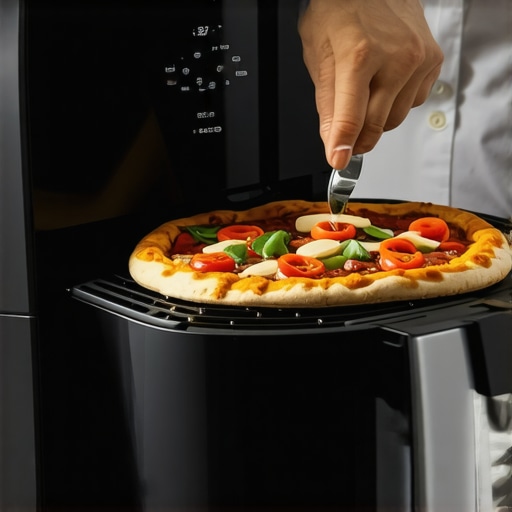
The Secret to Making Pizza in Your Air Fryer Without the Mess
Most home cooks treat their high-end air fryers like a glorified microwave for frozen snacks. That is a waste of engineering. After fifteen years managing premium kitchen installations, I have seen how high-velocity convection—the engine inside your luxury kitchen appliances—can either produce a five-star meal or a catastrophic cleanup. The mess people associate with air fryer pizza results from a failure to account for air velocity. When you have a fan spinning at 3,000 RPMs above a piece of dough, physics dictates that lightweight toppings will fly. This is not just about a dirty basket; it is about protecting the heating element from carbonized cheese. The financial stake is real. Replacing a burnt-out fan assembly in a top-tier unit costs four times more than the pizza itself.
The Engineering Reality of Convective Heat Transfer
To master the pizza process, you must understand heat sinks. Standard premium cookware relies on conductive heat—the pan touches the food. In an air fryer, the heat is convective. The problem? Raw pizza dough is a thermal insulator initially. It stays soft while the air dries out the toppings. To fix this, you need a specialized carrier. Using a perforated silicone mat or a pre-heated ceramic disk acts as a thermal ballast. This stabilizes the base before the air turbulence can lift the cheese. If you have ever wondered why your air fryer fan sounds like its hitting something, it is likely a piece of pepperoni that got sucked into the housing during a previous high-velocity bake.
Why Standard Methods Fail
The industry standard advice often suggests parchment paper. This is a mistake. Parchment blocks the very airflow the machine relies on for a crisp crust. Unless you weigh it down perfectly, the edges curl, catch the fan, and smoke. The result? Avoidable failure. Instead, I recommend a ‘blind bake’ of the crust for exactly 120 seconds. This sets the surface tension of the dough. It creates a structural foundation that the sauce and cheese cannot permeate. Without this step, moisture migrates into the basket mesh. You end up scraping carbonized flour off the wire for an hour. To avoid the house filling with haze, you should also check how to stop your air fryer from setting off the smoke alarm when dealing with high-fat toppings like spicy salami.
Operational Risk Management
The mess is not just on the basket. It is the aerosolized grease. When cheese bubbles in a high-velocity environment, microscopic fat droplets are whipped into the air. These stick to the upper heating coil. Over time, this creates a fire hazard. Professionals use a physical barrier that does not impede air. A stainless steel splatter screen, trimmed to fit, is the technical solution. It allows the heat to penetrate while catching the splatter. You also need to ensure you have a splatter guard for your air fryer heating element to maintain the longevity of the appliance. I have seen espresso machines and stand mixers nearby coated in a fine layer of ‘pizza grease’ because the cook did not manage the exhaust properly. It is a mess that migrates.
Market Corrections Ahead
We are seeing a shift in the 2025 appliance market toward integrated ‘Smart Convection’ zones. Manufacturers are finally adding sensors that detect ‘topping lift’ and adjust fan RPMs accordingly. Until those units become the standard, the burden of precision stays with you. We are moving away from the ‘set it and forget it’ era. Proper thermal management in the kitchen is becoming a specialized skill, much like calibrating espresso machines for the perfect extraction. The demand for luxury kitchen performance is driving consumers to treat their air fryers like commercial hearth ovens.
The Executive Verdict
If you want a mess-free pizza, stop using raw, high-hydration doughs directly on the basket. If you are using a pre-made crust, apply the sauce sparingly. Use a splatter screen. If you are dealing with a high-end unit, treat the airflow with respect. The ‘Buy’ strategy here is investing in a high-quality, perforated pizza disk. The ‘Sell’ is the idea that you can just throw a frozen slice in and expect a clean machine. Precision yields results; laziness yields a scrub brush and a service call.
Frequently Asked Questions
Can I use aluminum foil to prevent the mess?
No. Foil blocks the airflow entirely and can cause the motor to overheat by creating backpressure. Use a perforated mat or a dedicated screen instead.
How do I stop my cheese from flying off?
The secret is ‘anchoring.’ Place a single heavy topping, like a thick slice of vegetable or a piece of sausage, in the center of the cheese layer to hold the light shreds down during the initial blast.
What is the best temperature for no-mess pizza?
375 degrees Fahrenheit is the sweet spot. Anything higher increases the oil aerosolization; anything lower results in a soggy crust that sticks to the mesh.