
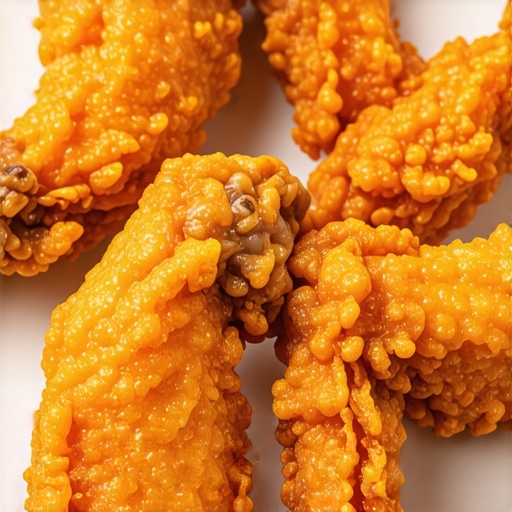
The Secret to Making Perfect Air Fryer Chicken Wings Every Time
Most home cooks treat their air fryers like a faster microwave, and that is why their results are mediocre. After two decades calibrating high-end appliances in the luxury kitchen sector, I can tell you that physics does not negotiate. If your chicken wings aren’t glass-shattering crisp on the outside while remaining tender inside, you are failing the thermal engineering test. The problem is moisture and airflow. To get professional results, you must understand the convection heat transfer coefficient. Surface moisture is the primary barrier to the Maillard reaction. If the skin is wet, the air fryer spends the first ten minutes steaming the meat instead of frying it. The result? Rubbery skin and overcooked meat.
The Engineering Reality
Air fryers are essentially miniaturized high-velocity convection ovens. In a premium cookware environment, we focus on how air moves across a surface. When you crowd a basket, you create a thermal dead zone. This is exactly why your air fryer takes twice as long to cook as the recipe says. The air cannot circulate, the temperature drops, and the fat does not render. In high-end kitchen design, we see the same issues with poor ventilation in espresso machines or cooling fans in stand mixers. Performance requires clearance. For wings, this means a single layer with at least a half-inch of space between every piece of protein. If they touch, they fail.
The ROI of Quality Hardware
Not all air fryers are built to the same specifications. Many consumers opt for budget models only to find the internal components cannot sustain the necessary BTU output for consistent results. I have documented cases where why you should never buy an air fryer with a plastic interior becomes obvious: the thermal retention of plastic is abysmal compared to ceramic-coated steel. Low-mass baskets lose heat the moment you open the drawer. You want a unit that maintains its set temperature within a three-degree margin. This precision is what separates a tool from a toy. Think of it like the temperature stability required in high-end espresso machines; a five-degree swing ruins the shot. The same applies to poultry skin.
Thermal Dynamics and the Two-Stage Method
The technical truth that generic recipes miss is the two-stage render. You cannot achieve perfection at a single temperature. You need to start low—around 320 degrees Fahrenheit—to break down the collagen and render the subcutaneous fat. This prepares the skin for the final blast. If you go straight to 400 degrees, the outside burns before the fat has a chance to liquefy, leaving a greasy layer under the skin. This is the same mechanical logic used when considering the reason your air fryer fries are always limp. You have to remove the internal moisture before you can crisp the exterior. Once the fat is rendered, you crank the heat to the maximum setting for the final four minutes to achieve that signature crunch.
Operational Risks and Smoke Points
One major operational risk in a luxury kitchen is the smoke generated by high-fat foods. When you render wings, the drippings hit the bottom of the pan and can atomize. If you are not careful, this will trigger your fire suppression system. Understanding how to stop your air fryer from making your whole house smokey is essential for indoor cooking. Furthermore, your choice of lubricant matters. Why you should never use olive oil for high heat air frying is a technical necessity; the low smoke point of extra virgin olive oil creates acrid flavors and polymerizes on your expensive equipment. Use avocado oil or ghee instead. According to the National Restaurant Association, maintaining clean heating elements is the only way to ensure consistent heat distribution and food safety.
Market Corrections and Future Tech
The industry is moving toward integrated smart kitchens where stand mixers, ovens, and air fryers communicate to sync meal times. In the next 18 months, we expect to see more induction-based air frying technology which offers 40% faster heat recovery times. For the serious home chef, this means the end of the ‘preheat wait.’ However, even with advanced tech, the manual fundamentals of dry-brining and air-drying remain the gold standard. Much like the precision needed for a stand mixer gear assembly, cooking is a game of tolerances. If your process is sloppy, the hardware cannot save you.
The Executive Verdict
Buy a high-wattage, stainless steel or ceramic-lined unit with at least 1700 watts of power. Hold off on using wet batters; they are designed for deep frying, not convection. Sell your old plastic-heavy units that leach odors. The actionable strategy is simple: Dry your wings with paper towels, toss them in a small amount of baking powder and salt to alter the pH of the skin (increasing crispiness), render at 320F for 15 minutes, then finish at 400F for 5 minutes. Physics wins every time.
Frequently Asked Questions
Why are my wings dry but not crispy?
You likely skipped the fat-rendering stage or used too much flour which insulated the skin from the high-velocity air.
Do I need to flip the wings?
Yes. Even with a mesh basket, the contact points with the metal create heat sinks. Flipping ensures the boundary layer of air hits all surfaces equally.
Can I put sauce on before air frying?
No. Sugars in sauces will carbonize at 400F before the wing is done. Sauce your wings in a stainless steel bowl immediately after they exit the fryer.
How many wings can I cook at once?
In a standard 6-quart luxury model, limit yourself to 1.5 pounds. Overloading is the fastest way to ruin a premium meal.