
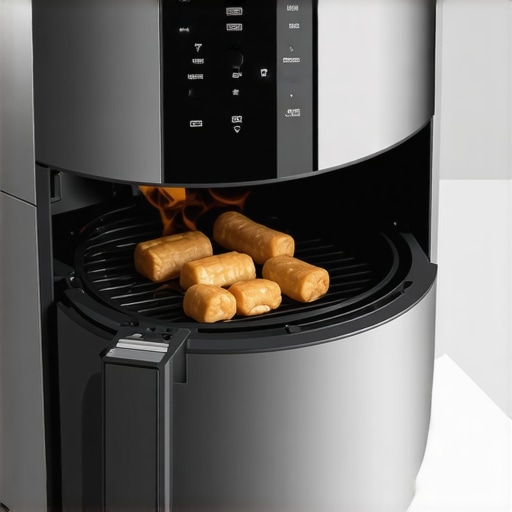
The Hidden Reason Your Air Fryer Smells Like Burnt Plastic
Most luxury kitchen owners assume a foul odor during the initial cycle is a standard ‘break-in period’ quirk. It is not. After fifteen years of diagnosing thermal failures in high-end appliances, I can tell you that a persistent acrid scent is a red flag for structural polymer degradation. If your kitchen smells like a burning tire factory every time you crisp a batch of wings, you aren’t just breaking in a new machine; you are witnessing a fundamental engineering mismatch. The stakes are high. Beyond the ruined flavor of a prime cut of protein, you are breathing in volatile organic compounds (VOCs) that have no business being in a ventilated living space. This is an operational risk that many manufacturers mask with vague manual warnings. The truth? If the smell persists after the third use, the unit is likely suffering from internal insulation failure or improper heating element shielding.
The Thermal Degradation Reality
Air fryers function as high-velocity convection ovens. To achieve that signature crunch, they must move air at incredible speeds across a heating element that often exceeds 400 degrees Fahrenheit. In cheaper units, or even mid-tier models that mimic a luxury kitchen aesthetic, the internal housing often consists of polypropylene or other heat-resistant plastics. However, ‘heat-resistant’ is a relative term. When the air path is not properly isolated from the electronics and the outer casing, those plastics reach their glass transition temperature. The result? Molecular breakdown. You are smelling the literal disintegration of the machine’s skeleton. This is why air fryers are perfect for reheating leftovers only when the chassis is built from die-cast aluminum or high-grade stainless steel that remains inert under thermal stress.
Why Off-Gassing Happens in Budget Units
During the manufacturing process, industrial lubricants and protective coatings are applied to the heating coils to prevent corrosion during shipping. Under the first few high-heat cycles, these oils vaporize. This is normal. What is not normal is the smell of melting zip ties. In my experience, the culprit is often the fan assembly or the wiring harnesses. If the manufacturer used low-spec electrical tape or sub-par plastic clips to secure the internal components, the radiant heat from the element begins to char these parts. I have seen units where the fan motor housing was so close to the element that it began to warp, causing a mechanical friction smell on top of the chemical one. If you notice a strange sound, check if your air fryer fan is making a strange vibrating noise, which often precedes total thermal failure.
Identifying Volatile Organic Compounds
The technical truth the industry ignores is the presence of PFAS and PTFE in non-stick coatings. When these coatings are applied to thin-gauge metals that fluctuate rapidly in temperature, they can reach a ‘smoke point’ where the coating itself begins to off-gas. This is why it is vital to deep clean the interior heating element before its first use to remove factory residue. According to reports from the Association of Home Appliance Manufacturers (AHAM), proper airflow design is the only way to mitigate this risk. If the exhaust port is obstructed or the basket is overloaded, the heat reflects back into the sensitive plastic components of the door seal, exacerbating the toxic aroma. High-end brands bypass this by using ceramic-coated glass or solid steel baskets that do not rely on these problematic polymers.
The Operational Risk of Continued Use
Continuing to operate a machine that smells like burning plastic is a gamble with your home’s safety. Beyond the chemical exposure, a melting internal component is a precursor to a short circuit. If the plastic around the power leads degrades, you face a fire hazard. The National Fire Protection Association (NFPA) notes that appliance failures are a leading cause of kitchen fires. I’ve walked into kitchens where the bottom of the air fryer had actually fused to the countertop. The heat was so poorly managed that the rubber feet melted. This is why I advocate for units with clear thermal breaks—physical gaps between the cooking chamber and the exterior skin. If you suspect grease buildup is the cause of the odor, remember that preventing smoke is a matter of maintenance, but preventing plastic smells is a matter of engineering.
Strategic Action for the Modern Kitchen
If you are in the market for a new appliance, look for a ‘Buy’ signal in the weight and material composition. A quality air fryer should feel heavy; it should feel like a piece of industrial equipment, not a plastic toy. If you already own a unit that won’t stop smelling, perform a ‘dry run’ outdoors on a patio for thirty minutes at maximum temperature. If the smell remains after that, it is an irreparable manufacturing defect. Hold no loyalty to a brand that compromises on material science. In the next 12 to 24 months, I expect regulatory bodies to tighten the standards on the types of polymers allowed near high-heat convection elements. The industry is moving toward ‘All-Metal’ interiors as a response to consumer health demands. My verdict? If it smells like plastic after the third use, return it. Invest in a model with a stainless steel interior and a ceramic-coated basket. Your health and your house are worth the price of entry.
Frequently Asked Questions
Is the plastic smell in an air fryer toxic?
Initially, it is usually just vaporized factory oils. However, if the smell persists, it indicates the breakdown of internal plastic components, which can release harmful VOCs into your kitchen environment.
How many uses should it take for the smell to disappear?
A high-quality unit should have no detectable chemical odor after two or three 20-minute cycles at 400 degrees. Anything beyond that suggests a structural issue.
Can I use vinegar to remove the burnt plastic smell?
Vinegar is excellent for removing food odors or grease, but it will not stop the smell of melting plastic. If the plastic is actually degrading due to heat, no amount of cleaning will fix the underlying engineering flaw.
Why does my expensive air fryer still use plastic parts?
Even premium brands use plastic for exterior handles and touchscreens to keep them cool to the touch. The key is how well the manufacturer has insulated the internal heat zone from these external plastic parts.