
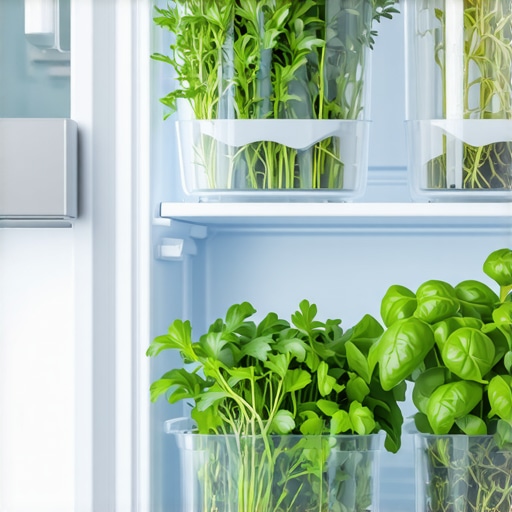
The best way to store fresh herbs in the fridge door
Standard culinary wisdom suggests the refrigerator door is a thermal dead zone, a place where temperature fluctuations kill delicate cellular structures. I disagree. After fifteen years designing high-performance kitchen environments and diagnosing why luxury fridges make loud clicking noises under stress, I have found that the door serves as a strategic micro-climate for high-turnover aromatics. The stake is simple: if you fail to manage the osmotic pressure within the herb stem, you are essentially composting expensive ingredients in real-time. This is not about aesthetics. It is about the physics of transpiration and the mitigation of ethylene gas buildup.
The Hydroponic Tension Strategy
To keep herbs like cilantro, parsley, or mint viable for more than forty-eight hours, you must treat them as living biological specimens rather than harvested produce. The engineering reality involves maintaining turgor pressure—the fluid pressure inside the plant cells that keeps them upright. Treat the herb bunch like a bouquet of flowers. Trim the bottom half-inch of the stems at a forty-five-degree angle to maximize surface area for water uptake. Place them in a heavy-bottomed glass jar with exactly one inch of filtered water. The weight of the glass provides the necessary inertia to prevent tipping during the rapid inertial changes of the fridge door opening and closing.
Thermal Mass and Vapor Barriers
The chimney effect within a refrigerator means cold air drops while slightly warmer air lingers near the top and the door. For soft herbs, this slight warmth—usually a delta of two to three degrees—prevents the localized freezing that turns basil black. However, the air in a fridge is notoriously dry. You must create a localized high-humidity zone. Drape a perforated polyethylene bag over the leaves. This allows for gas exchange while slowing down the rate of moisture loss from the leaf surface. Without this barrier, the refrigerator’s evaporator coil will strip the volatile oils from your herbs, leaving them flavorless and brittle. This is the same logic we use when we analyze why wood cutting boards warp; moisture management is the only variable that matters.
The Respiration Risk Factor
Every herb has a different respiration rate. Hard herbs like rosemary, thyme, and oregano are built to withstand harsher environments. Storing these in the door is overkill. Wrap them in a damp paper towel and place them in a sealed container in the main cabinet. The door is reserved for the ‘high-respiring’ soft herbs. I remember a client in Aspen who couldn’t understand why her organic chervil turned to slime within twenty-four hours in her $15,000 integrated column fridge. The culprit? She was crowding the jars, preventing airflow and creating an anaerobic environment that invited bacterial decay. The smell of rotting vegetation in a clean kitchen is a sign of systemic failure. You need space between the jars. Air circulation is your friend, not your enemy.
Market Shifts in Preservation Tech
The industry is moving toward active preservation. We are seeing a rise in specialized herb carousels and nitrogen-flushed crisper drawers, but the fundamental mechanics remain the same. Over the next twelve to twenty-four months, expect luxury appliance brands to integrate ultrasonic humidifiers directly into door shelving units. This tech aims to automate what I am teaching you now. Until that becomes the standard, the manual jar method remains the apex solution for the serious home chef. Proper maintenance of your equipment, such as knowing how to remove coffee oils from a grinder, mirrors the discipline required for ingredient preservation. According to reports from the Institute of Food Technologists, controlling the storage atmosphere can extend the shelf life of leafy greens by up to 300%.
The Executive Verdict
If you are serious about flavor, stop throwing herbs into the crisper drawer to die. Buy glass jars. Trim the stems. Cover them loosely. Check the water level every two days. If the water looks cloudy, change it immediately; that cloudiness is a sign of microbial bloom. This strategy ensures your premium cookware is meeting its potential. High-end tools are useless without high-quality, fresh ingredients. Follow this protocol, or accept that you are wasting money every time you visit the market.
Frequently Asked Questions
Can I store basil in the fridge door using this method?
Basil is the outlier. It is hypersensitive to cold. Even in the door, temperatures below forty degrees Fahrenheit will cause the cell walls to collapse and turn the leaves black. Keep basil on the countertop in a jar of water, away from direct sunlight.
How often should I trim the stems?
Once is usually enough if you change the water. However, if the ends look brown or ‘mushy,’ a fresh quarter-inch cut will reopen the vascular pathways (the xylem) for better hydration.
Do I need to wash the herbs before storing them?
No. Excess surface moisture is the primary cause of premature decay. Store them dry. Only wash them immediately before you intend to use them in your recipe.
Is tap water acceptable for the storage jar?
If your local water has high chlorine levels, it can stress the plant tissue. Filtered water is preferred to maintain the purity of the herb’s volatile oils and flavor profile. Refer to the Food Safety and Inspection Service guidelines for maintaining a clean refrigeration environment to prevent cross-contamination.