
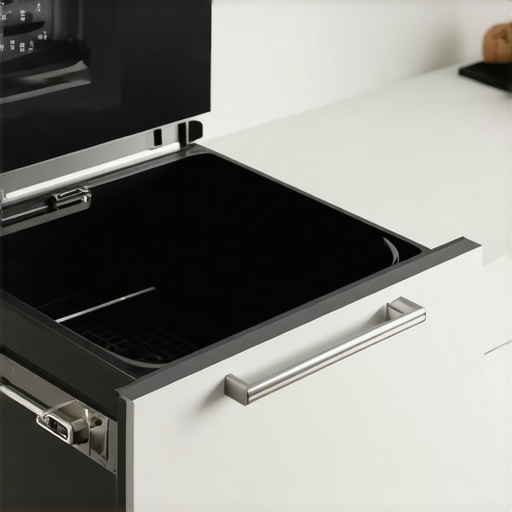
A sticky drawer handle on a premium air fryer indicates more than a minor annoyance; it signifies a mechanical conflict between thermal expansion and grease polymerization. After fifteen years in the high-end appliance industry, I have seen hundreds of owners force these handles until the internal locking pins snap. The cost of negligence? A completely useless chassis. The handle must move with a calibrated, smooth resistance. When it fights back, the physics of friction and heat are winning. We don’t fix this with brute force. We fix it with engineering precision.
How to fix a sticky air fryer drawer handle
The primary culprit behind handle resistance is almost always the migration of vaporized lipids into the internal spring-loaded latching mechanism. As you cook, fats atomize. These particles settle into the crevices of the handle assembly, cooling into a tacky, resin-like substance. This isn’t just dirt. It is a chemical bond. To restore the movement, you must understand that the handle is a multi-component system involving a trigger, a latch, and a return spring. Using the trick to keeping your air fryer basket non-stick for years helps prevent external buildup, but the internal handle housing requires a different strategy. You need a food-safe degreaser that can penetrate the tight tolerances of the plastic housing without compromising the integrity of the polymer. Heat cycles make plastics brittle over time. Forced movement during these cycles accelerates stress fractures.
[IMAGE_PLACEHOLDER]
The Physics of Friction and Thermal Expansion
Air fryers operate at high temperatures, often reaching 400°F. This heat causes the basket and the handle housing to expand at different rates depending on their material composition. Cheaper units use low-grade ABS plastics that warp under consistent thermal stress. High-end luxury models utilize glass-filled nylon or advanced polycarbonates that resist warping, yet even these face issues if the sliding rails are blocked. If your handle sticks only when hot, you are dealing with thermal expansion issues. If it sticks when cold, you are dealing with grease polymerization. You should regularly check the alignment of the locking pins. A slight misalignment, even by a millimeter, creates a shear force that makes the drawer feel jammed. While you are maintaining the exterior, remember that the best way to deep clean an air fryer heating element often involves clearing out the same grease vapors that eventually migrate to your handle.
The Technical Restoration Protocol
Begin by inspecting the underside of the handle. Most premium air fryers use Torx or security screws to prevent amateur tampering. Remove these with the correct bit; using a flathead will only strip the head and leave you with a permanent mechanical failure. Once the handle cover is removed, you will see the spring and the lever. The smell of old, burnt oil is a dead giveaway of the problem. Clean these parts with isopropyl alcohol. It evaporates quickly and leaves no residue. Never use WD-40. It is toxic and will actually attract more dust and grease over time. Instead, apply a microscopic layer of food-grade silicone grease to the friction points. The result? Immediate mechanical fluidity. While the unit is disassembled, check for signs of melting or discoloration. If the plastic near the latch is charred, your thermal gaskets have failed. This is when you must how to calibrate the temperature on a high-end air fryer to ensure the unit isn’t running hotter than the safety specifications allow.
The Reality of Implementation Risks
I recall a client who attempted to ‘lube’ their handle with olive oil. Within a month, the oil had turned into a literal glue, cementing the latch shut. We had to use a heat gun just to soften the organic bond to open the machine. This is the messy reality of kitchen physics. If you feel a ‘gritty’ sensation when pulling the handle, that is likely carbonized food particles acting like sandpaper on the plastic rails. Every time you force it, you are sanding down the structural ribs that keep the drawer aligned. Eventually, the drawer will sag. A sagging drawer loses its seal. A lost seal means heat loss, uneven cooking, and potentially a fire hazard if the heating element overcompensates. You can avoid this by never overfilling the basket. Steam pressure from overfilled baskets forces grease into the handle assembly faster than normal operation ever would.
Strategic Foresight for the Luxury Kitchen
The industry is moving toward magnetic latching systems to eliminate these mechanical failure points. Within the next 24 months, expect high-end brands to phase out spring-loaded handles entirely in favor of electromagnetic closures. This will reduce mechanical wear but increase electrical complexity. For now, the best strategy is preventative maintenance. Treat your air fryer like a precision tool, not a microwave. The Association of Home Appliance Manufacturers (AHAM) notes that mechanical failure in small appliances is frequently linked to poor cleaning habits. By maintaining the handle’s integrity, you extend the life of the entire appliance by years. This is about ROI. A $600 air fryer should last a decade, not two years.
The Executive Verdict
My recommendation is clear. If your handle sticks, stop using the machine immediately. Disassemble the handle housing, degrease with isopropyl alcohol, and lubricate with food-grade silicone. If the stickiness persists after cleaning, the plastic has likely suffered thermal warping, and the basket assembly must be replaced. Do not attempt to sand down the plastic rails; this creates micro-crevices where bacteria will thrive. Buy high-quality replacement parts from authorized dealers. Safety and precision are the only paths to a long-lasting luxury kitchen experience.
Frequently Asked Questions
Can I use cooking oil to lubricate the handle?
No. Cooking oils oxidize and polymerize, turning into a sticky resin that will permanently seize the mechanism. Only use food-grade silicone grease.
Why does the handle stick more when the air fryer is hot?
This is due to thermal expansion. The heat causes the plastic and metal components to expand. If there is grease buildup, the tighter tolerances make the stickiness even more pronounced.
Is a sticky handle a fire risk?
Indirectly, yes. If the handle doesn’t latch perfectly, the safety interlock switch may flicker, causing electrical arcing or forcing the heating element to work harder to maintain temperature.
How often should I clean the handle internals?
For heavy users, an internal inspection and cleaning every six months is recommended. For occasional users, once a year is sufficient to prevent grease from hardening.