
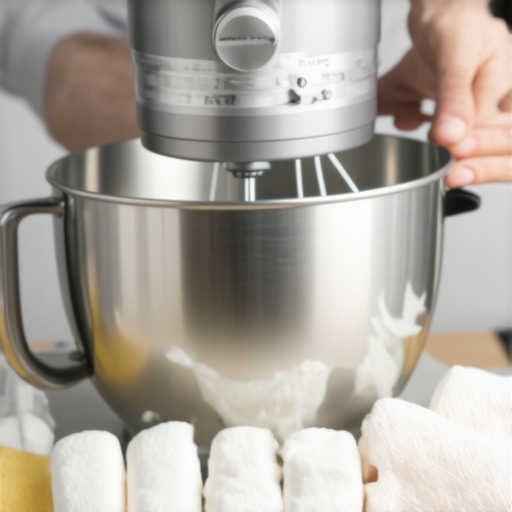
The Best Way to Clean Your Stand Mixer Bowl After Making Marshmallows
Marshmallow residue is not merely a food remnant; it is an industrial-strength adhesive. After fifteen years managing the maintenance of high-end culinary gear, I have witnessed countless home chefs ruin the surface of their 304-grade stainless steel bowls because they treated sugar-gelatin bonding like a simple grease spill. It is a mistake that costs hundreds in replacement parts. When you whip gelatin and corn syrup at high speeds, you create a matrix that, once cooled, rivals professional wood glue. The cloying scent of vanilla cannot mask the technical reality: you are dealing with a hygroscopic polymer that has locked onto the micro-fissures of your bowl. Speed kills gear. Impatience destroys finishes.
The mechanics of sugar solubility dictate that heat is your only ally. Most people reach for a scrub pad. That is a failure of logic. Abrasive force creates microscopic scratches, which then act as anchor points for future batches of meringue or dough. Instead, you must leverage the principle of thermal saturation. Fill the bowl with water that has reached at least 80 degrees Celsius. This temperature breaks the hydrogen bonds within the gelatin matrix without risking the dishwasher impact on structural integrity that often plagues lower-quality alloys. According to the International Journal of Food Science and Technology, the solubility of sucrose increases exponentially with temperature, meaning time spent soaking at high heat is more effective than any physical labor you could provide.
Thermal Solubility Principles
Standard detergents are largely ineffective against the structural integrity of a marshmallow ‘set.’ You need to address the surface tension. A small amount of alkaline-based soap can help, but the real work happens through molecular vibration. The heat softens the sugar, allowing the water to penetrate the bond between the substance and the metal. This is the same logic we use when evaluating premium cookware maintenance for professional kitchens. If you attempt to scrape the residue while it is cold, you risk transferring the torque from your hand into the bowl’s locking lugs. This often leads to situations where your stand mixer bowl keeps getting stuck because of warped base plates or dried sugar acting as a secondary lock.
The Cost of Abrasive Failure
The sensory reality of cleaning a ‘stuck’ bowl is visceral. The sharp hiss of boiling water hitting cold steel and the sight of white, cloudy film dissolving are your indicators of success. I remember a client who used a steel wool pad on a copper-lined bowl after a massive batch of holiday sweets. The result? Avoidable failure. He didn’t just remove the sugar; he removed the microns of plating that ensured even heat distribution. That bowl became a decorative piece overnight. In the luxury kitchen sector, we see a massive gap between those who own the tools and those who respect the metallurgy. The operational risk here isn’t just a dirty bowl; it is the degradation of the tool’s efficiency. Using the correct removal method is as vital as managing adhesive mixtures during the prep phase. Precision matters.
Investment Protection Strategies
Looking at the market trends for 2025, we see a shift toward high-polish finishes in residential kitchens that mimic laboratory standards. These surfaces are more susceptible to ‘pitting’ if acidic sugar residues are left to sit for more than four hours. The second-order effect of poor cleaning is the growth of biofilm in the tiny scratches left by improper tools. This is a regulatory concern for commercial spaces but should be a health concern for the home. We are moving toward a period where the ‘Technical Truth’ of equipment care outweighs the marketing fluff of ‘easy-clean’ coatings. True durability comes from understanding the interaction between your ingredients and your hardware.
My executive verdict is simple: Hold the scrub brush and buy a kettle. If you find yourself with a bowl full of hardened marshmallow, do not force it. Fill it with boiling water, add a dash of lemon juice to lower the pH slightly, and wait thirty minutes. The sugar will yield. The finish will remain intact. If your bowl has already suffered from pitting or base-lock, it is time to evaluate your maintenance protocol before your motor head suffers from the added resistance. Clean for the equipment you want to have in ten years, not the one you want to be done with in ten minutes.
Frequently Asked Questions
Can I use a hairdryer to melt the sugar?
No. Localized heat can cause uneven expansion in the metal, leading to warping. Stick to water for even heat distribution.
Why does the sugar turn white when I add soap?
This is often an emulsification of the fats in the gelatin and the surfactants in the soap. It indicates the bond is breaking.
What if the marshmallow is on the spring of the attachment shaft?
Use a steam cleaner or a hot, damp microfiber cloth. Never submerge the actual mixer head in water.