
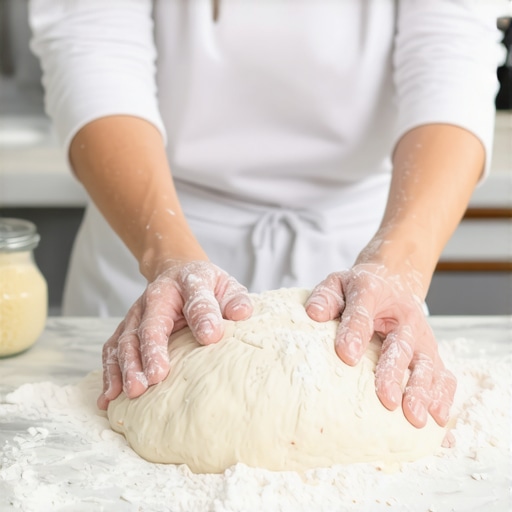
Standard 36-inch kitchen counters are a biomechanical tax on the serious baker. After designing luxury kitchen spaces for 15 years, I have seen hundreds of clients invest in premium cookware and high-end stand mixers only to find their lower backs screaming after twenty minutes of kneading sourdough. The mistake is universal: treating the kitchen as a one-size-fits-all prep zone. If you are serious about your craft, you need to understand that the leverage required for rolling out cold laminated dough is fundamentally different from the reach needed to operate espresso machines or air fryers.
The Best Countertop Height for People Who Love to Bake
The standard height of 36 inches was calculated based on the average height of a woman in the 1940s. It was designed for light tasks like chopping vegetables or washing dishes. Baking is different. It is visceral. When you are working with heavy bread dough, you need to use your body weight, not just your arm strength. A counter that is too high forces your shoulders up toward your ears, cutting off circulation and creating a ‘shrugging’ tension that leads to chronic fatigue. For a dedicated baker, the magic number usually sits between 30 and 32 inches. This ergonomic height adjustment allows you to get your shoulders over the work, using gravity to do the hard labor of pressing and stretching fibers. The result? Avoidable failure. Without this drop in height, you are fighting your own skeleton every time you pick up a rolling pin.
The Engineering Reality
Physics dictates the efficiency of your pastry work. When your work surface is too high, the angle of your elbow is forced into an acute position. This reduces the torque you can apply to the dough. By dropping the surface to 30 inches, you create an obtuse angle at the elbow, which allows the large muscle groups of the chest and back to engage. This is why a dedicated pastry station is the hallmark of a high-functioning luxury kitchen. It is not just about aesthetics; it is about mechanical advantage. Most builders ignore this because it complicates the cabinetry run. They prefer the ease of a continuous line. But your body does not care about the cabinet line. It cares about the 6-inch drop that makes the difference between a painful hobby and a joyful obsession.
Why Standard Methods Fail
The retail industry pushes ‘countertop extenders’ or ‘thick butcher blocks’ to solve height issues, but these only move the problem in one direction—up. If you are tall, a thick block might help for chopping, but for the baker, the problem is almost always that the counter is already too high. I have watched clients try to use stools to gain height, which creates a significant safety risk when handling heavy stand mixers or transferring hot trays from air fryers. A stool also disconnects your core from the floor, removing the stability needed for vigorous dough manipulation. Before you start your next project, you must prep your countertops by measuring your ‘elbow-to-floor’ distance. The National Kitchen & Bath Association (NKBA) suggests that a secondary work surface should be at least 3 inches lower than the primary surface for specialized tasks. I argue for 4 to 6 inches for heavy baking.
The Messy Reality of Implementation
Lowering a section of your counter introduces technical hurdles. You must consider the island structural integrity when creating multi-level surfaces. I remember a project in the local hills where the client insisted on a 30-inch marble slab for her tarts. We had to ensure the island structural integrity was reinforced with steel plates because the weight of the stone, combined with the pressure of kneading, would have cracked the standard cabinet joinery. Then there is the flour. Fine dust finds its way into the glides of lower drawers. You can smell the fresh yeast, feel the weight of the industrial grade steel bowls, and hear the high-pitched whine of a motor under load. If the transition between the 36-inch and 30-inch heights is not capped correctly, flour will settle in the seam, creating a sanitation nightmare over time. Avoid wood trim at this junction; use the same stone or metal for a vertical transition piece to keep it hygienic.
Market Corrections Ahead
The luxury market is moving away from the ‘show kitchen’ and toward the ‘utility kitchen.’ In the next 12 to 24 months, I expect to see a surge in hidden pastry larders where the entire unit is set at the ergonomic 31-inch mark. This allows you to keep your espresso machines and premium cookware at a height that makes sense for the eyes, while the baking zone is optimized for the hands. We are seeing a second-order effect where homes with specialized baking zones are fetching higher resale values among the millennial demographic, who value ‘homesteading’ skills more than previous generations. It is a strategic move for any long-term renovation. You are not just building for yourself; you are building for the next era of home utility.
The Executive Verdict
If you are planning a renovation, do not settle for a uniform 36-inch slab. It is an ergonomic lie. My recommendation: if you bake more than twice a week, a dropped-height station is a ‘Buy.’ If you only bake during the holidays, a large, heavy butcher block placed on a lower table or a kitchen cart might suffice, but it will never match the stability of a built-in stone surface. Follow the ‘Elbow Minus Six’ rule: measure the distance from the floor to your bent elbow and subtract six inches. That is your ideal baking height. Implement this, and you stop the metabolic tax on your body. You preserve your joints, and you bake better bread. It is that simple.
Frequently Asked Questions
Q: Will a lower counter affect my home resale value?
A: Quite the opposite. Custom, task-oriented kitchen zones are currently seen as high-end upgrades. As long as the design is integrated, it adds a ‘professional’ feel that buyers find attractive.
Q: Can I use a lower counter for my espresso machine?
A: No. Operating a portafilter at 30 inches will cause you to hunch. Espresso machines are best at 36 inches or even slightly higher, so you can see the extraction without bending over.
Q: What is the best material for a lowered baking station?
A: Marble or quartzite. The thermal mass of stone keeps dough cool, which is essential for butter-heavy pastries like croissants or pie crusts.