
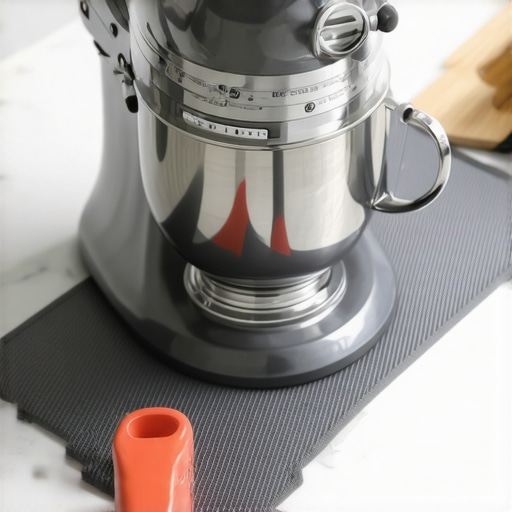
How to Stop Your Stand Mixer from Walking Off the Counter
A stand mixer is not a decorative centerpiece; it is a high-torque centrifuge capable of generating significant kinetic energy. When you are kneading dense doughs in a luxury kitchen, that energy must go somewhere. If it is not absorbed by the chassis or the countertop, it manifests as lateral migration. I have spent 15 years dissecting the engineering of high-end appliances, and the ‘walking’ mixer is a symptom of a fundamental mismatch between motor output and surface friction. This is not just a nuisance. It is a mechanical risk to your premium cookware and a potential disaster for your flooring if that machine takes a four-foot plunge. The stakes? A shattered bowl, a burnt-out motor, and a deep gouge in your stone island.
The Engineering Reality of Motor Oscillation
Modern stand mixers, especially those found alongside high-end espresso machines or advanced air fryers, utilize either AC or DC motors. DC motors typically offer higher torque at lower speeds, which is excellent for bread but creates intense internal vibration. The oscillation occurs when the planetary action of the beater hits a point of peak resistance in the dough. This creates an unbalanced load. According to the principles of mechanical vibration damping, a machine must have enough mass to counteract its own centrifugal force. However, many consumer-grade stand mixers prioritize aesthetics over a heavy cast-iron base. When the internal dampening fails, the machine seeks equilibrium by moving across your counter. You need to understand the hidden benefit of high wattage stand mixer motors to realize that more power requires better stabilization techniques.
The Friction Coefficient of Luxury Surfaces
The interaction between the rubber feet of your mixer and your countertop material is the primary defense against migration. Polished marble, quartz, and high-gloss granite have extremely low friction coefficients. When a fine layer of flour or moisture gets trapped between the rubber and the stone, the mixer effectively hydroplanes. This is why countertop material that actually withstands heat often fails to provide the necessary grip for heavy-duty mixing. The technical truth? Most manufacturers use cheap, oil-based rubber feet that harden over time, losing their ‘tack.’ Once the rubber polymerizes, it becomes a plastic-like slider rather than a grip. Replacing these with high-friction silicone pads is often the first step in a professional-grade fix.
Mechanical Failures and Implementation Risks
I recall a client in a high-rise who lost a professional-series mixer because of a ‘clean’ counter. The vibration was so rhythmic that it hummed through the entire cabinetry stack before the machine rattled off the edge. We found that the planetary head had loosened over years of use, exacerbating the wobble. If your machine is older, you might need to know how to stop your stand mixer from jumping during bread prep by checking the neck pin and the height of the beater. A beater set too low hits the bottom of the bowl, sending a shockwave through the frame. This ‘clank’ of metal on metal is a warning sign. It is the sound of mechanical stress that eventually leads to gear stripping. Furthermore, using sub-par ingredients can increase resistance; for instance, why cheap flour ruins your high torque stand mixer is often due to unpredictable gluten development that creates sudden, sharp spikes in torque requirements.
Strategic Foresight in Kitchen Mechanics
Looking at the next 24 months, we are seeing a shift toward brushless DC motors in the premium appliance sector. These motors are quieter and more efficient, but they deliver power in a ‘bursty’ fashion that can catch a standard kitchen setup off guard. Regulatory changes in energy consumption are forcing manufacturers to shed weight to meet shipping efficiency standards, which means the ‘heavy’ mixer is becoming a relic. In the future, we expect to see vacuum-seal bases or integrated magnetic mounting systems for luxury kitchens. If you are designing a space today, consider a dedicated appliance ‘landing’ zone with a higher-texture surface or a recessed ‘garage’ to prevent equipment from moving during high-output sessions. This foresight protects the integrity of your workspace and the longevity of your tools.
The Executive Verdict
Do not tolerate a migrating mixer. It is a sign of either mechanical misalignment or surface failure. If your mixer is walking, check the feet first for hardening. If the feet are pliable, adjust your beater-to-bowl clearance. If the problem persists, the issue is likely the density of your dough exceeding the machine’s stabilization capacity. In this scenario, invest in a heavy-duty silicone mat specifically designed for high-vibration appliances. My recommendation: Stop the machine immediately if it moves more than an inch. A ‘hold’ strategy here is a recipe for a broken appliance. An ‘action’ strategy involves recalibrating the internal gears and ensuring the surface is chemically de-greased. High-end cooking is about precision; do not let a basic physics problem undermine your craft.
Stand Mixer Stability FAQ
Why does my mixer only walk when making bread?
Bread dough is non-Newtonian; its resistance increases as you work it. This creates high-torque spikes that lower-mass machines cannot absorb. High-protein flours create more resistance than pastry flours.
Are suction cup feet a good idea?
Usually, no. Suction cups fail on porous stone or if a single grain of flour breaks the vacuum. High-friction silicone pads are a more reliable engineering choice for long-term stability.
Can I use a towel under the mixer to stop the noise?
Absolutely not. Placing a towel under a high-torque machine reduces friction to near zero. It acts as a lubricant, making the mixer more likely to slide off the counter.
Does the speed setting matter for walking?
Yes. Most machines have a ‘sweet spot’ for harmonic resonance. If you notice walking at speed 4, shifting to speed 3 or 5 might change the vibration frequency enough to stop the lateral movement.