
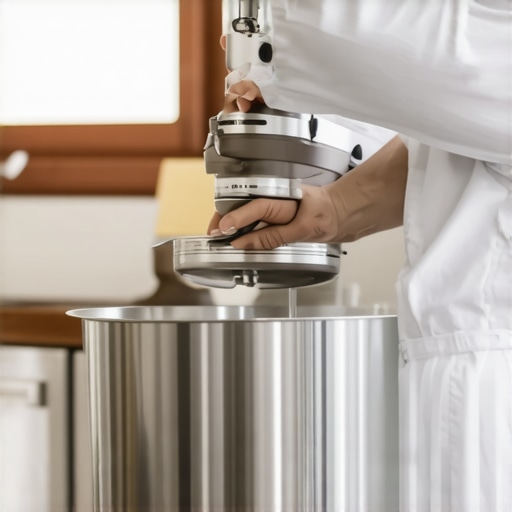
How to Stop Your Stand Mixer from Jumping During Bread Prep
A stand mixer dancing across a granite countertop is not a charming quirk of home baking. It is a mechanical warning. When that machine walks, it indicates a violent misalignment between the torque produced by the motor and the resistance of the dough. After fifteen years of diagnosing gear failures and motor burnouts in luxury kitchen environments, I can tell you that most owners ignore this oscillation until the transmission housing cracks. A jumping mixer is an expensive liability that signifies either poor machine calibration or an engineering mismatch between the appliance and the recipe.
The root cause often lies in the friction coefficient and the dampening system of the machine. Most high-end stand mixers rely on rubberized feet to grip the surface, but these degrade. When the rubber loses its tackiness, the kinetic energy from the planetary mixing motion translates into lateral movement. The result? Avoidable failure. Beyond the feet, the actual clearance between the dough hook and the bowl floor dictates how much leverage the dough has over the machine. If the hook sits too high, the dough gathers in a dense mass that pushes against the bowl sides with uneven force. This creates a centrifugal imbalance that mimics a washing machine with an off-center load.
The Engineering Reality
To stabilize the unit, you must address the bowl-to-hook ratio. This is often solved by the Dime Test, a calibration method that ensures the attachment sits exactly one thin coin’s height from the stainless steel. We see too many machines leave the factory with loose tolerances. Adjusting the internal screw on the neck hinge is the first step to reclaiming control. Without this precision, the motor works harder to overcome the drag, leading to the smell of ozone and burning copper windings. For those pushing the limits of their equipment, understanding the heavy-duty gear secret inside premium stand mixers is the difference between a tool that lasts decades and one that dies in three years.
Hydration levels in your dough also dictate the stress on the transmission. A 50% hydration bagel dough is a structural nightmare for a standard AC motor. It lacks the elasticity to move fluidly, behaving more like a solid wall. If the mixer starts to strain, the head will bounce. This bounce stresses the locking pin. Once that pin shears, the mixer is effectively scrap. It is a common occurrence in kitchens where people assume a high price tag equals infinite durability. It does not. Professional-grade results require professional-grade respect for the machine’s torque limits. Often, the solution is as simple as monitoring the bread kneading speed that actually saves your motor, which is almost always speed two and never higher.
Operational Risk and the Messy Reality
I remember a client who insisted on running a triple batch of heavy sourdough in a designer machine. The vibration was so intense it actually vibrated the mixer off the island. The sound was a sickening thud of cast iron hitting hardwood. The repair cost more than the original purchase. That client learned the hard way that some machines simply lack the mass to anchor themselves against high-protein flour. If you are working with difficult grains, you have to acknowledge that the flour test: why some mixers can’t handle 100% rye is a real benchmark for motor stability. The weight of the industrial grade steel in the chassis matters more than the aesthetic finish.
Market Corrections Ahead
The industry is currently shifting. We are seeing a move away from high-wattage AC motors toward high-torque DC motors. Why? Because DC motors provide consistent power at low speeds without the heat buildup. In the next 18 months, I expect more luxury brands to abandon the traditional worm gear setup for more efficient belt-drive systems or direct-drive DC configurations. This change is driven by the rise of home-based artisan baking which demands longer run times. Regulatory standards for kitchen appliances are also tightening, focusing on energy efficiency which will eventually phase out the power-hungry, inefficient motors of the past.
The Executive Verdict
If your mixer is jumping, do not simply hold it down with your hands. That is a stopgap that masks a larger technical issue. First, clean the rubber feet and the countertop with denatured alcohol to restore grip. Second, perform the bowl-clearance adjustment. Third, if the machine still vibrates excessively, reduce your batch size or increase the dough hydration. If you are a high-volume baker, sell your current unit before the gears strip and invest in a machine with a DC motor and a bowl-lift design rather than a tilt-head. Mass and torque are the only metrics that matter for bread prep.
Frequently Asked Questions
Why does my mixer only jump when making bread?
Bread dough provides significant resistance compared to cake batter. This resistance creates a physical kickback that tests the machine’s stabilization and gear tolerances.
Can I use a silicone mat to stop the movement?
Yes, a high-friction silicone mat can dampen vibration and prevent the machine from walking, but it won’t fix internal mechanical strain.
Is the jumping sound a sign of broken gears?
Usually, no. The jumping is external movement. However, the clicking sound accompanying a jump often indicates that the gears are slipping under the load.
What is the safest speed for kneading dough?
Almost all manufacturers specify speed two. Using higher speeds increases the centrifugal force and is the leading cause of