
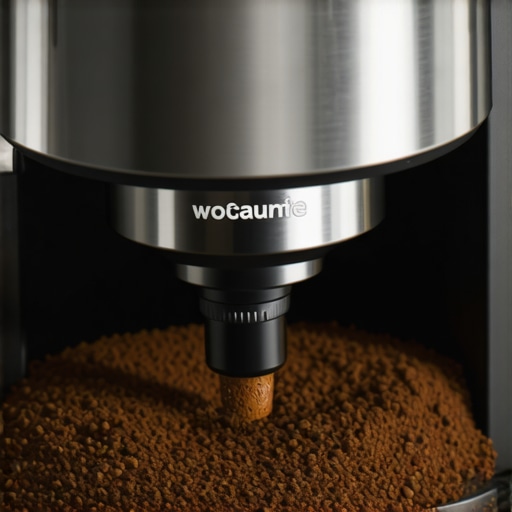
How to Stop Your Espresso Grinder From Retaining Stale Beans
Retention isn’t a minor annoyance. It is a fundamental engineering failure that sabotages the chemistry of your extraction. Every gram of coffee trapped in the burr chamber from yesterday acts as a contaminant for today’s brew. After fifteen years diagnosing high-end espresso machines and grinders, I have seen the same pattern: users invest thousands in luxury kitchen gear only to have their shots ruined by three grams of oxidized dust. The stake here is simple. If you don’t manage retention, you aren’t tasting your beans; you are tasting a ghost of yesterday’s failure.
The Engineering Reality of Dead Space
Grinder retention occurs because of ‘dead space’—the physical voids between the burrs and the exit chute. Centrifugal force pushes grounds outward, but static electricity and oily residues act as binders. This creates a cake of compressed coffee. In commercial settings, this matters less because the throughput is constant. In a home environment, that coffee sits. It oxidizes. It turns rancid. Most standard hoppers are designed for weight-based feeding, which actually increases the pressure on the burr chamber and worsens the compaction. To fix this, you must understand the difference between ‘retention’ and ‘exchange.’ Retention is what stays inside after a cycle. Exchange is the amount of old coffee pushed out by the new beans. High exchange is the true enemy of the technical purist. You might want to learn the proper way to clean a burr grinder without ruining the calibration to keep these tolerances tight.
Static Electricity and Kinetic Energy
Static is the primary driver of chute clogging. As burrs spin at high RPMs, friction creates a massive charge. The coffee particles cling to the metal walls like iron filings to a magnet. This is especially prevalent in dry climates or during winter months. One effective industry trick is RDT (Ross Droplet Technique). A single micro-spray of water on the beans before grinding neutralizes the charge. It sounds risky. It isn’t. The moisture level is so low it evaporates before hitting the motor bearings. If your grinder still struggles, you may need to investigate why your coffee grinder makes so much static to prevent long-term buildup. The result? A cleaner exit and more accurate dosing.
The Failure of Traditional Hoppers
Traditional hoppers are built for convenience, not precision. They hold a pound of beans that slowly go stale while sitting under luxury kitchen lights. For the home barista, single-dosing is the only logical path. This involves weighing the exact dose, grinding it, and using bellows to blow out the residual dust. Bellows are a manual solution to a mechanical problem. By creating a pulse of air, you force the ‘exchange’ coffee out of the chute. I’ve watched clients struggle with ‘muddy’ tasting shots for months, only to realize they were consuming 4 grams of stale grounds every morning. The fix was a $20 silicone bellows. You should also deep clean the internal chute regularly to remove the ‘seasoned’ oils that act as glue for new grounds.
Implementation Risks and The Oily Bean Trap
The messy reality? Not all beans are equal. Dark, oily roasts are the nemesis of low-retention grinders. The oils weep from the bean surface and coat the burrs in a sticky film. I remember a service call where a prosumer grinder had completely seized. The smell was unmistakable: rancid vegetable oil and burnt carbon. The user was trying to single-dose an extremely oily Italian roast without cleaning the chute. The friction generated enough heat to ‘bake’ the coffee into a solid block. If you prefer darker roasts, you must adjust your grind size for oily coffee beans to avoid this mechanical stress. The clank of a jammed motor is an expensive sound you want to avoid.
Market Corrections and Future Tech
The industry is moving toward vertical burr alignments. In the next 12 to 24 months, expect to see premium cookware brands integrating ‘plasma generators’ into the exit chutes of every high-end grinder. These devices actively ionize the air to eliminate static at the source, rendering RDT obsolete. This is the same technology used in industrial cleanrooms. We are seeing a shift where ‘Zero Retention’ is no longer a niche mod but a baseline requirement for any machine competing in the luxury kitchen space. According to reports from the Specialty Coffee Association (SCA), precision in dosing is now ranked higher than motor wattage in consumer purchase intent.
The Executive Verdict
If you are serious about your espresso, stop using a full hopper. Switch to a single-dose workflow immediately. Buy a set of bellows for your current machine or upgrade to a grinder with a straight-through path. For those using air fryers and stand mixers for other culinary tasks, the principle remains: residue is the enemy of quality. My recommendation: if your grinder retains more than 0.5g per dose, it is a liability. Purge the machine for two seconds before every shot if you cannot mod it. This is a non-negotiable step for consistent extraction. For further technical standards, refer to the Barista Guild guidelines on equipment maintenance.
Frequently Asked Questions
Does a bellows damage the motor?
No. The air pressure is far too low to affect the motor assembly or the burr alignment. It only clears the path of least resistance: the chute.
How often should I deep clean the burrs?
For home use with light to medium roasts, once a month is sufficient. If you use oily dark roasts, every two weeks is the standard to prevent rancidity.
Is RDT safe for my grinder?
Yes, provided you use a fine mist. Do not pour water into the grinder. One spray on the beans is enough to kill the static without risking rust on steel burrs.
What is the best way to measure retention?
Weigh 18.0g of beans in. Weigh the output. If you get 17.5g out, your retention is 0.5g. Simple as that.