
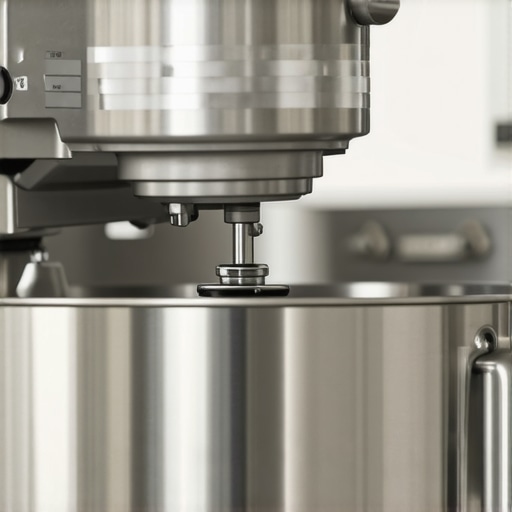
A professional stand mixer is not a decorative countertop accessory. It is a high-torque industrial machine housed in a consumer chassis. When you invest in luxury kitchen equipment, you are buying precision engineering. However, even the most expensive gear fails without scheduled maintenance. The primary failure point in universal motors? The carbon brushes. These small blocks of carbonized material provide the electrical bridge to the rotating commutator. They wear down by design. If you ignore them, you risk catastrophic motor arcing. This guide cuts through the noise to provide a technical path for restoration.
How to Replace the Brushes in Your Professional Stand Mixer
Carbon brushes are sacrificial. They exist to be consumed. In a professional setting, where stand mixers face constant resistance from heavy doughs, these components rarely last beyond three years of heavy use. You will notice the signs. Perhaps a slight decrease in RPM under load. Maybe a faint scent of ozone wafting from the rear vents. These are not quirks. They are warnings. Ignoring them often leads to why your high-end stand mixer is whining at low speeds as the electrical contact becomes intermittent. To begin, disconnect the power. Safety is non-negotiable. Locate the circular plastic caps on the sides of the motor housing. Use a flat-head screwdriver of the correct width. Avoid using a knife or a poorly fitting tool; the plastic is soft and deforms easily. Unscrew the caps slowly. The internal springs are under tension. If you are not careful, the brush assembly will launch across your kitchen. Once the cap is off, pull the brush out by its copper lead. Examine the length. If the carbon is shorter than one-quarter of an inch, it is dead. It is time for a swap. Slide the new brush into the guide channel. Ensure it moves freely. If it binds, the motor will arc. Reinstall the cap. Repeat on the opposite side. Both brushes must be replaced at the same time to ensure even electrical draw across the commutator. Failure to do so creates an unbalanced magnetic field. The result? Premature bearing wear.
[IMAGE_PLACEHOLDER]
The Engineering Reality of Universal Motors
Why do we still use carbon brushes in an age of brushless technology? Torque density. Professional stand mixers, much like high-end espresso machines or premium cookware production tools, require massive low-end torque. Universal motors provide this. The trade-off is friction. As the brush drags against the copper segments of the commutator, it deposits a layer of carbon. This layer facilitates current transfer but also creates heat. In a luxury kitchen, heat is the enemy. Excessive heat buildup in the motor housing can degrade the food-grade grease in the planetary gears. This chain reaction is the real reason your sourdough keeps breaking your mixer gears. It is not just about the metal teeth failing; it is about the electrical system failing to maintain a consistent phase. According to standards established by the IEEE, electrical contact resistance increases exponentially as brush pressure drops. When the spring weakens or the carbon wears thin, the resistance spikes. This causes the ‘whining’ or ‘stuttering’ you hear during a heavy mix. You are not just hearing a tired motor. You are hearing the sound of electrical arcing destroying the copper commutator segments. Once those segments are pitted, the motor is trash. Replace the brushes early. It is a ten-dollar fix that saves a thousand-dollar machine.
Market Corrections and the Right to Repair
The industry is shifting. Many modern air fryers and low-end mixers are moving toward disposable, sealed motors. This is a regression. A true professional-grade tool should be serviceable. As an owner of a specialized company, I see this trend as a threat to long-term value. We are seeing a resurgence in demand for ‘legacy’ repairability in the luxury kitchen market. People are tired of throwing away machines because a five-cent part failed. Regulatory bodies like the NAFEM are beginning to emphasize lifecycle costs over initial purchase price. This is strategic foresight. In the next 24 months, expect to see more transparency in appliance repairability scores. If your mixer does not have accessible brush caps, it is not a professional tool. It is a consumer toy with a professional price tag. Understand the hidden benefit of high-wattage stand mixer motors: they are built to be opened. They are built for the long haul. Your maintenance routine should reflect that reality.
The Executive Verdict
My recommendation is simple. If you use your mixer more than twice a week, inspect the brushes annually. Do not wait for the motor to stop mid-batch. Keep a spare set of brushes in your utility drawer. This is about operational continuity. A dead mixer on a holiday weekend is an avoidable failure. If you see heavy sparking through the side vents, stop immediately. You have already waited too long. Clean the commutator with a specialized cleaning stone before installing new brushes. This ensures a clean path for the current. If you are in a situation where the motor smells like burnt hair, do not just swap the brushes. The armature might be shorted. At that point, professional bench service is the only path forward. Be proactive. Be technical. Protect your investment.
Frequently Asked Questions
How long do carbon brushes usually last? In a home environment, they last 5 to 7 years. In a professional or high-output kitchen, expect 2 to 3 years before replacement is necessary.
Can I use generic brushes from a hardware store? No. Use only the manufacturer-specified grade. Different carbon compositions have different conductivity and hardness ratings. Using the wrong brush can score the commutator.
Why is there a smell of ozone after I change the brushes? A slight smell and minor sparking are normal for the first 30 minutes of use. The new brushes need to ‘seat’ or conform to the arc of the commutator. Run the mixer on medium speed without a load for 10 minutes to facilitate this process.
Will replacing brushes void my warranty? On professional-grade machines, brush replacement is considered routine maintenance and does not void the warranty. However, always check your specific brand’s policy before opening the housing.