
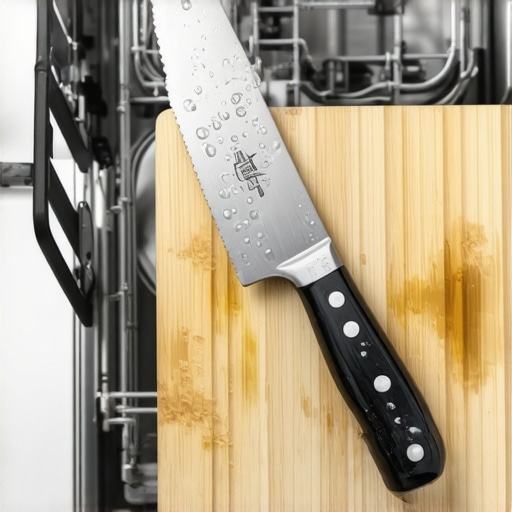
Why You Should Never Put Your High-End Chef Knife in the Dishwasher
Treating a forged Japanese blade or a high-carbon German workhorse like a standard ceramic plate is a form of mechanical malpractice. I have spent two decades sourcing the finest instruments for luxury kitchens, and the quickest way to turn a $500 investment into a dull, chipped relic is to hit the ‘Heavy Wash’ button. The dishwasher is not just a cleaning tool; it is a pressurized, high-heat chemical chamber designed to strip organic matter through sheer aggression. For a thin, acute edge, this environment is a death sentence. The stakes are simple: you either respect the metallurgy or you pay a professional to grind away the life of your blade to fix your negligence.
The Molecular Assault of Alkaline Compounds
Dishwasher detergents are formulated to be brutally effective. They rely on high alkalinity and abrasive surfactants to dissolve proteins and fats without manual scrubbing. On a molecular level, these chemicals are hostile to the martensitic structure of high-end steel. When you expose an edge ground to 12 or 15 degrees to these compounds, you aren’t just cleaning it; you are encouraging microscopic pitting. This isn’t a theoretical risk. In my years of consulting for local culinary enthusiasts, I have seen hundreds of blades where the carbide structure was weakened by chemical exposure, leading to ‘micro-chipping’ during basic prep work. Unlike the most durable non-toxic coating for daily fry pans, which can withstand some environmental stress, a naked steel edge is vulnerable to every shift in pH balance within that machine.
[image_placeholder_1]
Thermal Expansion and Structural Stress
Heat is the silent killer of handle integrity and blade alignment. Most premium knives utilize a composite or natural wood handle secured by rivets or epoxy. A dishwasher cycle involves rapid thermal cycling—spiking to 150 degrees Fahrenheit and then cooling rapidly during the rinse. Steel, wood, and resin expand and contract at vastly different rates. This differential movement creates gaps. I’ve felt the result: the slight, irritating wiggle in a tang that used to be rock-solid. Once the seal is broken, water enters the handle, leading to internal corrosion that you can’t see until the handle literally fails in your hand. This is especially true for those who ignore the countertop mistake that ruins your knife edge and then double down by tossing the blade into the wash. According to research by Knife Steel Nerds, corrosion resistance is a sliding scale, and even ‘stainless’ steels like VG-10 can suffer under prolonged hydrothermal stress.
Physical Cavitation and Mechanical Impact
The interior of a dishwasher is a violent place. High-pressure water jets are strong enough to knock lightweight items around. Your chef knife is heavy, but it is also thin. As the water circulates, the knife vibrates against the plastic-coated tines of the rack or, worse, other cutlery. This creates ‘edge rolling.’ You might not see it with the naked eye, but under a jeweler’s loupe, the damage is clear: the apex of the edge is bent over. This makes the knife feel dull even if the steel is technically still hard. If you care about your equipment, you should reconsider the knife magnet vs drawer debate to ensure your tools are stored safely after they are hand-washed. The ASM International trade standards for cutlery safety emphasize that mechanical impact is the primary cause of premature edge failure in professional-grade tools.
Strategic Foresight for the Modern Kitchen
The luxury kitchen industry is shifting toward total automation, but high-end cutlery remains one of the few areas where ‘old-school’ maintenance is non-negotiable. Over the next 12 to 24 months, I expect to see more ‘dishwasher safe’ claims on premium knives. Ignore them. These are marketing concessions, not technical improvements. The metallurgy hasn’t changed; only the manufacturer’s willingness to accept a higher return rate has. If you want a tool that lasts a lifetime, you must accept the 30 seconds of labor required to wipe it clean with warm water and a soft sponge. The result? A blade that stays sharper longer and a handle that remains a solid extension of your arm.
The Executive Verdict
My recommendation is absolute: hand wash, dry immediately, and store on a magnetic strip. If you find yourself in a situation where convenience outweighs the health of your tools, buy a cheap set of stamped knives for the dishwasher and keep your forged pieces in a separate drawer. Never let the two mix. The financial ROI on a well-maintained knife is found in the lack of sharpening fees and the precision of the cut. Stop treating your precision instruments like garage tools.
Frequently Asked Questions
Can I use the dishwasher if I use a ‘gentle’ cycle?
No. Even gentle cycles use heat and detergents that are too aggressive for thin edges and handle adhesives. The risk of mechanical impact against other dishes remains the same.
What is the best way to clean a knife after cutting acidic foods?
Rinse it immediately. Acids from lemons or tomatoes can etch even high-carbon stainless steel if left to sit. A quick wipe with mild soap and immediate drying is the only professional standard.
Does the dishwasher affect the tempering of the steel?
While 150 degrees won’t reach the 350-500 degree range needed to fully draw back the temper, the prolonged ‘soak’ in heat combined with chemicals can slightly degrade the edge stability of certain high-performance steels over time.