
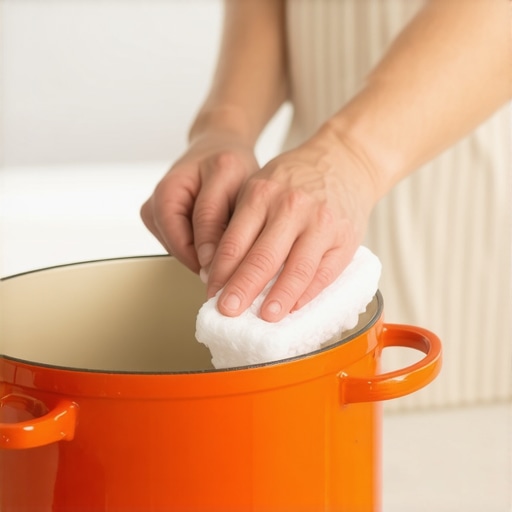
How to Properly Clean an Enameled Dutch Oven Base
Neglecting the exterior base of a premium Dutch oven is a silent tax on your kitchen’s efficiency. Most home cooks obsess over the interior cooking surface while allowing carbonized oils and protein residues to bake into the bottom of the vessel. This buildup isn’t just a cosmetic flaw. It creates a literal thermal barrier. When you place a fouled base over a flame or induction element, you aren’t heating the iron; you are insulating it with a layer of burnt carbon. After fifteen years in the high-end kitchenware industry, I have seen more heirloom-quality pots destroyed by ‘cleaning’ than by actual cooking. The stake is simple: use the wrong abrasive and you induce microscopic stress fractures in the glass coating. The result? Total delamination. These pots are $400 investments, not disposable pans.
Thermal Conductivity and the Frit Bond
To understand the cleaning process, you must understand the material science of vitreous enamel. Enamel is essentially a glass ‘frit’ fused to a cast iron core at temperatures exceeding 1,400 degrees Fahrenheit. The bond depends on a specific coefficient of thermal expansion. When you allow a thick crust of carbon to accumulate on the base, you create uneven heat distribution across that bond. This causes localized ‘hot spots’ where the iron expands faster than the glass can accommodate. Many owners reach for a metal scouring pad, which is a catastrophic error. Those steel coils create micro-scratches that act as points of origin for future cracking. A clean base ensures the heat moves from the burner to the iron with zero interference, maintaining the precision of your braise.
Technical truth: the base of your pot experiences the highest thermal gradient. Unlike high-end 5-ply stainless steel, which distributes heat through an aluminum or copper core, cast iron is a heat sponge. It retains heat but moves it slowly. If the base is covered in polymerized grease, the iron underneath can actually overheat while your food remains cold. This is why professional kitchens insist on a ‘bright base’ policy. It is about thermodynamic consistency, not vanity.
The Reality of Scouring and Chemical Fatigue
Cleaning a burnt base requires chemistry, not physical force. I remember a client who brought in a limited-edition Le Creuset with a base so blackened it looked like raw charcoal. They had used a power drill with a wire brush attachment. They didn’t just remove the carbon; they stripped the enamel down to the raw iron, rendering the pot prone to rust and uneven heating. The sensory experience of a damaged pot is unmistakable—the gritty feeling when it slides across a glass cooktop and the faint ‘tink’ of glass shards popping off during preheating. You avoid this by using a paste of sodium bicarbonate and a minimal amount of water. This creates a mild alkaline reaction that breaks the bond of the carbonized grease without abrading the glass surface. For stubborn cases, a soak in a solution of specialized enzymatic cleaner or a dedicated enamel restorer is the only path forward. If you have ever had to clean a burnt bottom on a stainless steel pot, you know the frustration, but with enamel, the stakes are higher because you cannot simply polish out the damage.
Strategic Foresight for the Luxury Kitchen
The industry is shifting toward more sensitive induction technology. Within the next 24 months, as gas range bans become more common in new builds, the condition of your Dutch oven base will become even more critical. Induction requires a perfectly flat, clean contact point for maximum electromagnetic efficiency. A fouled base will cause the induction coil to work harder, potentially leading to the ‘whining’ noise often associated with poor-quality cookware. Regulatory changes regarding PFOA and PFOS are also driving more people toward enamel, making these maintenance protocols a standard skill for the modern home chef. Expect to see ‘base-cleaning kits’ marketed heavily as manufacturers try to reduce warranty claims caused by thermal shock and improper abrasion.
Executive Verdict
My recommendation is clear: adopt a proactive cleaning stance. Do not wait for the base to turn black. After every third use, apply a baking soda slurry to the base and let it sit for twenty minutes. This prevents the polymerization of fats before they become a permanent part of the pot’s anatomy. If the base is already heavily fouled, use a specialized liquid cleanser like Bar Keepers Friend (Liquid version only) and a non-scratch blue sponge. Avoid the green heavy-duty pads at all costs. An ounce of chemical prevention preserves a lifetime of thermal performance.
Frequently Asked Questions
Can I use oven cleaner on the base of my Dutch oven?
While effective on carbon, most oven cleaners contain lye which can dull the gloss of the enamel over time. Use it only as a last resort and never leave it on for more than 30 minutes.
Why is the base of my pot turning yellow?
This is the early stage of grease polymerization. It is not permanent yet. A simple soak in warm soapy water with a splash of white vinegar usually resolves this before it turns brown.
Does a dirty base affect induction cooking?
Yes. Carbon buildup creates a microscopic gap between the induction surface and the iron, reducing the efficiency of the magnetic field and slowing down your boil times.
Is it safe to put a hot pot directly into soapy water?
Never. Thermal shock is the number one killer of enameled cookware. Let the pot cool to room temperature naturally before it touches water.