
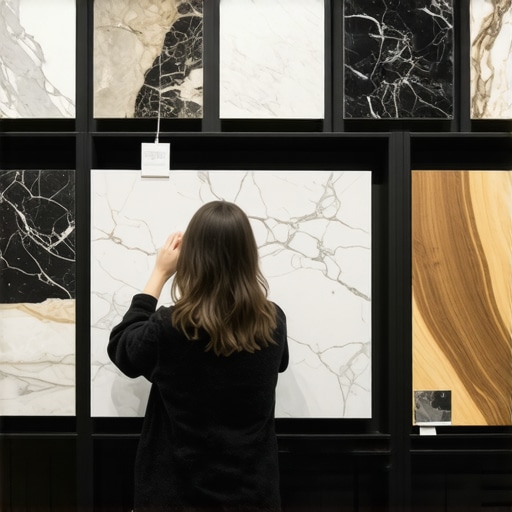
How to Pick the Right Material for Your Kitchen Countertop Slabs
Buying a countertop slab based on a 4-inch sample is like choosing a spouse based on a headshot. It is a recipe for long-term resentment. In twenty years of tearing out failed kitchen remodels, I have seen the same error repeated: prioritizing the vein pattern over the mineralogical reality. Your countertop is the literal foundation of your culinary workflow. If you are investing in premium cookware and high-performance appliances, the stone beneath them must handle the heat, the weight, and the inevitable spills. A $15,000 marble slab that etches when a single drop of lemon juice hits it is not luxury. It is a liability. The stakes are high because replacing a slab usually means destroying the backsplash and potentially damaging the cabinetry. It is a one-way street.
The Engineering Reality of Natural Stone
Natural stone is not a uniform product. It is a geological accident. Granite remains the gold standard for thermal stability. You can pull a heavy Dutch oven off the stove and set it down without a second thought. The crystalline structure of granite handles rapid temperature shifts through a process called thermal dissipation. Quartzite, on the other hand, is a different beast entirely. It offers the ethereal look of marble but with a Mohs hardness scale rating that rivals granite. However, there is a catch. Many showrooms mislabel stones. You must understand why quartzite is often mislabeled as marble to avoid paying premium prices for a stone that will etch within a week. True quartzite should not be scratched by a glass cutter. If the dealer will not let you perform a scratch test on a remnant, walk away. The technical truth is that metamorphic rocks vary wildly in their porosity. Porosity determines your maintenance schedule. A high-porosity slab requires biannual sealing to prevent oils from the bottom of your air fryers or prep bowls from migrating into the stone.
When Synthetic Solutions Fail
Engineered quartz is often marketed as bulletproof. This is a half-truth that leads to expensive scorch marks. Quartz is a composite: roughly 90% crushed mineral and 10% polymer resins. Those resins are plastics. They melt at temperatures far lower than the stones they mimic. If you place a hot cast iron pan directly on a quartz surface, you risk a permanent yellowing or a literal crack from thermal shock. I always point clients toward the countertop material that actually survives a hot cast iron pan to ensure they aren’t treating their kitchen like a museum. Then there is the vibration factor. A high-torque stand mixer running a stiff sourdough dough creates micro-oscillations. On a poorly installed or brittle slab, these vibrations can exacerbate existing fissures. The result? A hairline fracture that starts at the sink cutout and migrates across the entire island. I’ve seen it happen. It’s loud, it’s sudden, and it’s heart-breaking.
The Messy Reality of Lighting and Installation
You find the perfect slab in a warehouse under industrial mercury-vapor lights. It looks cool, crisp, and white. You install it under your warm 2700K LED under-cabinet strips. Suddenly, your expensive investment looks like an old tooth. This is the lighting error that makes your quartz countertops look cheap and yellow. Always view your slab in the same orientation it will be installed. Horizontal surfaces reflect light differently than vertical ones standing in a rack. Beyond lighting, consider the weight. A 3cm granite slab weighs approximately 18 to 20 pounds per square foot. If you are planning a massive island with waterfall edges, your subfloor and cabinetry must be engineered for that dead load. I have walked into jobs where the island was bowing because the designer forgot that stone is heavy. According to the Natural Stone Institute, structural deflection should be limited to L/720 to prevent stone cracking. Ignore that math at your peril.
Market Corrections and Future Proofing
The industry is shifting toward sintered stone and large-format porcelain. These materials are fired at extreme temperatures, making them nearly impervious to heat and UV degradation. They are the future for outdoor kitchens and high-intensity indoor use. However, the labor pool for porcelain is shallow. It requires specialized bridge saws and water-cooled hand tools. If your fabricator treats porcelain like granite, it will shatter during the install. Looking at the next 18 months, I expect more regulation on silica dust, which will drive up the cost of engineered quartz. Investing in high-quality natural stone or properly fabricated porcelain is the smarter long-term play for property value. My executive verdict? If you cook daily, choose a honed granite or a certified quartzite. If you value aesthetics and rarely use high-heat methods, a high-end quartz is acceptable, but you must use trivets religiously. For those building a legacy kitchen, search for the densest granites available. They are the only materials that will look the same in 2045 as they do today.
Frequently Asked Questions
Is marble ever a good idea for a chef’s kitchen? Only if you embrace the patina. Marble will scratch and stain. If you view those marks as a history of your cooking, buy it. If you want it to stay pristine, stay away.
Does a thicker slab mean better quality? Not necessarily. A 3cm slab is standard for strength, while 2cm is often used with a laminated edge to look thicker. The quality is in the mineral density, not the thickness.
Why is my countertop cold to the touch? That is thermal conductivity. Natural stone pulls heat away from your skin. This makes it excellent for rolling out pastry dough but can feel chilly in a room without proper climate control.