
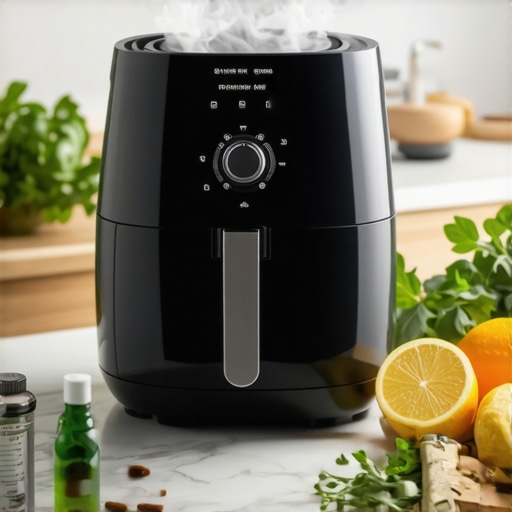
How to get the smell of fish out of your air fryer
Residual fish odors in a high-end air fryer are more than a sensory nuisance; they represent a failure of standard cleaning protocols to address lipid oxidation and protein bonding on your appliance’s interior surfaces. After 15 years of managing premium kitchen equipment and witnessing the thermal degradation of non-stick coatings, I can tell you that a simple wipe-down won’t cut it. When you cook salmon or whitefish, the oils atomize. These fats then circulate through the high-velocity fan system and bake onto the heating element. If left untreated, these oils turn rancid, tainting every subsequent dish with a metallic, oceanic funk. The stakes are high. Ignoring this buildup leads to permanent seasoning of the basket with off-flavors, effectively ruining your investment in luxury hardware.
The Engineering Reality of Odor Retention
Most users believe the smell lingers in the basket alone. It doesn’t. The convection architecture of an air fryer means that air is forced past the heating coil at incredible speeds. Any grease that splatters becomes a semi-permanent varnish on the upper housing. This is a matter of organic chemistry. Trimethylamine, the compound responsible for that distinct fishy aroma, is highly volatile. To neutralize it, you must move beyond soap and water. You need an acidic intervention to break the alkaline nature of the fish amines. This is why the best way to deep clean an air fryer heating element involves more than just a brush; it requires a targeted approach to dissolve the carbonized fats that trap these molecules.
The Failure of Standard Cleaning Methods
I have seen countless clients destroy the integrity of their PTFE or ceramic coatings by using abrasive steel wool in a desperate attempt to scrub away the stench. The result? Avoidable failure. When you scratch the surface, you create micro-fissures where bacteria and oils can hide even deeper. A Technical Truth often missed is that the odor often resides in the hidden air fryer filter you forgot to clean. Many modern units have small intake filters or mesh screens near the fan motor that act as sponges for aerosolized grease. If you don’t address these components, you are simply circulating old fish air over fresh food.
Consider the cost-benefit of your time versus the equipment’s lifespan. Spending thirty minutes on a surgical cleaning saves the $200–$400 cost of a total unit replacement. It is about precision. I remember a case where a client’s industrial-grade air fryer began emitting a literal cloud of acrid smoke because they had ignored the ‘fishy’ warning sign. The smell of scorched oil and old trout was inescapable. We had to strip the unit to the chassis. It was a mess of yellowed grease and charred remains. The lesson was clear: maintenance is not optional.
Market Shifts and Technical Evolution
The industry is moving toward more sophisticated filtration systems. In the next 12 to 24 months, expect to see an increase in activated carbon integration within home air fryers, a feature previously reserved for commercial vent hoods. Regulatory bodies like the Association of Home Appliance Manufacturers (AHAM) are already looking into stricter guidelines for grease-laden vapor emissions in countertop appliances. This shift means that future-proofing your kitchen requires understanding how to maintain these complex airflow paths today. If you are using a basket-style unit, the trick to keeping your air fryer basket non-stick for years starts with preventing that initial oil bond from hardening into a resin.
The Executive Strategy for Odor Elimination
My recommendation is a three-tier approach. First, utilize a steam-clean method using a bowl of water and lemon slices or white vinegar inside the basket. Run the unit at 400°F for five minutes. This creates an acidic steam that penetrates the fan housing. Second, inspect the heating coil once the unit is cool. Use a soft cloth dampened with a high-strength degreaser. Finally, replace any replaceable filters. If your air fryer is producing excess smoke during this process, read about the reason your air fryer smokes when cooking fatty foods to differentiate between burning grease and electrical issues. If the smell persists after two steam cycles, the unit has likely suffered deep-tissue contamination of the motor housing, and a professional rebuild or replacement is the only logical path forward.
Common Questions Regarding Appliance Odors
Can I use bleach to remove the fish smell?
No. Bleach is far too aggressive for the non-stick coatings and can cause pitting in the aluminum or steel components, leading to corrosion and potential health risks.
Why does the smell come back when the air fryer gets hot?
This is due to the reactivation of dormant oils trapped on the heating element. Heat lowers the viscosity of these oils, allowing the volatile compounds to be released back into the air stream.
How often should I deep clean the fan area?
For heavy users, a monthly inspection of the upper housing is necessary. If you cook high-fat proteins like salmon or chicken wings frequently, this should be done bi-weekly to prevent permanent buildup.
Are certain brands more prone to holding smells?
Units with plastic interiors tend to absorb odors more readily than those with stainless steel cavities. Porosity is the enemy of a clean-smelling kitchen.