
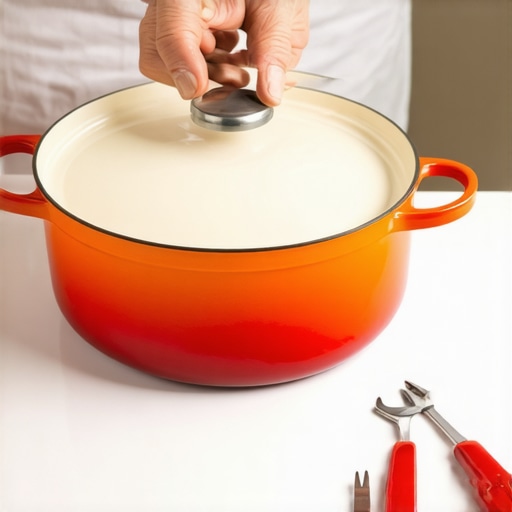
How to Fix a Wobbly Handle on Your Le Creuset Dutch Oven
A loose handle on a fifteen-pound cast iron vessel is not a minor inconvenience; it is a structural liability. In a luxury kitchen, where precision defines the experience, a wobbly knob represents a failure of basic mechanical integrity. After fifteen years of managing high-end culinary assets, I have seen heavy lids drop, shattering tile and causing avoidable injuries, all because a single fastener lost its grip. The stakes are high. Your Dutch oven is a pillar of the kitchen, much like your espresso machines or stand mixers. Maintaining this heirloom piece requires more than a casual turn of a screwdriver. It requires an understanding of the thermal expansion and the specific metallurgy involved. The physics of heat transfer mean that every time you roast, the metal expands and contracts. Over hundreds of cycles, even the best-engineered bonds can fail. Ignoring this lead to a total failure of the lid assembly.
The Mechanics of the Fastener Assembly
The standard Le Creuset lid utilizes a metric screw, typically an M5 or similar pitch, to secure the phenolic or stainless steel knob to the cast iron boss. The cast iron boss is the threaded protrusion on the lid. Because cast iron is relatively brittle compared to the 18/10 stainless steel used in the screw, cross-threading is a permanent mistake. If you strip the threads inside the lid, the repair becomes a machine-shop project rather than a home fix. When selecting replacement parts, the metal choice that prevents pitting is vital to ensure that the screw does not seize into the lid over time. You must use a manual, wide-head screwdriver. Power tools provide too much torque, which can easily crack the surrounding enamel. The goal is a snug fit, not an industrial-grade lock. The pressure must be distributed evenly across the base of the knob to avoid stress concentrations on the glass-like enamel coating.
The Stress Test and Enamel Vulnerability
Enamel is essentially glass bonded to metal. It does not flex. When you tighten a wobbly handle, you are applying compressive force to a brittle surface. I have stood in professional kitchens and heard the distinct ‘ping’ of enamel cracking under excessive torque—a sound that signifies the end of a pot’s pristine life. This is the same care one must take with the components of premium air fryers or the delicate parts of high-end coffee gear. If the knob has been wobbly for a long period, debris and grease may have built up under the base. This buildup creates an uneven surface. Tightening over this debris creates localized pressure points. Before tightening, remove the knob entirely and clean the surface. If you already see small cracks or wear, understand that the only way to fix a scratched enameled Dutch oven or one with compromised enamel near the handle is a careful, specialized approach. Never use thread-locking compounds like blue Loctite. These are not rated for the 500-degree Fahrenheit temperatures common in Dutch oven cooking and can out-gas toxic fumes into your food environment. Standards such as those from ASTM International regarding fastener safety highlight the importance of material compatibility in high-heat scenarios.
Strategic Foresight for the Luxury Kitchen
The next 24 months will see a significant shift toward the ‘right to repair’ within the luxury appliance segment. Consumers are moving away from the ‘buy-and-replace’ culture that plagued the early 2000s. Whether it is servicing your own stand mixers or performing home maintenance on premium cookware, the value of the heirloom is returning. We are seeing a market correction where durability is the primary metric of luxury. Expect more brands to offer modular components. This shift is driven by both environmental concerns and the high cost of replacement for top-tier items. If you maintain your hardware now, you are preserving the long-term ROI of your kitchen assets. This is not just about a pot; it is about a philosophy of ownership. Just as you would monitor the performance of your enameled cookware to prevent white spots, you must monitor the mechanical bonds of every tool in your arsenal. Organizations like the National Sanitation Foundation emphasize that equipment integrity is a prerequisite for food safety.
The Executive Verdict
If your handle moves even a millimeter, fix it today. A loose knob leads to uneven weight distribution when lifting, which can cause you to drop a heavy, hot lid. The strategy is simple: inspect, clean, and manually tighten. Do not wait for the screw to strip or the enamel to chip. If the screw feels ‘mushy’ or won’t catch, the threads are likely already damaged. In that case, seek a professional replacement knob kit rather than forcing a failing fastener. The long-term health of your premium cookware depends on these small, decisive maintenance acts. If you are in a high-volume cooking environment, check your handles every six months. If you are a home enthusiast, an annual inspection is sufficient. Proper torque is the difference between a lifetime tool and a piece of scrap metal.
Frequently Asked Questions
Can I use a washer to stop the wobble? Only use a stainless steel washer if the knob base is damaged. However, adding height to the stack can reduce the number of threads engaged, increasing the risk of stripping. Should I upgrade to a metal knob? Yes. Stainless steel knobs have higher heat resistance than phenolic ones, which are usually rated only up to 375 or 480 degrees depending on the generation. What if the screw is rusted? Replace it immediately with an 18/10 stainless steel screw. Rust can expand and crack the enamel boss on the lid. How tight is too tight? Tighten until the knob no longer moves when twisted with moderate hand force. If you feel a sudden ‘give’ while turning, stop immediately; you have likely stripped the threads or cracked the enamel.