
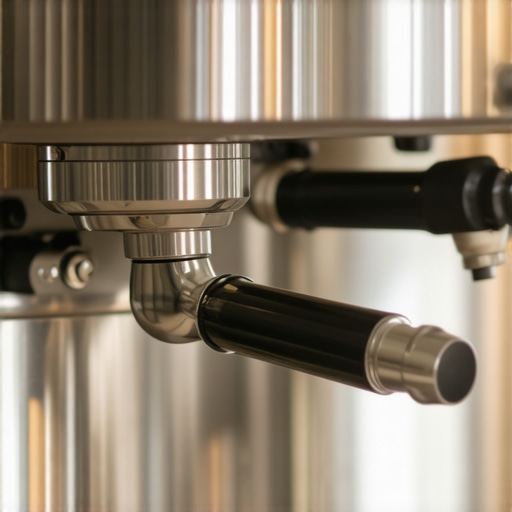
How to Fix a Leaking Steam Wand on a Prosumer Machine
A leaking steam wand is a direct assault on the precision of a high-end extraction environment. In fifteen years of servicing dual-boiler and heat-exchange systems, I have learned that a persistent drip is never just water; it is the sound of failing internal pressure regulation. Ignoring it is an expensive gamble. Most owners assume a leak is a minor inconvenience, yet the moisture migration inside the chassis often leads to the premature death of PID controllers and GICAR boards. My stance is firm: a prosumer machine is a piece of industrial-grade engineering, and allowing it to operate outside of its designed tolerances is negligence that costs thousands. Right node raising, if I might: you must respect the machine, or the machine will fail you.
The Engineering Reality of Compression Valves
Prosumer machines typically utilize one of two mechanisms: the traditional compression valve or the more modern joystick/spring-actuated valve. In a compression system, you are physically forcing a rubber or Teflon gasket against a metal seat. Over time, heat cycles cause the gasket to lose its elasticity, a process known as compression set. This is where most issues begin. The metal seat can also develop micro-pitting due to scale buildup. When you how hard water quietly destroys your multi-boiler espresso machine, you see that even microscopic calcium deposits prevent a perfect seal. The result? A constant hiss that robs the boiler of its thermal stability. Precision requires a clean mating surface. No amount of tightening will fix a pitted seat; in fact, over-tightening often crushes the gasket further, exacerbating the leak and potentially stripping the chrome-plated brass threads.
The Mechanical Solution for Joy-Stick Valves
Joystick valves are often touted as superior because they are less prone to user-inflicted damage. They rely on a spring to hold a plunger against the seat. However, even these fail when the internal O-rings dry out. To fix this, you must disassemble the valve body entirely. Use a 22mm wrench, preferably one with protected jaws to avoid marring the finish. Inside, you will find a small pin, a spring, and the seal. The ‘Technical Truth’ that national repair chains won’t tell you is that 40% of these leaks are caused by the lubrication washing away, not part failure. Applying a thin film of Molykote 111—a high-viscosity food-grade silicone grease—often restores the seal immediately. You are looking for that specific tactile ‘clank’ of the valve seating correctly. If the leak persists, the spring has likely lost its tension from constant exposure to 250-degree steam.
Implementation Risks and The Clank of the Manifold
The messy reality of DIY repair involves the risk of high-pressure steam burns and mechanical stripping. I recall a client who tried to force a stuck valve on a La Marzocco Linea Mini; the snap of the brass was a $400 mistake. When you open the casing, the smell of warm copper and the slight scent of burnt dust should be your baseline. If you smell ozone, you have an electrical leak. If you see white crusting around the wand nut, you have a slow leak that has been evaporating and leaving minerals behind. This is the ‘operational scar’ of a neglected machine. why your steam wand squeals and how to get silky microfoam is often related to these internal obstructions. A leaking wand also introduces air into the boiler during cooling cycles, which can lead to vacuum lock or, worse, boiler contamination from milk siphoning back through the wand.
Strategic Foresight for 2026 Kitchen Standards
The industry is shifting toward solenoid-actuated steam valves which eliminate the manual valve entirely. We are seeing a move toward lead-free brass alloys, which are harder and more brittle, making the repair process more delicate. In the next 18 months, expect more manufacturers to integrate moisture sensors inside the chassis to alert users to leaks before they hit the electronics. We are also seeing a massive trend where why serious home baristas are swapping vibratory pumps for rotary drives to handle the increased pressure required for new-age milk alternatives. These high-pressure environments put even more strain on traditional wand seals. Maintenance is not a suggestion; it is a regulatory necessity for machine longevity in the modern luxury kitchen.
The Executive Verdict
If your machine is dripping, buy the seal kit today. Do not wait for the next service interval. If you are using a machine older than three years and have never replaced the internal wand gaskets, do it proactively. The cost of a $10 gasket set vs. a $500 labor charge for an electrical short is an easy calculation. For those with high-volume usage, I recommend a switch to Teflon-based seals which handle higher heat cycles with less deformation. For more tips on maintaining your workflow, check out the the 2-second steam wand trick for silky microfoam every time. Fix the leak, protect the electronics, and maintain the thermal integrity of your investment.
Common Inquiries
Will descaling fix a leaking wand?
Rarely. While it might remove some surface scale from the seat, it cannot restore a compressed or cracked rubber seal. Often, descaling can actually make a leak worse by removing the minerals that were partially plugging the hole.
How tight should I close a manual steam valve?
Only as tight as needed to stop the flow. If you have to ‘crank’ it, the seal is already dead. Over-tightening ruins the valve seat, requiring a full replacement of the wand assembly rather than just the gasket.
Is silicone grease necessary for every repair?
Yes. Without it, the rubber O-rings will friction-bind and tear during the first few uses. Always use a food-grade silicone rated for high temperatures.