
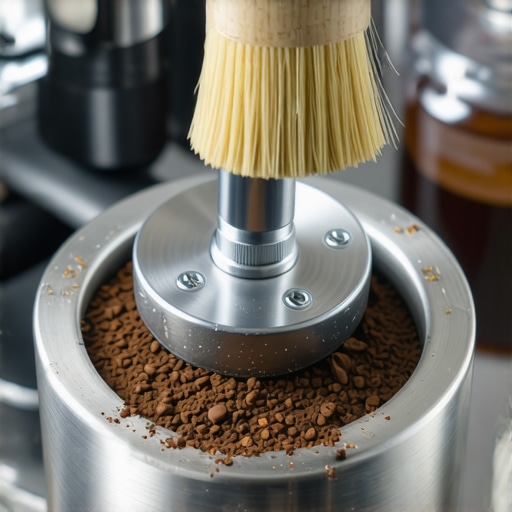
How to Clean Coffee Oil Buildup Inside Your Grinder Burrs
Neglecting your grinder burrs is a direct tax on your palate. Owners invest thousands in espresso machines only to ignore the mechanical heart of the extraction process. Coffee oil is not a benign byproduct. It is a chemically active lipid that undergoes oxidative rancidity the moment it meets oxygen and heat. After running this specialized maintenance firm for 15 years, I have seen six-figure luxury kitchens produce subpar results simply because a thin layer of polymerized oil turned a precision instrument into a flavor-muddling disaster. The stake here is simple: ignoring this buildup destroys the clarity of high-end beans and forces your grinder motor to work against increased friction, shortening the lifespan of your investment. This is the reality of the trade. If you want professional results, you must treat the hardware with industrial discipline.
The Physics of Burr Contamination
Burrs are engineered with razor-sharp teeth designed to shear coffee beans into specific particle sizes. As these beans pass through the grinding chamber, they release essential oils. In a high-speed environment, these oils coat the stainless steel or ceramic surfaces. Over time, this coating thickens. It becomes a sticky varnish. This isn’t just a cleaning issue; it is an engineering failure. The buildup fills the micro-grooves of the burr teeth, reducing their shearing efficiency. Instead of cutting, the burrs begin to crush. This creates excessive heat and fines—the dust-like particles that cause why your high-end coffee grinder is clumping every morning. The cost-benefit analysis of regular cleaning is heavily weighted toward performance longevity. A clean set of burrs maintains thermal stability, while an oily set acts as an insulator, cooking the coffee before it even hits the portafilter. According to standards set by the Specialty Coffee Association, consistency in particle size is the primary driver of extraction quality. Oil buildup is the primary enemy of that consistency.
The Engineering Reality
The mechanics of removal require more than a simple brush. You are dealing with polymerized organic compounds. Think of it like the seasoned surface of a cast-iron skillet, but on a component where you absolutely do not want seasoning. When the oils stay in the chamber, they trap old coffee dust. This creates a concrete-like sludge in the ‘dead space’ of the grinder. During my years in the field, I have opened professional-grade units that smelled like a deep fryer left in the sun. That is the scent of rancid lipids. The result? Avoidable failure. When you adjust your grind size and nothing happens, it is often because this sludge has seized the adjustment collar or the burr carrier. This creates a massive operational risk. If the burrs cannot move freely, the motor encounters torque resistance it wasn’t designed to handle. You aren’t just losing flavor; you are burning out a $500 motor because you wouldn’t spend ten minutes on maintenance. Most owners ignore the grinder maintenance routine most baristas ignore until the unit stops spinning entirely.
The Material Cost of Neglect
Consider the sensory anchors of a failing grinder. The clatter of the adjustment collar becomes stiff. The weight of the industrial-grade steel feels wrong when it’s bogged down by debris. The smell of burnt organics begins to waft from the discharge chute. I once handled a client’s machine where the oil had actually corroded the edge of the steel burrs—a rare but possible outcome with certain high-acid fermented beans. The implementation risk of a deep clean is real, however. If you misalign the burrs during reassembly, you will experience horrific the grinder static problem and the RDT water drop solution won’t even save you. Precision is mandatory. You need to understand the ‘chirp point’—the exact moment burrs touch—to recalibrate after a teardown. Failure to do this results in a machine that can only grind for French press, or worse, burrs that grind themselves into metal shavings. All food-contact surfaces must also meet National Sanitation Foundation guidelines, meaning you cannot use standard household degreasers that leave toxic residues.
The Strategy for Professional Maintenance
The industry is moving toward DLC (Diamond-Like Carbon) and Red Speed coatings to mitigate this oil adhesion. Over the next 12 to 24 months, we expect to see more consumer-facing grinders adopting these industrial standards. Until then, your strategy must be proactive. For those using light-roasted, dense beans, a monthly deep clean is sufficient. If you prefer the oily, dark roasts common in traditional espresso, you are looking at a bi-weekly requirement. My executive verdict is clear: Buy the dedicated cleaning tablets for weekly maintenance to absorb surface oils, but perform a manual teardown every quarter. If you are in a high-volume home environment, do it monthly. The Actionable Strategy: Disconnect power, remove the hopper, and use a vacuum to pull out loose debris before even touching the burrs. Use isopropyl alcohol (90% or higher) on a lint-free cloth for the steel surfaces only. Never soak the burrs in water. Reassemble with a focus on parallelism. Precision is the only path to the perfect shot.
Grinder Maintenance FAQs
Can I use rice to clean my burr grinder?
No. Rice is too hard for many consumer motors and contains starches that can gum up the internal components. Use dedicated, biodegradable cleaning tablets designed to expand and absorb oils without stressing the drivetrain.
How do I know if my oils have gone rancid?
The primary indicator is a fishy or ‘old crayon’ smell coming from the grind chamber. If your espresso tastes bitter and hollow regardless of your settings, oil polymerization is the likely culprit.
Will cleaning my burrs change my grind settings?
Usually, yes. Removing the buildup of oil and ‘fines’ increases the gap between the teeth slightly. You will likely need to adjust your grinder finer after a thorough cleaning to achieve the same extraction time.
Is it necessary to replace burrs because of oil?
Oil itself doesn’t require burr replacement, but if the oil has caused the burrs to overheat and lose their temper (hardness), or if you used abrasive tools to clean them, replacement is necessary. Most steel burrs are rated for 500-800kg of coffee.