
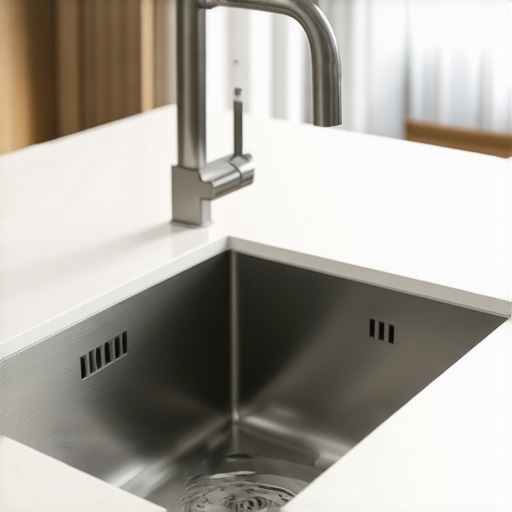
How to Choose a Kitchen Sink That Won’t Show Scratches and Water Spots
A kitchen sink is not a design element. It is an industrial basin that handles thermal shock, chemical abrasion, and mechanical impact. After twenty-five years in this industry, I have seen too many six-figure luxury kitchen projects ruined by a sink that looks like a scratched-up ice rink within months. Homeowners often prioritize the aesthetic curve over the material science. That is an expensive mistake. You need a surface that handles the grit of a heavy cast iron pan without surrendering its finish. The secret lies in the grain, the density, and the surface tension. Most people think they want stainless steel. They often regret it when the first fork drops. We are going to look at why certain materials fail and how to select the one that stays pristine under heavy operational use.
The Engineering Reality of Basin Materials
Stainless steel remains the default, but not all steel is created equal. Most big-box stores sell 18 or 20-gauge basins. These are garbage. They vibrate. They dent. In a durable kitchen workspace, you should accept nothing less than 16-gauge T-304 stainless steel with a high nickel content. However, even the best steel scratches. Physics demands it. To hide these marks, look for a ‘brushed’ or ‘satin’ finish rather than a mirror polish. Some modern manufacturers use Physical Vapor Deposition (PVD) to add a hardened color layer that is significantly more scratch-resistant than raw steel. This is not paint. It is a molecular bond. If you choose an under-mount sink for granite, ensure the flange is perfectly flat to prevent the silicone seal from failing under the weight of a full basin.
The Hidden Cost of Water Spots
Water spots are actually mineral deposits. When water evaporates, it leaves behind calcium and magnesium. These stand out like a sore thumb on dark, smooth surfaces. If you have hard water, a matte black finish is your enemy unless the material is non-porous. This is where granite composite shines. High-quality composites—those with an 80/20 quartz-to-resin ratio—are virtually impervious to these minerals. They are molded under extreme pressure, creating a surface that doesn’t just look like stone but behaves like armor. According to the National Kitchen & Bath Association, durability is the primary concern for 70% of luxury homeowners today. If you are noticing white cloudy spots on your cookware, your sink will suffer the same fate. Granite composite hides these deposits within its textured matrix. The result? A sink that looks clean even when it isn’t.
The ROI of Quality
Think about the replacement cost. An under-mount sink is trapped beneath your countertop. If it cracks or stains permanently, you are looking at thousands of dollars in labor to drop the sink and potentially recut the stone. The most durable countertop material won’t save you if the basin fails. Fireclay is an excellent alternative for those seeking a white finish. It is fired at temperatures exceeding 2,000 degrees Fahrenheit. This fuses the clay and glaze into a single, incredibly hard unit. Unlike enameled cast iron, fireclay does not chip or rust. It is dense. It is heavy. It feels substantial. But be warned: fireclay can craze if you dump boiling water into it while it is ice cold. The thermal shock is real. Always look for certifications from the American Society of Mechanical Engineers regarding load and impact testing.
Market Corrections Ahead
The next 24 months will see a shift toward ‘functional textures.’ We are moving away from the ‘hospital-clean’ mirror finishes. Buyers are realizing that maintenance is the ultimate luxury. A sink that requires a microfiber buffing after every rinse is a liability, not a feature. Expect to see more copper with living patinas and micro-textured stainless steel that mimics the look of linen. These surfaces are designed to age. They don’t hide the scratches; they integrate them. It is a fundamental shift in how we perceive wear and tear in the high-end market. Smart money is moving toward materials that require zero specialized chemicals for cleaning.
The Executive Verdict
If you want the absolute best resistance to both scratches and water spots, buy a high-end granite composite sink in a mid-tone grey or ‘salt and pepper’ finish. Avoid pure black or pure white if you have hard water. If you must have the professional look of stainless steel, only buy 16-gauge with a PVD finish or a pre-distressed texture. The investment upfront saves you from the visual decay that defines cheap installations. Stop looking at the shine. Start looking at the hardness rating. That is how you win the long game in kitchen design.
Common Questions About Durable Sinks
Can I remove scratches from a granite composite sink? No. You cannot buff them out like you can with solid surface materials. However, because the color is consistent throughout the material, micro-scratches are almost invisible to the naked eye. Prevention is the only cure.
Why does my stainless sink have rust spots? It is likely not the sink itself rusting. It is usually ‘ferrous contamination’ from steel wool pads or cast iron pans left in the basin. The iron particles bond to the surface and oxidize. A mild acidic cleaner usually fixes this.
Is a protective grid necessary? Yes. If you have a stainless sink, a bottom grid is mandatory. It prevents the ‘skating rink’ effect by keeping heavy pots from making direct contact with the basin floor.