
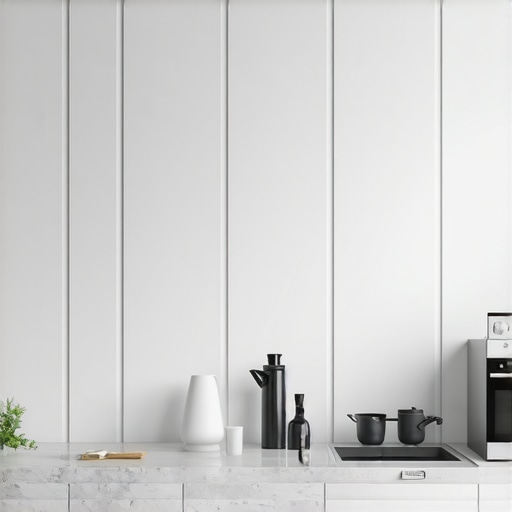
Subway tile is a design trap. I have spent 20 years in the high-end renovation market, and I have seen the same cycle repeated hundreds of times. A homeowner chooses that classic 3×6 ceramic block because it feels safe. Then, six months later, they are on their knees with a toothbrush, scrubbing yellowed grease out of the grout lines. The truth is simple: grout is a porous liability. Every joint is an opportunity for moisture, bacteria, and aerosolized cooking fats to take up permanent residence. If you actually cook in your kitchen—if you use a high-heat induction hob or deal with the inevitable splatter from a basket air fryer—you need a surface that rejects grime rather than inviting it. The financial cost of maintaining a high-maintenance backsplash often outweighs the initial savings of cheap tile within three years.
The Engineering Reality of Surface Porosity
Most homeowners confuse ‘cleanable’ with ‘waterproof.’ A glazed ceramic tile is waterproof, but the system it belongs to is not. Grout is essentially a sand-based sponge. Even when sealed, it remains the weakest point in your kitchen’s hygiene defense. When you realize how to stop your air fryer from smearing the kitchen with grease, you start to see that the backsplash is the primary impact zone. We are seeing a massive shift toward non-porous, continuous materials that eliminate these failure points. The goal is to reduce the surface tension that allows oils to bond. This is not just about aesthetics; it is about the chemistry of a clean workspace.
The Slab Quartz Advantage
Running your countertop material up the wall is the single most effective way to eliminate cleaning friction. Engineered quartz is nearly non-porous. It lacks the natural fissures found in granite or marble, meaning there is nowhere for a stray splash of red wine or hot oil to hide. The result? A single wipe clears the surface. However, you must be careful with the lighting. We often see the lighting error that makes your quartz countertops look cheap and yellow when a slab is vertical. Directing light across the face of a slab reveals every smudge, so the installation must be precise. According to the National Kitchen & Bath Association (NKBA), slab backsplashes are now the top-tier recommendation for longevity in professional-grade home kitchens.
Tempered Back-Painted Glass
Glass is the ultimate victor in the war against kitchen grime. Because it is a single, uninterrupted sheet of non-absorbent material, it has zero joints. You can spray it with a standard glass cleaner and be done in ten seconds. It is a favorite for the Modern Disruptor archetype because it allows for custom colors that won’t fade over time. The technical challenge here is the measurement. You cannot trim tempered glass on-site. If your outlet cutouts are off by even a fraction of an inch, the entire sheet is scrap. It requires a contractor with high-end digital templating tools.
Stainless Steel Industrial Sheets
There is a reason every commercial kitchen on the planet uses stainless steel. It is heat resistant, non-reactive, and can handle the most aggressive degreasers. For a residential setting, we often use a brushed finish to hide fingerprints. This material is particularly effective behind high-BTU gas ranges where heat would crack a standard ceramic tile. It pairs perfectly with under-cabinet setups; why your cabinet lighting should always be warm white is a critical consideration here, as cool LEDs on steel can make a kitchen feel like a surgical suite.
Large Format Porcelain Slabs
Porcelain has evolved. We can now source sheets as large as 5×10 feet that are only 6mm thick. This is not the porcelain tile of the 1990s. These slabs mimic the look of Calacatta marble but with a hardness that resists scratching and chemical damage. The Natural Stone Institute confirms that high-density porcelain offers superior stain resistance compared to almost any natural quarried product. The weight is the risk. These sheets are fragile until they are fully bonded to the substrate. If the wall isn’t perfectly flat, the porcelain will crack under the pressure of the adhesive curing.
High Performance Solid Surface
Materials like Corian allow for an ‘integrated cove’ backsplash. This means the transition from the horizontal counter to the vertical wall is a curved, seamless piece. No 90-degree corner for crumbs to get stuck in. While it is less heat-resistant than stone, for a beverage station or a prep area, it is unmatched for pure hygiene. It is one of the best ways how to choose a backsplash that won’t look dated in three years because it feels like a part of the architecture rather than an applied decoration.
The Structural Failure of Standard Methods
I have seen luxury renovations fail because the designer prioritized the ‘vibe’ over the mechanical reality of the home. When you install heavy slab materials, you must verify the load-bearing capacity of the wall studs and the flatness of the drywall. A common operational risk involves ‘lippage’—where one edge of a material sits higher than its neighbor. In a backsplash, this creates a shadow line that collects dust. Proper illumination is the only way to audit this; why under-cabinet lighting makes or breaks your backsplash is something we discuss with every client before the first sheet of material is ordered. The smell of fresh adhesive is great, but the sight of an uneven seam is a permanent scar on a project.
Market Corrections and Design Longevity
The industry is moving away from ‘busy’ patterns. In the next 24 months, expect to see the complete decline of the mosaic tile. Buyers are looking for surfaces that suggest a ‘clean room’ environment. This is a second-order effect of the global shift toward health-conscious home design. If you are planning to sell your property, a slab backsplash is a high-ROI upgrade that signals quality to sophisticated buyers. It says you didn’t just build a kitchen; you engineered a workspace.
The Executive Verdict
Stop buying tile. If your budget allows, install a full-height quartz or porcelain slab. If you are looking for a more cost-effective but equally functional alternative, go with back-painted tempered glass. The reduction in weekly labor and the elimination of chemical grout cleaners make these the only logical choices for a high-performance kitchen. If you currently have subway tile and hate the maintenance, your immediate strategy should be a deep steam clean followed by a high-grade epoxy grout colorant, but prepare for a full surface replacement within the next five years.
Does a slab backsplash cost more than tile?
Yes, typically 2-3 times more for materials and specialized labor, but it pays for itself in reduced maintenance and higher resale value.
Can I install a glass backsplash myself?
No. Tempered glass requires professional templating and specialized safety handling. One wrong move and the entire sheet shatters into thousands of pieces.
Will quartz melt behind my stove?
Quartz is heat-resistant but not heat-proof. For high-output professional ranges, we recommend a stainless steel heat shield or a porcelain slab, which has a higher thermal threshold.
How do I hide outlets in a slab backsplash?
We recommend ‘plug strips’ tucked under the upper cabinets. This keeps the face of the slab clean and avoids the need for ugly cutouts in your expensive stone.