
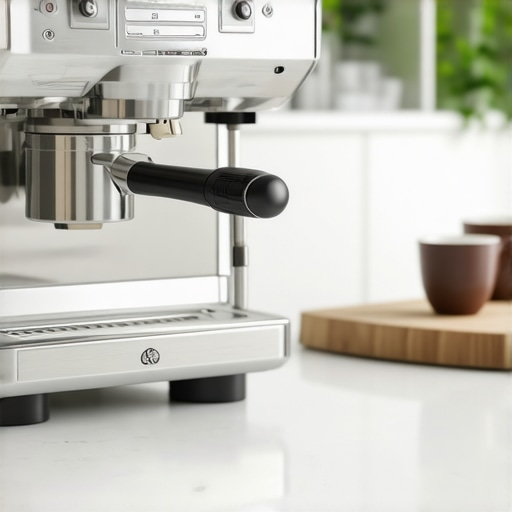
The Simple Trick to Stopping Espresso Machine Vibrations
Resonance is the silent killer of extraction quality. When a high-end Italian machine rattles like a cheap lawnmower, the problem isn’t just an annoying noise. It is a symptom of mechanical disharmony that disrupts the puck’s integrity. After fifteen years of tearing down E61 group heads and diagnosing hydraulic failures, I have seen vibration destroy more than just a morning mood. It destroys internal copper leads and loosens compression fittings. The fix? It isn’t a complex rebuild. It is a targeted application of industrial-grade isolation. Most enthusiasts ignore the surface interface. They think a heavy machine stays put. Wrong. The high-frequency hum of a vibratory pump creates micro-movements that can lead to channeling. I recommend a 70-durometer Sorbothane sheet cut into precision pucks for the machine feet. This visco-elastic polymer converts kinetic energy into negligible heat. The result? Total silence and a stable platform for your scale.
The Mechanical Reality of Pump Resonance
Vibratory pumps, the standard in many prosumer units, operate on a reciprocating piston. It is violent. If the internal mounts—those rubber ‘elbows’ holding the pump—have hardened or shifted, the vibration transfers directly to the chassis. I have opened machines where the pump was touching the reservoir wall. A recipe for disaster. You can feel the heat and hear the frantic metallic clatter. If your machine sounds like a jackhammer, you likely have a mounting failure. Check the internal clearances. Often, why serious home baristas are swapping vibratory pumps for rotary drives becomes clear once you see the engineering stability of a balanced motor. It is about mass and displacement. A rotary pump uses centrifugal force; it is smooth. A vibe pump is a blunt instrument. Ensuring that no internal copper tubing is touching the outer casing is a basic but overlooked maintenance step. Use high-temp silicone tubing as a buffer. It works. The American National Standards Institute (ANSI) provides guidelines on mechanical vibration that many home setups ignore to their own detriment.
The Pressure Gauge Fallacy
Watching a needle bounce is a red flag. If your brew pressure gauge is fluttering, the vibration is likely causing cavitation or air ingress. This isn’t just a visual quirk. It affects the solenoid valve’s lifespan. We see it in the shop constantly. A client complains about a leak, and we find a cracked flare nut caused by years of unmitigated shaking. It is mechanical fatigue. This is why why your espresso machine needs a dedicated water softener is only half the battle; the other half is physical stability. Scale makes components brittle, and vibration snaps them. Think about the friction on the internal wiring. I’ve seen insulation rubbed raw by a vibrating boiler. One spark and your luxury kitchen becomes a fire hazard. The industry standard, according to the Specialty Coffee Association, emphasizes temperature and pressure stability, but mechanical stillness is the foundation they assume you already have.
Strategic Equipment Lifecycle Management
The market is shifting toward solid-state components. In the next 24 months, we will see more dampened pump housings and brushless DC motors in the prosumer space. These innovations aim to eliminate the very issues we are discussing. For now, you must be the engineer. Listen to the pitch of the machine. A healthy machine has a consistent, low-frequency thrum. A dying or poorly seated machine has a high-pitched, metallic ‘zizzing’ sound. That sound is money leaving your pocket. If you are investing in 3 multi-boiler machines that guarantee stable 2026 extraction, don’t ruin the experience by placing them on a resonant granite countertop without a dampening mat. The second-order effect of vibration is the loosening of the group head bolts. This leads to subtle pressure leaks that you won’t notice until your espresso starts tasting like vinegar due to bypass.
The Executive Verdict
If your machine is shaking, stop the cycle. Inspect the feet first. If they are hard plastic, replace them with rubber. Check the drip tray; a loose tray is a common culprit of ‘fake’ vibration noise. Apply a thin strip of adhesive felt where the tray meets the body. Silence. If the noise is internal, it is time for a pump mount inspection. Do not wait for a lead to snap. Buy the isolation pads today. It is a $20 fix for a $2,000 problem.
Frequently Asked Questions
Can vibration affect the taste of my espresso? Yes. High-frequency vibration can cause ‘puck migration,’ where the coffee grounds shift slightly during the pre-infusion phase, leading to uneven extraction and channeling. Is a noisy pump always a sign of failure? Not necessarily. Some vibratory pumps are naturally louder, but a sudden change in pitch or volume usually indicates a blockage or a failing capacitor. Should I put a mat under my machine? Absolutely. A thick, high-density rubber or silicone mat decouples the machine from the counter, preventing the ‘drum effect’ where your cabinetry amplifies the pump noise. Does vibration affect my digital scales? Significantly. Most high-end scales use load cells that are sensitive to vibration. If your machine is shaking the counter, your weight readings will fluctuate, ruining your brew ratio.