
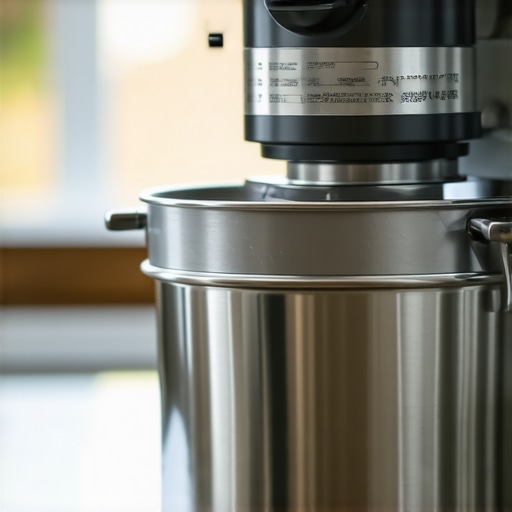
Why Your Stand Mixer Smells Like Burning Plastic During Heavy Kneading
That acrid, chemical scent rising from your mixer bowl during a sourdough session is rarely a ‘break-in’ period. It is the smell of a motor being pushed beyond its thermal threshold. After fifteen years of diagnosing mechanical failures in luxury kitchens, I can tell you that ignoring this scent is an expensive gamble. Most consumer-grade mixers rely on universal AC motors and sacrificial nylon gears. When you introduce a high-hydration dough or a dense triple batch, the friction between those components spikes. The plastic smell? That is the literal melting of internal housing or gear lubricants under high-torque stress. The result? Avoidable failure.
Understanding the physics of your counter-top appliance is the only way to protect your investment. Most standard stand mixers use a ‘worm gear’ system. In many models, this gear is made of a reinforced plastic or nylon. Manufacturers design it this way on purpose. It acts as a mechanical fuse. If the resistance of the dough is too high, the plastic gear strips so the expensive motor doesn’t burn out. However, before it strips, it heats up. This friction generates a smell that mimics burning electrical insulation. If you are regularly smelling this, your machine is not equipped for your baking volume. You are likely better served by 7 metal gear stand mixers that won’t overheat under heavy dough to ensure mechanical longevity.
The Engineering Reality
The core issue lies in torque vs. speed. Universal motors, found in most residential units, are high-speed, low-torque machines. They use gearing to slow the rotation down to a kneading speed. This conversion is inefficient and produces significant heat. When you knead a stiff bagel dough, the motor draws more current to maintain its RPM. This excess current flows through the carbon brushes and copper windings. If the air cooling is insufficient—often due to flour dust clogging the intake—the internal temperature can exceed 200 degrees Fahrenheit. According to standards set by the Association of Home Appliance Manufacturers (AHAM), continuous operation under these conditions will lead to winding insulation failure. For those doing high-volume work, switching to 3 heavy duty stand mixers that handle triple batches without stalling is a strategic move for your kitchen workflow.
The Operational Risk of Thermal Runaway
I’ve stood in high-end kitchens where the client thought the smell was ‘normal’ until the machine seized mid-loaf. One specific case involved a professional-grade mixer that had its ventilation ports blocked by a decorative backsplash. The motor housing was so hot it scorched the artisan wooden island. This isn’t just about the machine. It is about safety. The smell of burning plastic is often the smell of the wire coatings melting. Once those wires touch, you have a short circuit. The risk of a grease fire inside the head of the mixer is real. You should monitor the ‘feel’ of the mixer head. If the top of the machine is too hot to touch comfortably for five seconds, the internal grease is likely liquefying and losing its lubricity. This creates a feedback loop of more friction and more heat.
Market Corrections and Future Tech
The industry is moving away from these outdated AC motors. The next 12 to 24 months will see a surge in Brushless DC (BLDC) technology in the luxury kitchen space. BLDC motors don’t have carbon brushes, which means less friction and no ‘sparking’ smell. They provide constant torque even at the lowest speeds. This is how industrial mixers have functioned for years, and it is finally trickling down to the home chef. If you are planning a renovation or an upgrade, looking for 4 solid state stand mixers that won’t overheat in 2026 will put you ahead of the curve. These machines are quieter and significantly more durable under the strain of heavy kneading. We are also seeing the integration of thermal sensors that automatically shut the machine down before the plastic smell even begins, a standard I expect to see enforced by NSF International for any machine claiming ‘professional’ status.
The Executive Verdict
If your mixer smells like a tire fire every time you make bread, stop. Your equipment is mismatched for your output. For occasional soft doughs, a standard mixer is fine. For sourdough, bagels, or high-volume holiday baking, you need a machine with a DC motor and all-metal transmission. My recommendation: Sell the current unit while it still works and invest in a high-torque alternative. The cost of one failed holiday bake and a broken $500 mixer far exceeds the premium for a professional-grade tool. Ensure your mixer has at least 2 inches of clearance on all sides for airflow. Never run a mixer on its highest speed with dough hooks; this is the fastest way to kill the planetary assembly.
FAQ
Is the burning plastic smell normal for a brand new mixer?
A very faint smell for the first 5 minutes of its first use can be factory lubricants heating up. Anything beyond that, or a smell that persists during the third or fourth use, indicates a mechanical strain issue.
Can I fix a mixer that has already started smelling?
Usually, the smell means the grease is burnt or a gear is partially melted. You can have a technician repack the gearbox with high-temp food-grade grease and replace the sacrificial gear, but this is a temporary fix if you continue to overwork it.
How long should I knead dough to avoid overheating?
Most residential mixers should not knead heavy dough for more than 6-8 minutes at a time. If the recipe requires more, give the machine a 10-minute rest period between sessions.
Does wattage matter for the burning smell?
Wattage is often a marketing gimmick. A high-wattage AC motor can still overheat faster than a low-wattage DC motor. Look for ‘torque’ and ‘motor type’ (DC is better) rather than just the number of watts.