
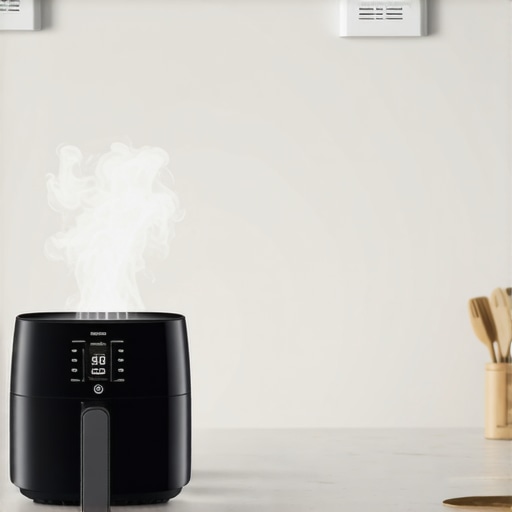
How to Stop Your Air Fryer From Setting Off the Smoke Alarm
The persistent scream of a smoke detector is not a cooking timer. It is a loud signal of mechanical and chemical failure within your kitchen. After fifteen years of diagnosing why high-end appliances fail in the field, I can tell you that a smoking air fryer is rarely a defective unit. Instead, it is usually a conflict between fluid dynamics and the flash point of your ingredients. When you force 400-degree air at high velocity around high-fat proteins, you create a particulate storm. If those particles hit the heating element, the chemical breakdown of the oil produces acrid blue smoke. The stakes are more than just a ruined dinner; sustained smoke exposure damages the delicate sensors in your luxury kitchen and poses a genuine fire risk.
The Thermodynamic Reality of Aerosolized Grease
Air fryers function as miniature convection ovens, but their compact footprint creates a volatility that larger ovens avoid. The fan doesn’t just move air. It creates a vortex. When you cook fatty items like bacon or un-trimmed chicken thighs, the grease doesn’t just sit in the drip tray. The high-speed airflow picks up micro-droplets of oil, turning them into an aerosol. This oil mist is then pulled directly into the heating coil. According to the Association of Home Appliance Manufacturers, maintaining clear airflow is the primary factor in appliance longevity. If the oil reaches its smoke point before it settles, you get a kitchen full of haze. For those looking for a long-term fix, transitioning to ceramic air fryers that stop kitchen smoke can mitigate the surface-level carbonization that occurs on cheaper, non-stick coatings.
Thermal Failure in High Fat Environments
The physics of the ‘drip’ is often misunderstood. In a standard luxury oven, drippings fall into a large, relatively cool pan. In an air fryer, the proximity of the basket to the floor of the unit means the grease is constantly being hit with radiant heat. If the grease in the tray reaches 400 degrees, it begins to smoke. The solution? Thermal mass. Adding a tablespoon of water or a slice of bread to the bottom of the drawer acts as a heat sink. It absorbs the energy that would otherwise cause the oil to reach its flash point. This isn’t a hack. It is basic thermal management. If you are experiencing persistent issues with chemical odors alongside the smoke, you might be dealing with polymer degradation. In that case, you should consider PFOA-free air fryers for 2026 that use stable linings instead of cheap plastics.
The Scent of Burnt Residue and Engineering Flaws
I remember a service call last November. A client with a $50,000 kitchen renovation was furious because her air fryer was ‘broken.’ I walked in and immediately smelled it. Not fresh smoke, but the stale, heavy scent of old carbon. It was the smell of carbonized breadcrumbs from three weeks prior. These particles hide behind the fan shroud. When the unit heats up, they incinerate. It is a mechanical reality: if you cannot see the heating element, you cannot clean it properly. This is why many chefs are moving toward stainless steel air fryers which allow for more aggressive cleaning without the risk of peeling toxic flakes into the food. The National Fire Protection Association notes that the buildup of grease is a leading cause of small appliance fires. Neglect is not just a cleanliness issue; it is a structural hazard.
Market Corrections and the 2026 Filtration Standard
The industry is shifting. We are seeing a move away from simple ‘buckets with fans’ toward sophisticated air-scrubbing systems. Within the next 12 to 24 months, we expect high-end models to incorporate integrated HEPA or carbon filtration systems directly into the exhaust port. This will neutralize particulates before they exit the machine. This regulatory and design shift is a response to the increasing density of modern urban living where ventilation is often subpar. If you are currently shopping, focus on units that offer a higher vertical clearance between the food and the element. This reduces the ‘splash-up’ effect. Durability is also a factor; I suggest looking for ceramic coated air fryers that never peel, as a smooth surface prevents the micro-pits where oil hides and eventually smokes.
The Executive Strategy for Smoke Free Operation
If your alarm is going off, your current process is failing. The fix is three-fold. First, oil management. Use oils with a smoke point above 400 degrees, like avocado oil. Avoid aerosol sprays; the lecithin in them gums up the works. Second, heat sinks. Use the water method for fatty meats. Third, airflow. Ensure there is at least six inches of clearance from your backsplash. My final verdict? If your current unit is a plastic-heavy model older than three years, replace it. The internal components are likely saturated with grease that you cannot reach. Invest in a model with a visible, accessible heating element and a stainless or ceramic interior. It is the only way to guarantee a clear kitchen.
Frequently Asked Questions
Why does my air fryer smoke when I cook bacon?
Bacon releases high amounts of liquid fat that the high-speed fan aerosolizes. When these droplets hit the hot heating element, they vaporize instantly into smoke. Use a lower temperature or add water to the drip tray.
Can I use parchment paper to stop the smoke?
Only if weighted down. If the paper lifts and touches the heating element, it will catch fire. It does not stop grease smoke, but it can prevent food particles from burning on the basket floor.
Is the smoke from my air fryer toxic?
If you are using a non-stick basket and the coating is peeling, the smoke could contain PFAS or PFOA byproducts. If it is just grease smoke, it is a respiratory irritant but not inherently toxic in small amounts.
How often should I deep clean the heating element?
Every five to ten uses. Unplug the unit, let it cool, and use a damp cloth with a degreaser to wipe the coil. This prevents the ‘old smoke’ smell during preheating.