Precision in a luxury kitchen isn’t about vanity. It is about the physics of extraction. For fifteen years, I have watched homeowners spend five figures on italian-made hardware only to produce shots that taste like battery acid because they skipped the most vital step: the dose. Relying on an external scale is a workflow killer. It’s clunky. It’s slow. The 2026 market has finally solved this through integrated gravimetric and volumetric sensors that render the handheld jewelry scale obsolete. We are moving past the era of ‘eyeballing’ the grind.
The Volumetric Reality
Most machines rely on a simple flow meter. It counts the pulses of water passing through the pump. This is fine, until it isn’t. When the resistance in the puck changes—due to a slightly finer grind or an aging bean—the volume of water doesn’t equate to the weight in the cup. This is where high-end thermal stable espresso machines come into play. They use sophisticated algorithms to adjust for brew-head pressure. If you are building a bar today, ignoring integrated dosing is a strategic error. You are essentially buying a Ferrari with a manual choke. It’s nostalgic, but it’s objectively worse for daily performance.
Why Gravimetric Sensors Win
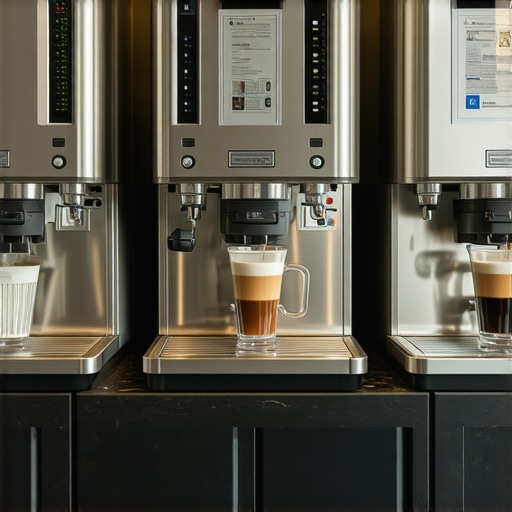
True auto-dosing happens in the drip tray. A load cell under the grate communicates with the CPU to kill the pump at exactly 36.0 grams. No lag. No overrun. The result? Repeatable excellence. I recently oversaw an installation where the client insisted on a manual lever machine. Three weeks later, they traded it for a machine with auto-tamping and dosing capabilities. Why? Because the friction of manual prep ruins the morning ritual. The weight of the industrial grade steel in these new units provides more than just durability; it provides the vibration dampening necessary for these sensitive scales to function without interference from the rotary pump’s hum.
The Engineering Behind Consistent Yields
Let’s talk about the ‘operational scars’ of the trade. I’ve seen cheap solenoids crack under the stress of 9-bar pressure because they couldn’t handle the rapid-fire shutoffs required for precise dosing. The high-performance machines for 2026 utilize DC-driven pumps that ramp down RPMs as the target weight approaches. It’s the difference between a car slamming on the brakes and a smooth stop at a red light. This prevents the ‘water hammer’ effect that destroys internal plumbing. When you hear that sharp clank of the manifold, that’s the sound of a machine struggling. A quality auto-dose system is silent. It is deliberate.
Thermal Drift Risks
Even the best dosing fails if the water temperature fluctuates. If your group head loses 2 degrees during a 30-second pull, the viscosity of the espresso changes. It flows differently. It tastes different. This is why precise heat control is the silent partner of the auto-dose system. According to the Specialty Coffee Association (SCA) standards, temperature stability is the foundation of any gold-cup extraction. Without it, your ‘auto-dose’ is just a sophisticated way to make consistently mediocre coffee.
The 2026 Market Correction
We are seeing a shift toward ‘Smart Extraction.’ In the next 18 months, expect to see machines that adjust dose weight based on the humidity in your kitchen. It sounds like overkill. It isn’t. Flour and coffee are hygroscopic; they absorb moisture from the air. A humid Tuesday requires a different grind and dose than a dry Friday. The modern disruptors in this space are already testing sensors that measure bean density in the hopper. If you are investing now, you want a machine that can receive firmware updates. Don’t buy a static piece of hardware. Buy a platform.
Final Procurement Logic
If you are designing an open-plan kitchen, sound is your enemy. You need silent rotary pump machines. The vibration of a cheap vibratory pump will throw off the integrated scales and wake up the entire house. It is a rookie mistake I see every year. You spend $200k on a renovation and then put a noisy, vibrating box on the counter. It’s an aesthetic and functional mismatch. The executive verdict is simple: Buy for the pump, stay for the sensors. If it doesn’t have a rotary pump and a PID-controlled boiler, it doesn’t belong in a 2026 luxury build.
Frequently Asked Questions
Does auto-dosing work with any coffee? No. Very oily, dark roasts can occasionally clog the internal grinders associated with super-automatic dosing systems. Stick to medium or light-medium roasts for peak performance.
Are integrated scales fragile? The sensors used by companies like La Marzocco and Victoria Arduino are rated for industrial use. They handle heat and moisture, though you should avoid dumping a gallon of water directly into the drip tray.
How often should I calibrate the sensors? In a home environment, once every six months is plenty. It’s usually a thirty-second process involving a standard weight.