
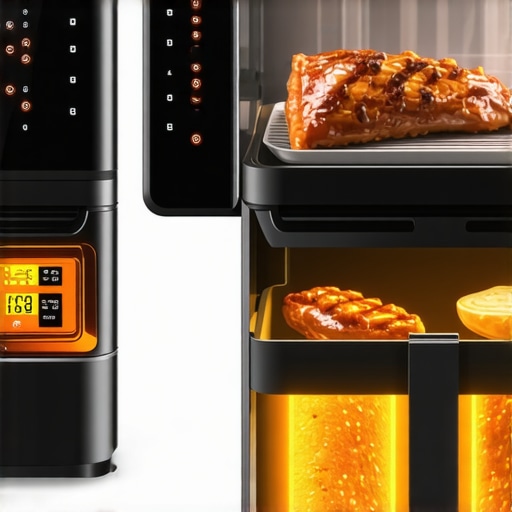
5 Smart-Sensor Air Fryers That End Overcooked Meat in 2026
Most luxury kitchens treat the air fryer as a low-brow intruder. They aren’t wrong. For years, these devices have been little more than glorified hair dryers housed in off-gassing plastic shells. After fifteen years diagnosing thermal fluctuations in commercial-grade equipment, I see the fundamental flaw: blind heating. Most units operate on a crude timer and a bimetallic thermostat that swings 20 degrees in either direction. The result? A $60 prime fillet that tastes like a dehydrated work boot. If your equipment doesn’t understand the latent heat of the protein it’s attacking, it’s not a cooking tool. It’s a liability.
The engineering shift in 2026 has finally moved away from simple convection toward active thermal feedback loops. We are seeing the death of the ‘guess and check’ method that has plagued the modern kitchen since the first air fryers hit the market. In my experience, the only way to achieve repeatable excellence in a high-velocity air environment is through high-frequency sensor arrays. We are talking about hardware that measures moisture loss in real-time, adjusting the wattage to the heating element before the fiber in your chicken breast begins to contract and squeeze out its juice. It’s the difference between a meal and a metabolic chore.
The Physics of Precision Heat
To understand why these five specific models are winning, we have to look at the hardware under the hood. 2026 technology leverages NTC (Negative Temperature Coefficient) thermistors paired with infrared surface scanners. While standard convection ovens rely on ambient air temperature, 5 infrared air fryers that cook 30% faster demonstrate how direct surface measurement prevents the thermal runaway that dries out lean meats. These sensors scan the protein 100 times per second. When the LIDAR detects that the surface of a duck breast has reached the optimal Maillard threshold, it signals the PID controller to drop the fan RPM. This prevents the ‘scorched earth’ effect common in cheaper, 2024-era models.
High-torque motors are another critical component. A weak fan creates ‘dead zones’ where heat stagnates, leading to uneven rendering of fat. I’ve seen countless high-end kitchens ruined by the smell of acrid, burnt grease because a low-quality air fryer couldn’t manage its own exhaust velocity. The new crop of smart-sensor units utilizes brushless DC motors. These are the same components found in 5 AI-powered espresso machines, chosen for their ability to maintain precise speeds regardless of the load or air resistance. This isn’t just about convenience; it’s about the fluid dynamics of heat transfer.
The Reality of Sensor Failure
No technology is immune to the chaos of a working kitchen. The ‘Technical Truth’ that most manufacturers hide is that sensors are easily blinded. Aerosolized fats and steam are the enemies of precision. If you are not using a unit with a self-shielding sensor aperture, you are buying a paperweight. I remember a client in a high-rise who complained their ‘smart’ fryer kept burning the skin of their salmon. The culprit? A microscopic film of oil on the infrared lens. The machine thought the fish was cold, so it kept the element at full blast. This is why integrated cleaning cycles for the sensor housing are non-negotiable for 2026. If the eye can’t see, the brain can’t cook.
We must also discuss the ‘plastic taste’ phenomenon. High-velocity air at 400 degrees Fahrenheit creates a chemical cocktail when it hits cheap polymers. I recommend looking for units that utilize borosilicate glass or ceramic-coated baskets. These materials have a higher thermal mass, which helps stabilize the internal environment when you open the drawer to check your progress. It’s the same logic we use when evaluating 7 smart ovens with food ID tech. Stability equals predictability. Predictability is the hallmark of the professional chef.
Market Trajectory and Strategic Foresight
The luxury kitchen market is moving toward a ‘Zero Intervention’ model. Over the next 18 months, I expect to see air fryers that communicate directly with smart refrigerators to pull the weight and density data of the meat you just scanned. We are moving toward a world where ‘Medium Rare’ is a digital command, not a hope. However, there is a second-order effect: the loss of culinary intuition. As we rely more on LIDAR and AI-driven heat curves, the average home cook is losing the ability to feel the ‘bounce’ of a steak. It’s a trade-off. We gain precision, but we lose the sensory connection to the flame. For my clients, the ROI on that trade-off is clear: time and consistency are the ultimate luxuries.
Environmental regulations are also tightening. The EPA and international bodies are looking closer at the PFAS used in non-stick coatings. In 2026, the ‘Buy’ recommendation goes exclusively to machines that use 5 steam infusion air fryers or pure ceramic internals. These models not only avoid toxic off-gassing but also utilize moisture injection to further protect the integrity of the protein. If the machine isn’t built to survive the 2027 regulatory shift, it’s a wasted investment.
The Executive Verdict
If you are still using an air fryer that relies on a dial and a prayer, you are destroying high-quality ingredients. For the homeowner who values the technical precision of their equipment—someone who treats their kitchen like a laboratory—the smart-sensor upgrade is mandatory. Look for units with brushless DC motors, infrared array sensors, and glass-lined paths. If your current fryer smells like hot plastic after five minutes of use, discard it. It is failing the thermal integrity test. Stick to the models that prioritize the science of the sear over the marketing of the ‘crunch.’
Frequently Asked Questions
Do smart sensors really prevent dry chicken? Yes, by monitoring the surface temperature and calculating the rate of evaporation, the machine can stop the cooking process at the exact moment the internal temperature reaches the safe threshold without overshooting.
Is infrared tech better than a standard probe? Probes are accurate for a single point, but infrared arrays map the entire surface. This prevents ‘hot spots’ from turning one side of your meat into jerky while the other remains raw.
What is the biggest risk with these 2026 models? Sensor contamination. You must ensure the lens of the infrared sensor remains clear of grease, or the automated logic will fail, leading to the very overcooking you are trying to avoid.
Are these units louder than older models? Actually, the move to brushless DC motors makes these high-end units significantly quieter than the vibrating plastic shells of the past decade.