
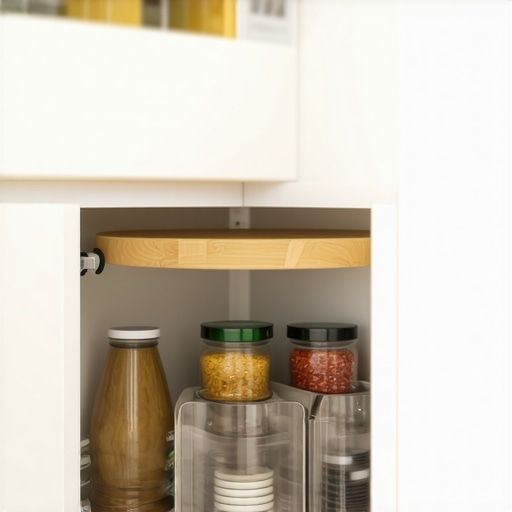
The Best Way to Organize a Corner Cabinet in a Small Kitchen
The standard corner cabinet is a graveyard for expensive gear. After fifteen years of designing high-end kitchen layouts, I have seen thousands of dollars in premium appliances—from pro-grade espresso machines to heavy stand mixers—buried in ‘the void’ because homeowners prioritized cabinet volume over mechanical accessibility. Efficiency in a small kitchen is not about how much you can cram into a dark corner; it is about the retrieval rate and the structural integrity of the hardware. If you can’t reach it in three seconds, you won’t use it. That is the hard reality of kitchen ergonomics.
The Engineering Reality of Spatial Dead Zones
Physics dictates that any storage solution deeper than 24 inches without a mechanical assist becomes a liability. Most builders install a basic plastic Lazy Susan and walk away. This is a mistake. These center-pole units lack the torque to handle a 30-pound stand mixer. Over time, the uneven weight distribution warps the base, causing that familiar, irritating scrape of plastic against wood. Real efficiency requires understanding the fulcrum of your pull-out systems. If you are struggling with spatial constraints, reviewing the cabinet depth secret for storing large appliances reveals why standard dimensions often fail the modern home chef. A corner unit must be viewed as a mechanical system, not just a box of air. According to the National Kitchen & Bath Association (NKBA) standards, accessibility is the primary driver of kitchen ROI, yet corner cabinets remain the most mismanaged square footage in the industry.
Why Blind Corner Pull-Outs Often Fail
The market is flooded with ‘swing-out’ kidney-shaped shelves that look impressive in a showroom. In the field, they present a specific operational risk: hinge fatigue. When you load a heavy cast-iron Dutch oven onto a cantilevered chrome wire shelf, you are testing the shear strength of two or three wood screws. The result? Avoidable failure. I have walked into hundreds of kitchens where the ‘luxury’ pull-out is sagging, dragging against the cabinet face, and ruining the finish. For those using high-performance tools, knowing how to layout your kitchen cabinets for maximum flow is the difference between a functional workspace and a frustrating bottleneck. The most durable solution is a ‘Magic Corner’ system with a track-and-slide mechanism that transfers the load directly to the floor of the cabinet rather than the door frame.
The Technical Truth of Weight Distribution
Storage is a math problem. Most homeowners forget the ‘Static vs. Dynamic’ load capacity. A shelf might hold 50 pounds while sitting still, but the moment you pull it toward you, that force triples. If you are storing a professional stand mixer, you must verify that your hardware is rated for at least 60 pounds of dynamic weight. Failure to do so will eventually lead to a misaligned door that won’t close. When planning these zones, consider the best shelf height for a heavy stand mixer to ensure you aren’t lifting with your back in a cramped corner. I have seen countless hinges snapped because a user tried to force a tray that was overloaded. The smell of fresh adhesive from a cabinet repair is a scent no owner wants to experience six months after a renovation.
Market Corrections and Future Proofing
The industry is moving toward motorized corner lifts. In the next 12 to 24 months, expect to see sensor-driven trays that descend from upper corner cabinets, eliminating the need for step stools. This is not just a luxury; it is a response to the aging-in-place demographic and the tightening of spatial footprints in urban luxury developments. Regulatory changes in European kitchen standards are already pushing for higher accessibility ratings, and the US market follows closely. Investing in heavy-duty, European-spec hardware now protects your property value for the 2026 market. Cheap wire racks are out; solid-bottom, high-walled drawer systems are in.
The Executive Verdict
If your kitchen is small, stop buying ‘blind corner’ cabinets. Opt for a 45-degree diagonal corner cabinet instead. It provides a larger opening and allows for the installation of a heavy-duty, full-circle rotating tray that handles the weight of prosumer espresso machines and air fryers without the mechanical failure points of a swing-out arm. If you are stuck with a blind corner, buy the most expensive track-based pull-out you can find. Cheap hardware is a debt you pay every day in frustration.
Frequently Asked Questions
Can I retrofit a pull-out into an old corner cabinet?
Yes, but you must reinforce the base. Most older cabinets use 1/4-inch plywood bottoms that will buckle under the weight of a modern mechanical pull-out system. Use a 3/4-inch plywood overlay before mounting the tracks.
What is the best material for corner shelves?
Solid-surface melamine or thick-gauge stainless steel. Avoid wire racks; they allow small items like espresso tampers or stand mixer attachments to fall through, potentially jamming the slide mechanism.
Are Lazy Susans obsolete?
The cheap, center-pole versions are. However, ‘Super Susans’—which sit on fixed shelves and rotate on high-grade ball bearings—are still the most reliable way to store heavy cookware without mechanical failure.
How do I prevent my corner cabinet from smelling musty?
Small kitchens often have poor airflow in deep corners. Install a small vent in the toe kick or use moisture-absorbing liners. This is especially vital if you store air fryers or machines that use water in those zones.