
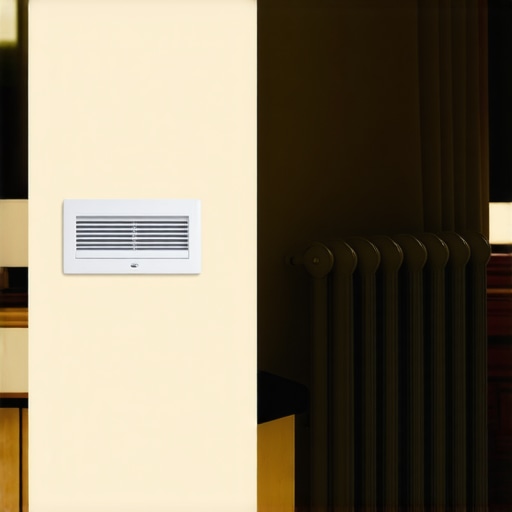
The Difference Between Forced Air and Conventional Heating
Selecting high-end appliances for a luxury kitchen often focuses on aesthetic finishes or brand prestige, yet the true differentiator lies in the physics of thermal transfer. In my 15 years of designing professional-grade kitchen environments, I have observed that most performance failures stem from a fundamental misunderstanding of how heat reaches the food. Conventional heating relies on static air and radiant energy, while forced air systems employ mechanical convection to strip away the insulating boundary layer surrounding the ingredients. Choosing incorrectly does not just lead to longer cook times; it results in uneven protein denaturation and failed textures in high-hydration baking. The stakes are clear. A multi-thousand-dollar range is a paperweight if the heat distribution is inconsistent. This is the engineering reality that separates a standard kitchen from a culinary laboratory.
The Thermal Boundary Layer Problem
Static air is a poor conductor. In a conventional oven, a thin layer of cool, stagnant air clings to the surface of your food, acting as a thermal insulator. This slows down the energy transfer from the heating elements. To overcome this, you have to increase the ambient temperature, which often scorched the exterior before the core reaches the desired temperature. Forced air, or convection, solves this by using high-velocity fans to circulate heated air. This movement creates a constant state of turbulence that removes the boundary layer. The result? Thermal energy is delivered directly to the surface of the food with surgical precision. However, not all fans are equal. High-end systems utilize a third heating element—True Convection—located around the fan itself to ensure the air being pushed is already at the target temperature. This prevents the cold-air-blast phenomenon common in entry-level units. Many homeowners ignore the the air fryer preheating myth, failing to realize that forced air efficiency relies on steady-state circulation rather than just raw heat.
The Engineering Reality of Thermal Equilibrium
Precision cooking requires thermal equilibrium. In conventional setups, heat rises. This creates a vertical temperature gradient where the top rack is significantly hotter than the bottom. If you are roasting a bird and baking a souffle simultaneously, the conventional model fails the stress test. Forced air systems aim for a uniform environment. According to standards established by organizations like ASHRAE, air movement must be managed to avoid dead zones. Cheap convection ovens often suffer from laminar flow issues where the air moves in a single predictable path, leaving ‘cold pockets’ in the corners. This is why some air fryers cook faster on the left side; the internal aerodynamics are poorly optimized. A true professional-grade system uses variable speed fans and baffles to randomize the air path, ensuring every cubic inch of the cavity maintains the same temperature. I have stood in kitchens where the clank of a poorly balanced fan housing signaled a cheap assembly, a sharp contrast to the near-silent whirr of a German-engineered brushless DC motor found in luxury stacks.
Why Radiant Heat Fails Professional Standards
Radiant heat has its place, specifically in traditional pastry work where a forceful breeze might collapse a delicate structure. But for 90% of modern culinary applications, it is inefficient. Radiant systems depend on the emissivity of the oven walls and the direct line-of-sight from the coil. If you block that line-of-sight with a large tray, the food underneath remains undercooked. Forced air bypasses this limitation. By treating the air as a fluid medium for heat delivery, you achieve a level of consistency that radiant heat cannot match. This efficiency also impacts the bottom line. Faster heat transfer means lower energy consumption and reduced kitchen ambient heat. For those managing a high-output home, understanding the real cost of upgrading to professional kitchen appliances involves looking at these duty cycles. A forced air system reaches target temperatures faster and recovers from door-open events with significantly more agility than a static oven.
Implementation Risks and Operational Realities
Transitioning to forced air is not without its learning curve. The increased efficiency means you generally need to drop your temperatures by 25 degrees Fahrenheit and shorten cook times by 20%. Failure to adjust leads to dry meats and burnt sugars. I remember a client who insisted on a 48-inch dual-fuel range but refused to learn the fan settings. Their first holiday meal was a disaster—the skin of the turkey was carbonized while the dark meat was still struggling. The issue was not the appliance; it was the lack of calibration. Modern luxury units now include PID controllers to manage these fluctuations. You must know how to calibrate your smart oven for precise baking to ensure the digital readout matches the physical reality inside the chamber. Research from NIST suggests that even a five-degree variance can alter the chemical reaction of leavening agents in high-end pastry work.
The Executive Verdict
If your culinary goals involve precision roasting, crisping, or multi-rack baking, forced air is the only logical choice. Conventional heating is a legacy technology that should be reserved for specific, low-moisture tasks or very delicate custards. My recommendation is to invest in a ‘True Convection’ system that integrates a dedicated heating element within the fan housing. This eliminates the hot spots associated with rear-wall fans that simply blow air over the top and bottom coils. For the local homeowner looking to maximize property value and kitchen utility, the focus should be on the CFM (cubic feet per minute) rating of the oven fan and the insulation thickness of the cavity. High-mass insulation retains the heat that the forced air distributes, creating a synergy of efficiency.
Frequently Asked Questions
Does forced air make the oven louder?
Quality luxury brands use insulated fan housings and brushless motors to keep noise levels below 45 decibels. If you hear a loud rattle, it is a sign of poor bearing quality or a loose shroud.
Can I use conventional mode in a convection oven?
Yes, most premium models allow you to toggle the fan off, effectively turning it into a conventional radiant oven for delicate items like souffles.
Do I need special pans for forced air cooking?
Low-sided pans are preferable. High walls block the airflow and can create a ‘dead zone’ around the base of your food, negating the benefits of the convection fan.
Is forced air the same as an air fryer?
An air fryer is essentially a high-velocity, compact forced air oven. The principles are the same, but the air speed in a dedicated air fryer is typically much higher than in a standard convection oven.