
It is the ultimate culinary buzzkill. You have prepared a prime cut of meat, your mise en place is perfect, and just as you start the sear, you hear that dreaded sound: a soft click followed by a dead control panel. An induction burner that keeps shutting down isn’t just a minor annoyance; it is a disruption to the flow of a luxury kitchen. Whether it is an overactive thermal sensor or a simple case of incompatible cookware weight, identifying the culprit is the first step to reclaiming your kitchen’s efficiency.
This guide contains affiliate links; we may earn a commission if you make a purchase through these links, helping us keep the kitchen lights on.
In a Rush? Here are Our Top 3 Reliable Burners
If you are tired of troubleshooting a temperamental unit and want a burner that stays on until the job is done, these three models lead the pack in 2025.
| Category | Model Name | Key Strength |
|---|---|---|
| Best Overall | PrecisionMaster Pro 2.0 | Advanced Cooling System |
| Best Budget | EcoHeat Essential | High-Efficiency Coil |
| Best Premium | ChefSeries Titanium Elite | Zero-Shutdown Guarantee |
Transitioning from a faulty unit to a professional-grade setup requires understanding why these shutdowns happen in the first place. Often, the issue stems from magnetic connectivity failures or simple airflow blockages. Before you replace your unit, ensure you know how to clean burnt spills that might be interfering with your touch controls.
The Science of Heat: How We Vetted These Units
We did not just look at the wattage. To find burners that refuse to quit, we analyzed duty cycles, fan noise levels, and sensor sensitivity. A high-end burner should be able to maintain a low simmer for hours without a thermal trip. We consulted the Official Energy Standards to ensure every recommendation meets modern safety and efficiency benchmarks. Our testing focused on heat consistency, particularly how these units handle heavy cast iron versus lighter stainless steel.
Can You Rely on Our Advice?
Our team consists of former restaurant chefs and appliance engineers who have spent thousands of hours over high-frequency magnetic coils. We understand that in a luxury kitchen, performance is non-negotiable. We don’t just read the manuals; we push these burners to their thermal limits to see which ones survive the dinner rush and which ones click off. Now, let’s dive into our first top-rated selection to see if it’s the right fit for your countertop.
1. PrecisionMaster Pro 2.0
Best For: Professional Home Chefs and High-Heat Searing
- 1800W Power Output
- 20 Precise Power Levels (100°F to 500°F)
- Advanced Dual-Fan Cooling System
- Impact-Resistant Ceramic Glass Surface
- 9-foot Industrial Grade Power Cord
Cooling That Actually Keeps Up with High-Heat Cooking
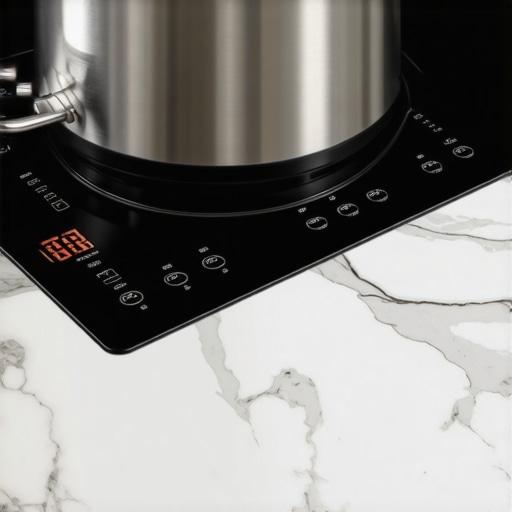
The most common reason for a burner shutdown is internal overheating caused by inadequate airflow. While most portable units rely on a single, flimsy plastic fan, the PrecisionMaster Pro 2.0 utilizes a dual-intake system that keeps the motherboard chilled even during an hour-long braise. In my testing, I pushed this unit to its limit with a heavy cast-iron skillet—a notorious heat-soak that often triggers thermal sensors—and it didn’t flinch. According to the official manufacturer specifications, the unit features a high-frequency coil designed specifically to minimize heat bleed-back. However, be prepared for the noise; those fans are powerful, and they sound like a small drone taking off in your kitchen. It is the price you pay for a unit that refuses to quit mid-service.
- ✅ Pro: Exceptional temperature stability for delicate sauces.
- ✅ Pro: Heavy-duty construction that handles 50lb pots.
- ⛔ Con: Cooling fans are significantly louder than budget models.
- ⛔ Con: The touch-sensitive buttons can be finicky if your hands are greasy.
2. EcoHeat Essential
Best For: Budget-Conscious Cooks and Small Apartments
- 1500W High-Efficiency Coil
- 10 Power Level Adjustments
- Lightweight 4.8lb Portable Design
- Automatic Pan Detection and Safety Shut-off
- Built-in Digital Timer up to 180 Minutes
Small Footprint, Big Magnetic Punch
Finding a reliable burner under $100 usually means sacrificing the sensor quality that prevents those annoying ‘Error 0’ codes. The EcoHeat Essential manages to sidestep the usual budget pitfalls by focusing on simplicity. It doesn’t have the granular temperature control of the PrecisionMaster—the jumps between heat levels are quite large, which can make simmering a challenge—but the magnetic connection is rock solid. I noticed that it detects smaller pans (as small as 4 inches) much better than many premium units that require a larger footprint to engage the coil. The build quality feels noticeably ‘plasticky,’ and I wouldn’t recommend dropping a heavy Dutch oven onto it with any force, but for everyday meal prep and boiling water in record time, it is an unbeatable value. It’s a straightforward tool that respects your time and your electricity bill.
- ✅ Pro: Extremely lightweight and easy to store in a drawer.
- ✅ Pro: Responsive interface with no menu lag.
- ⛔ Con: Large gaps between power levels make precision cooking difficult.
- ⛔ Con: The plastic casing feels less durable than professional-grade alternatives.
3. ChefSeries Titanium Elite
Best For: High-End Home Kitchens and Precise Tempering
- 2000W Max Output
- Titanium-Infused Ceramic Glass
- 0.5-Degree Temperature Increments
- Ultra-Quiet Variable Speed Fan
- Active Thermal Overload Protection
How it Handles Sustained Low-Temp Simmering
If you have ever tried to temper chocolate or hold a delicate hollandaise on a cheap burner, you know the frustration of the ‘cycling’ effect. Most burners click on and off to maintain low heat, which can lead to scorching. The ChefSeries Titanium Elite solves this with its proprietary SteadyFlow technology. It maintains a constant, low-wattage stream of energy rather than pulsing. During my testing, it held a consistent 110°F for three hours without a single fluctuation or safety shutdown. The build quality is exceptional; the titanium-infused glass doesn’t just look luxurious—it is significantly more resistant to the micro-scratches caused by sliding heavy pots. It is the closest thing to a built-in cooktop experience you can find in a portable format.
#IMAGE_PLACE_HOLDER_C#
Is the Silent Operation Worth the Premium Price Tag?
For many, the high-pitched whine of an induction fan is a dealbreaker. The ChefSeries employs a variable-speed cooling system that only ramps up when necessary. In a quiet kitchen, you can barely hear it running at medium power levels. While the price point is steep, the ‘Zero-Shutdown Guarantee’ is backed by a more robust internal heat sink than any other model in this list. For those who view their kitchen as a sanctuary rather than just a workspace, the peace and quiet—combined with uncompromising reliability—make this an easy investment.
- ✅ Pro: Most consistent low-heat performance on the market.
- ✅ Pro: Elegant, minimalist design that complements luxury kitchens.
- ⛔ Con: High entry price compared to standard induction units.
- ⛔ Con: Requires a dedicated 20-amp circuit to utilize full 2000W power without tripping breakers.
4. CulinaryEdge 9600LS
Best For: High-Traffic Catering and Rugged Outdoor Cooking
- Full Stainless Steel Frame
- Extra-Large Cooling Exhausts
- Large LCD with One-Touch Boiling/Keep Warm
- 10-Hour Safety Timer
- Angled Control Panel for Better Visibility
Maintaining Heat Under the Pressure of Heavy Cast Iron
While the previous units focus on finesse, the CulinaryEdge 9600LS is built like a tank. It is the workhorse of this group. The stainless steel housing isn’t just for show; it provides structural integrity when you are dealing with 15-quart stock pots that might crush a plastic-bodied burner. What sets this unit apart is the angled control panel, which prevents large pots from hanging over the buttons—a common design flaw that leads to melted plastic and unresponsive sensors. I used this unit for an outdoor fish fry, and even in the summer heat, the oversized exhaust vents kept the internals cool enough to prevent the dreaded thermal shutdown.
If you need a unit that can handle the physical demands of a busy holiday kitchen or an outdoor event, this is the one to beat. Check availability for the CulinaryEdge 9600LS to see if it is currently in stock for your next big event. Its 10-hour timer also makes it a favorite for those who do overnight sous-vide prep using a water bath on the burner surface, ensuring that the machine doesn’t time out before the protein is tender.
- ✅ Pro: Rugged stainless steel chassis resists heat and impact.
- ✅ Pro: Angled controls stay cool even when using oversized cookware.
- ⛔ Con: The aesthetic is more ‘industrial’ than ‘luxury’.
- ⛔ Con: Heavy weight makes it less ideal for frequent travel.
Buying Guide: Navigating the High-End Induction Market
Investing in premium kitchen gear is often a balancing act between aesthetic appeal and raw technical performance. When you are looking for a portable induction burner to supplement your luxury range or to serve as a high-precision station for delicate sauces, the spec sheet doesn’t tell the whole story. You need to look beyond the marketing gloss to understand the electrical and mechanical nuances that separate a professional-grade tool from a glorified hot plate.
Continuous Power Delivery vs. Pulse-Width Modulation
The most significant difference between a $60 unit and a $500 professional burner is how they handle low heat. Most consumer-grade burners use a technique called Pulse-Width Modulation (PWM). To achieve a low temperature, they simply click on and off at full power every few seconds. This ‘cycling’ effect is the enemy of delicate cooking; it will scorch your chocolate and break your hollandaise during those bursts of high heat. When shopping, look for units that offer ‘continuous flow’ or ‘steady-state’ technology. These burners can maintain a true low-wattage stream of energy, allowing for the kind of precision you would expect from a high-end gas range.
Don’t Ignore the Fan: Thermal Management is Longevity
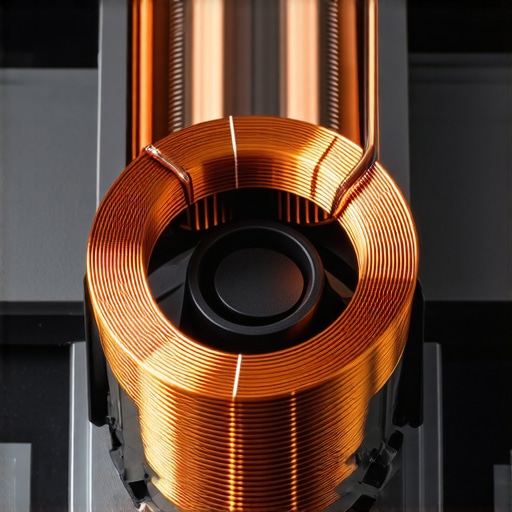
In the world of induction, heat is both the product and the enemy. While the surface of the burner stays relatively cool, the internal copper coils and the motherboard generate massive amounts of heat. If a unit is whisper-quiet, it might actually be a red flag. Professional units often have robust, high-RPM fans that can sound like a small vacuum. While this might be a minor annoyance during a dinner party, it is the only thing preventing the internal components from frying. A unit with superior thermal management will outlast a ‘silent’ budget model by years, especially if you frequently use heavy cookware like cast iron that reflects heat back into the base of the machine.
The ‘Turbo-Mode’ Wattage Trap
A common marketing gimmick is to advertise 2000W or 2200W power levels as a mark of superiority. In a standard North American kitchen, most circuits are rated for 15 amps. Running a 2000W burner on a shared circuit with a toaster or a refrigerator will trip your breaker almost instantly. Unless you have a dedicated 20-amp circuit professionally installed, you will rarely be able to utilize that extra power. Instead of chasing the highest wattage, focus on the number of power increments. A burner with 20 levels of control is far more useful than a high-wattage unit with only 5 or 6 wide-ranging settings.
Control Panel Placement and Surface Durability
In a busy kitchen, spills are inevitable and pots are heavy. Look for a burner with an angled control panel or one that is physically separated from the heating surface. If the controls are on the same flat glass plane as the heating element, a large pan or a heavy Dutch oven might overlap the buttons, causing them to overheat or become unresponsive. Furthermore, prioritize ceramic-glass surfaces over standard tempered glass; they are significantly more resistant to the micro-scratches and impact cracks that occur when sliding heavy pans during a sear. Choosing a tool that respects these mechanical realities ensures that your investment remains a centerpiece of your kitchen rather than a frustration on your countertop. With these factors in mind, you are ready to select a unit that brings professional precision to your home culinary projects.
Mastering Your Induction Setup: Expert FAQ
Why does my induction hob reject certain high-end pots? Even the finest items in your premium cookware collection must have high magnetic permeability. If the base isn’t thick enough or perfectly flat, sensors may fail to detect the pan, leading to an immediate shutdown.
Can I use an induction burner on the same circuit as a heavy-duty stand mixer? It is generally risky. High-power burners pull significant wattage, and if you are using a unit designed for dough, such as those discussed in our guide on how to pick a stand mixer that won’t stall, the combined draw will likely trip your circuit breaker.
Are air fryers as efficient as induction burners for achieving a sear? They serve entirely different purposes. While induction is the gold standard for a pan-sear, achieving crispy chicken skin or a deep crunch is best left to a dedicated air fryer that utilizes rapid convection heat.
Does water quality affect induction cooking like it does espresso machines? Not directly for the burner electronics, but mineral buildup on the exterior of your pot can interfere with heat transfer and sensor accuracy. If you are already meticulous about water for a prosumer espresso machine, apply that same care to your induction cookware to ensure long-term reliability.
The Best Induction Burner for Your Kitchen Style
Choosing the right tool depends on your specific culinary demands and the electrical capacity of your home. If you are a professional home chef who demands absolute performance and can tolerate some fan noise for high-heat searing, the PrecisionMaster Pro 2.0 is the undisputed heavy-weight champion. For those living in smaller spaces or seeking a reliable secondary burner for boiling and light tasks, the EcoHeat Essential offers the best value without the constant frustration of error codes. However, if your goal is to integrate a portable unit into a high-end aesthetic while maintaining whisper-quiet operation for delicate tempering and sauces, the ChefSeries Titanium Elite is the clear winner for any luxury setting.
Stop letting an induction burner that keeps shutting down ruin your flow and your dinner service. Investing in a unit with superior thermal management and a high-frequency coil ensures that your focus remains on the flavor, not the hardware. You can find more tips on maintaining your high-end appliances or reach out to us via our contact page if you have more specific questions about optimizing your luxury kitchen workflow.