
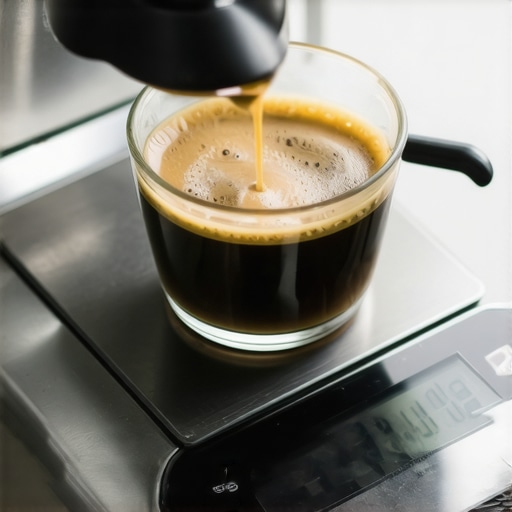
Why You Need a Digital Scale for Consistent Espresso Shots
Measuring espresso by volume is a fool’s errand. After a decade of diagnosing equipment failures and perfecting extractions in luxury kitchens, I can confirm that the visual level of liquid in your cup is a lying metric. When you rely on a shot glass or the timer on your machine without a mass-based reference, you are gambling with the flavor profile of your expensive beans. The stake here is simple: either you drink a balanced, sweet nectar, or you endure a salty, over-extracted mess that ruins your morning. Precision is the only path to repeatability. This isn’t about being pedantic. It is about the fundamental physics of coffee extraction.
The Mass vs. Volume Conflict
Coffee beans are biological products that change daily. As beans age, they lose CO2. This gas is what creates crema. Fresh beans produce a thick, voluminous head of foam, while older beans yield a thin layer. If you pull a 2-ounce shot by volume, the actual weight of the liquid coffee could vary by as much as 10 grams depending on that crema density. The espresso machines unveiled in modern high-end markets are built for precision, yet users often negate this by ignoring the ratio. According to the Specialty Coffee Association (SCA), weight is the only reliable way to track extraction yield. A digital scale with 0.1g resolution allows you to hit a 1:2 ratio every single time—say, 18g of dry grounds to 36g of liquid. This level of accuracy eliminates the guesswork that leads to the puck prep mistake that ruins every espresso shot for so many enthusiasts.
Density Disparity and Roast Profiles
Not all beans are created equal in the hopper. A dark roast is less dense than a light roast. If you use a scoop or a volumetric timer, you are ignoring the fact that 18 grams of a dark oily bean takes up significantly more space than 18 grams of a dense, high-altitude light roast. This discrepancy shifts your resistance in the portafilter. Without a scale to verify your dose, your grind setting becomes a moving target. You might think your grinder is drifting, but in reality, your input weight is fluctuating. This often leads to channeling and is the primary reason why your espresso portafilter is squirting everywhere during the pull. Constant variables are the backbone of a professional-grade home bar.
The Messy Reality of Grinder Retention
Even the most expensive grinders suffer from some level of retention—coffee that gets stuck in the burr chamber or the chute. If you put 18 grams in and only 17.2 grams come out, your shot is doomed before you even lock the handle. This half-gram difference is massive in the world of 9 bars of pressure. The result? An under-extracted, sour shot that no amount of milk can save. I have stood in multimillion-dollar kitchens where the owner was frustrated with a top-tier machine, only to find they were ‘eyeballing’ the dose. It is a waste of engineering. Beyond the coffee itself, the chemistry of your liquid matters; utilizing the best type of water for a prosumer espresso machine is secondary if your base measurements are erratic. I’ve seen industrial-grade steel machines fail to produce quality simply because the operator refused to acknowledge the science of mass.
Predicting the Precision Era
The industry is moving toward integrated technology. Within the next 24 months, expect to see more high-end machines with built-in gravimetric sensors in the drip tray. We are seeing a shift where ‘timed dosing’ is being replaced by ‘grind-by-weight’ technology as a standard, not a luxury. This market correction is happening because consumers are tired of the inconsistency of traditional methods. If you want to future-proof your skills, you must start weighing your shots now. The National Coffee Association reports a steady increase in the consumption of specialty grade coffee at home, which demands better tools for the brewing process.
The Executive Verdict
If you are serious about your espresso, stop using your eyes and start using a scale. My recommendation: Buy a scale with a fast response time and water resistance. If you are currently getting sour or bitter results, the first thing to check isn’t the machine temperature—it’s your dose-to-yield ratio. Consistency is the hallmark of an expert. High-end equipment requires high-end methodology. Start weighing your input and your output today.
Frequently Asked Questions
Do I really need 0.1g accuracy?
Yes. A variance of 0.5g in dose can significantly alter the flow rate and flavor of a 30-second shot. 1.0g accuracy is for baking; 0.1g is for coffee.
Should I weigh the beans before or after grinding?
Both. Weighing before (single dosing) ensures you don’t waste beans. Weighing after ensures you know exactly what made it into the basket despite grinder retention.
Why does my shot time change even when the weight is the same?
This is likely due to bean age or humidity. Even with a scale, you will need to adjust your grind size slightly as the beans lose moisture over time.
Is a cheap kitchen scale sufficient?
Usually not. Most kitchen scales are too slow to catch the ‘stop’ point during a pull and lack the resolution needed for small increments under 20 grams.