
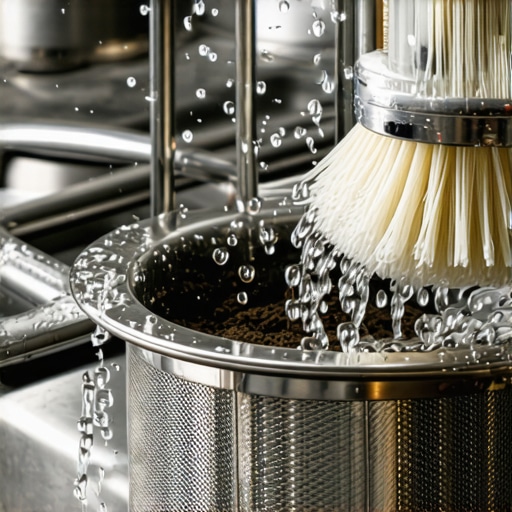
A clogged filter basket is not a minor inconvenience; it is a hydraulic bottleneck that threatens the mechanical integrity of your entire espresso system. After fifteen years of diagnosing high-end machines, I have observed a consistent pattern: users mistake a slow flow for a grind issue when, in reality, the basket perforations are suffocating under polymerized oils. This pressure backup forces the pump to work against its own bypass valve. The result? Premature pump failure and a bitter, over-extracted profile that no amount of bean quality can save.
How to Fix the Clogged Filter on Your Espresso Machine
The solution starts with understanding the physics of the 58mm basket. When you see a wet espresso puck, it often signals that the water cannot evacuate the chamber fast enough. You must remove the basket from the portafilter using a flat tool or the edge of another basket. Hold it up to a strong light source. If you see dark spots instead of clean, pin-sized holes, you are dealing with organic blockage. Do not use a needle; you will deform the precision-drilled holes and ruin the extraction geometry. Instead, soak the basket in a solution of sodium percarbonate and sodium carbonate. This chemical reaction breaks the bond between the coffee oils and the stainless steel without scratching the surface.
The Engineering Reality of Backpressure
Why does this matter for your machine’s lifespan? Most prosumer espresso machines utilize vibration pumps or rotary pumps designed for specific flow rates. When the filter is clogged, the backpressure exceeds the intended 9 bars. This heat builds up in the coil. I’ve seen hundreds of machines where the voltage spikes during these stalls, leading to fried control boards. The pump groans—a low-pitched, strained hum that vibrates through the luxury kitchen countertop. That sound is the death knell of a poorly maintained machine. If you neglect the filter, you are effectively redlining your engine while the parking brake is engaged.
Chemical Deception and Mechanical Cleaning
Many owners believe a simple rinse suffices. It does not. Coffee oils are hydrophobic and incredibly sticky once they reach the 200-degree mark. You need a backflush routine using a blind filter. This forces the detergent up into the group head and out through the three-way solenoid valve. You will hear a sharp ‘whoosh’ when the pressure releases. That is the sound of the pathway clearing. If your machine lacks a three-way valve, you must manually scrub the shower screen. Neglect this, and you’ll eventually need to remove scale from the heat exchanger because the heat soak from the clogged head causes minerals to precipitate faster. I once worked on a machine where the group head was so impacted with old grounds it smelled like a burnt tire—the client couldn’t understand why their $3,000 investment tasted like ash.
Strategic Foresight for the Home Barista
Looking at the next 24 months, we are seeing a shift toward precision-machined baskets with nano-coatings that repel oil. Industry standards from the Specialty Coffee Association emphasize that even microscopic variances in hole diameter lead to channeling. The market is moving away from the ‘standard’ basket toward IMS or VST precision filters. These require even more frequent cleaning because their tolerances are tighter. Furthermore, the type of water you use will interact with these oils. Hard water creates a composite ‘gunk’ that is significantly harder to dissolve than oil alone. If you aren’t using a dedicated filtration system, your cleaning frequency needs to double.
The Executive Verdict
If your shots are stalling and the pump is straining, stop immediately. Do not increase the grind size to compensate for a dirty basket. My recommendation: Implement a daily water-only backflush and a weekly chemical soak. This is a non-negotiable protocol for anyone serious about coffee quality or appliance longevity. If the basket shows any signs of permanent staining or physical warping, replace it with a precision-grade alternative. The cost of a new basket is negligible compared to a $400 pump replacement. Fix the filter, save the machine.
Frequently Asked Questions
Can I use vinegar to clean my filter basket?
No. Acetic acid is insufficient for breaking down coffee polymers and can leave a residual taste that ruins subsequent extractions. Use a dedicated espresso detergent.
How often should I replace the filter basket entirely?
For heavy home use, every 12 to 18 months. Over time, the pressure of tamping and the 9-bar extraction can slightly stretch the holes, leading to uneven flow.
Why is my portafilter leaking while the filter is clogged?
The backpressure is seeking the path of least resistance, which is often the group head gasket. The clog is forcing the water out of the seals rather than through the coffee puck.