
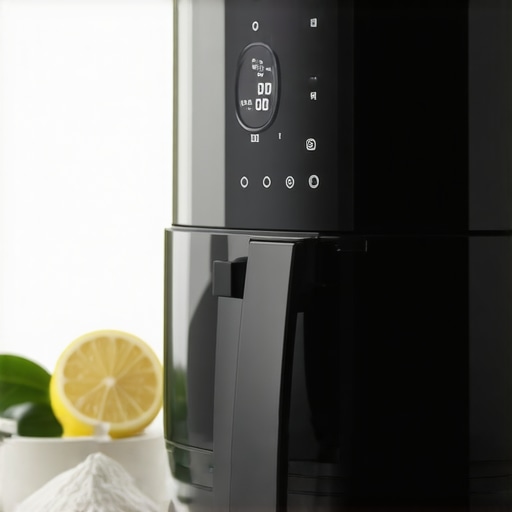
How to Stop Your Air Fryer from Smelling Like Burnt Plastic
That acrid, chemical stench wafting from a factory-fresh appliance is not a badge of quality. It is a sign of industrial residue. After fifteen years in the high-end appliance sector, I have diagnosed this issue more times than I care to count. The odor originates from Volatile Organic Compounds (VOCs) and protective coatings applied to the heating element during manufacturing. If you ignore it, you are essentially seasoning your food with vaporized factory lubricants. The result? Avoidable failure and a ruined palate.
The Engineering Reality of Thermal Off-Gassing
Air fryers operate on high-velocity convection. When the heating coil reaches 400 degrees Fahrenheit for the first time, the heat-resistant plastics and the protective film on the metal parts undergo thermal expansion. This process releases gas. Most mid-range units use plastic housings that, while rated for heat, still shed microscopic particles when first introduced to extreme temperatures. It is a material science limitation. According to UL Solutions (specifically standard UL 1026), appliances must withstand these temperatures safely, but safety does not mean odorless. The smell is often the result of the fan blowing these hot gases directly into the basket area. This is why why most air fryers dont reach the advertised temperature during their first few cycles; the thermal sensors are busy adjusting to the initial expansion of the internal components.
The Thermal Burn-In Protocol
The solution is a controlled burn-in. Do not put food in the basket yet. Place the unit in a well-ventilated area, preferably near an open window. Set the temperature to its maximum setting for 20 minutes. This forces the unit to complete its off-gassing process without contaminating your kitchen air. During this time, the scent might intensify. This is normal. It is the protective oils on the coil vaporizing. Once the cycle finishes, let the unit cool completely. Repeat this twice. Proper airflow is essential, and understanding the problem with putting your air fryer too close to the wall will ensure the exhaust doesn’t trap those fumes inside the motor housing. If the smell persists after three cycles, you are likely looking at a manufacturing defect involving a melted internal wire clip or poor-quality solder.
The Deep Clean Strategy for Persistent Odors
Sometimes the burn-in is not enough. The factory oils can be stubborn. I recommend a manual intervention using a mixture of lemon juice and white vinegar. This acidic combination breaks down the hydrocarbon chains found in many industrial lubricants. Wipe the interior walls and the heating coil (once cool) with a damp cloth soaked in this solution. Avoid getting the motor wet. It is a surgical strike against chemical residue. If you find the basket itself smells, a soak in hot, soapy water is a start, but don’t stop there. Knowing how to get the smell of fish out of your air fryer applies here too; the same neutralization techniques for organic odors work on synthetic ones. If you still detect a plastic scent, check the fan blades. Occasionally, plastic shavings from the manufacturing mold get caught in the fan housing. As the fan spins, the friction heats these shavings, creating a perpetual smell.
Regulatory Shifts and Material Standards
The industry is moving toward higher standards. Reports from ASTM International suggest that consumer demand for PFAS-free coatings is forcing manufacturers to rethink internal insulation. In the next 12 to 24 months, expect to see more stainless steel linings and ceramic-coated heating elements in the luxury segment. This shift will reduce the ‘new appliance’ smell significantly. For now, we are stuck with the burden of domestic commissioning. High-end brands are already implementing factory burn-ins before shipping, but budget models will continue to off-gas in your kitchen. It is an economic reality of the current supply chain. You might also want to how to recalibrate the thermostat in your convection air fryer once the plastic smell is gone to ensure your unit is performing at peak efficiency after its thermal break-in.
The Executive Verdict
The decision is binary. If a burn-in protocol of three 20-minute cycles at max heat does not eliminate the plastic smell, the unit is a fire hazard. Sell the idea of a replacement to the manufacturer. If the smell is gone, you have successfully seasoned the machine. My recommendation: Never use your air fryer for the first time with food inside. Always perform a dry run. It preserves the integrity of your meal and the health of your household air. If you are in a situation where the smell returns during normal use, pull the plug immediately. The fan motor is likely overheating and melting its own casing.
Frequently Asked Questions
Is the burnt plastic smell toxic?
While brief exposure during a burn-in is generally considered safe if ventilated, breathing concentrated VOCs over long periods is not advisable. Always vent the area.
Can I use parchment paper to stop the smell?
No. In fact, why you should never preheat your air fryer with parchment is a vital lesson; it can catch fire or block airflow, making the plastic smell worse by overheating the internal housing.
How many cycles until the smell is gone?
Most units require two to three 20-minute cycles at 400 degrees Fahrenheit to fully clear the factory residues.
Should I return the air fryer if it smells?
Only if the smell persists after five cycles or if you see visible smoke coming from the motor vents, which indicates a mechanical failure rather than a standard off-gassing process.