
The Difference Between Cold-Pressed and Forged Cookware Performance
Molecular integrity defines the ceiling of your culinary output. Most home cooks obsess over non-stick coatings or brand names, yet they ignore the structural genesis of the metal itself. In fifteen years of specifying equipment for high-end residential builds, I have seen more ‘premium’ pans fail due to internal stress than poor maintenance. The choice between cold-pressed and forged methods is not about aesthetics. It is about thermal kinetic energy and the lifespan of your investment. Getting this wrong means replacing your kit every three years. That is an expensive cycle of failure.
The Engineering Reality
Forging involves intense heat and massive pressure to shape the metal. This process aligns the grain structure of the alloy, creating a dense, resilient form. When you hold a forged skillet, you feel the density. It possesses a specific gravity that cold-pressed alternatives cannot replicate. Cold pressing takes a flat sheet of room-temperature metal and forces it into a mold using a hydraulic stamp. The result? Residual internal tension. The metal wants to return to its flat state. It is waiting for a reason to warp. This is why the heavy bottom secret to preventing scorched sauces is almost always a conversation about forged bases. Forging eliminates the ‘memory’ of the metal, ensuring it stays flat under extreme thermal loads.
Technical standards from organizations like ASM International confirm that forged metals exhibit superior tensile strength compared to stamped or pressed equivalents. In a luxury kitchen, where high-BTU ranges are standard, this matters. A pressed pan might look sleek, but its molecular structure is stretched thin at the corners. Those thin spots become hot zones. Hot zones lead to uneven searing and ruined proteins.
The ROI of Density
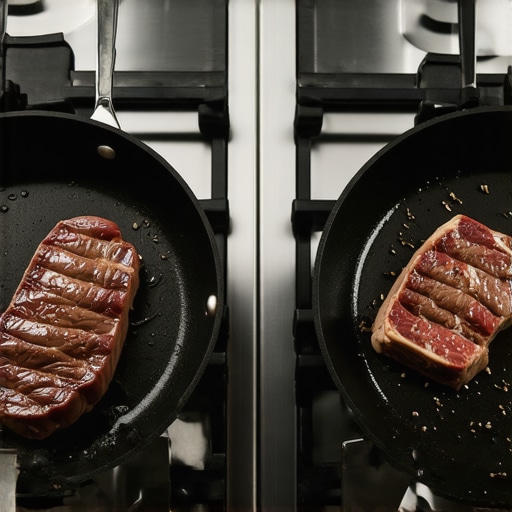
Let us talk about thermal mass. A forged pan acts as a heat battery. It absorbs energy and distributes it with a level of uniformity that makes why 5-ply cookware is total overkill for most home chefs a valid point—if the base metal is forged correctly, you don’t need excessive layering to compensate for poor manufacturing. When you drop a cold steak onto a pressed pan, the surface temperature plummets. The sizzle dies. In a forged vessel, the sheer volume of metal retains enough latent energy to maintain the sear. This is the difference between a grey, steamed piece of meat and a Maillard-reaction masterpiece.
The Risk of the Spinner
I once walked into a client’s kitchen after they had spent sixty thousand dollars on a custom range. They were frustrated. Their pans were ‘spinning’ on the glass induction top. The culprit? Cold-pressed construction. When the metal heated up, the internal stresses caused the bottom to bow. This is the ‘operational scar’ of the industry. A pan that isn’t dead-flat is useless on modern induction or electric surfaces. You lose the the searing difference between cast iron and blue steel benefits when your cookware doesn’t make full contact with the heat source. The smell of acrid, overheated oil from a warped pan is a sensory reminder of why engineering matters more than marketing.
Market Corrections Ahead
The next twenty-four months will see a shift. As induction technology becomes the global standard, the demand for high-density, forged cookware will spike. Manufacturers are already moving away from thin-walled pressed designs because they cannot handle the rapid energy transfer of electromagnetic coils. We are seeing a return to ‘heavy’ manufacturing. If you are buying cookware today, you are buying for the kitchens of 2030. Cheap, stamped aluminum will become obsolete in the high-end sector. You should also consider how why clad stainless steel is better than disk bottoms plays into this, as the bond between layers must withstand these forging pressures to remain structural.
Executive Verdict
My recommendation is decisive. If you are cooking on high-output gas or high-precision induction, buy forged. The initial cost is 40% higher, but the utility lifespan is 300% longer. Look for ‘Fully Forged’ or ‘Heavy Gauge’ markings. Avoid anything that feels light for its size. If the pan feels like a toy, it will perform like one. Invest once. Buy the weight. Trust the grain structure.
Frequently Asked Questions
Is forged cookware always heavier?
Generally, yes. The density required for forging results in a heavier tool, which provides better heat retention.
Can I use cold-pressed pans for anything?
They are acceptable for low-heat tasks like boiling water or quick sautés where temperature precision is not the priority.
How can I tell if a pan is forged or pressed?
Check the rim and the transition from the base to the walls. Forged pans usually have variable thickness—thicker at the base, tapering toward the top. Pressed pans have a uniform, thin wall thickness throughout.