
How to Prevent Rust on Your Stand Mixer Attachments
Oxidation is the silent killer of the luxury kitchen environment. Most owners treat their burnished aluminum dough hooks with the same recklessness as a cheap plastic spatula. That stops today. After 15 years of disassembling planetary gear systems and diagnosing motor failures, I can state with absolute certainty: your cleaning habits are likely eroding your investment. This isn’t about aesthetics. It is about the structural integrity of the metal and the safety of your food supply. When aluminum or steel attachments begin to pit, they create microscopic havens for bacterial growth and increase mechanical drag on your machine. The result? Avoidable failure.
The Science of Surface Degradation
Metal doesn’t just rust; it reacts. Standard burnished aluminum attachments are particularly vulnerable because they lack a thick anodic coating. When you expose these tools to high-pH detergents found in modern dishwashers, you trigger a rapid galvanic reaction. The alkaline environment strips the protective oxide layer, leading to the dreaded grey residue. This is the first sign of terminal oxidation. If you have noticed why your stand mixer attachments turn grey after a dishwasher cycle, you have already begun the process of surface decomposition. The metal is becoming porous. Once that porosity takes hold, moisture becomes trapped within the metal itself, leading to internal corrosion that eventually flakes into your dough. I have seen countless professional mixers brought into my shop with seized gears simply because the owner didn’t understand the relationship between attachment friction and motor load. Pitted metal increases resistance. Increased resistance forces the motor to draw more amperage, eventually leading to a burnt stator.
[IMAGE_PLACEHOLDER]
The Hand-Wash Protocol
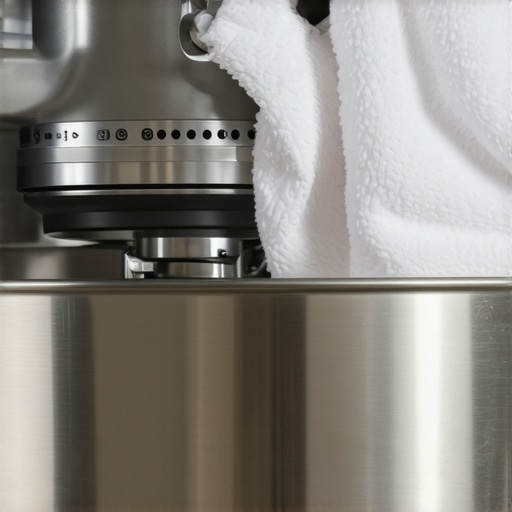
The solution is manual. Immediate. Non-negotiable. You must wash your attachments in lukewarm water with a neutral pH soap. Avoid abrasive scouring pads that create micro-scratches. These scratches act as nucleation sites for rust. Once washed, drying is not a passive activity. You do not place them in a rack to air dry. You use a clean microfiber cloth to remove every molecule of surface moisture. This is especially vital for the ‘neck’ of the attachment where it connects to the planetary shaft. Moisture trapped in this crevice often migrates upward into the gear housing, emulsifying with the food-grade grease and causing it to lose its lubricating properties. It’s a chain reaction of neglect. Beyond simple drying, I recommend a light coating of food-grade mineral oil for long-term storage. This creates a hydrophobic barrier that prevents ambient humidity from interacting with the metal. For those working with heavy breads, remember that why high-torque motors are essential for whole wheat doughs is only half the battle; the surface finish of the hook determines how efficiently that torque is applied.
The Mechanical Impact of Neglect
Consider the cost-benefit of your time versus replacement parts. A high-end stainless steel whisk can cost upwards of eighty dollars. A full motor replacement? Three hundred, plus labor. The economics of the kitchen demand a maintenance-first mindset. If you are experiencing vibration, you might need to check how to stop your stand mixer from vibrating off the counter, but often, the root cause is an imbalanced, corroded attachment that no longer seats correctly. We also need to discuss the ‘Dime Test’ and head clearance. If your attachment is corroding, it can change the clearance between the tool and the bowl. This leads to the tool scraping the bottom, which strips the bowl’s finish and accelerates rust on both components. Adjusting the screw adjustment that stops your mixer from hitting the bowl is a temporary fix if the underlying metal is already warping due to deep oxidation.
Industry Foresight and The Stainless Shift
The luxury kitchen market is currently undergoing a shift. Over the next 12 to 24 months, I expect to see a total phase-out of burnished aluminum by premium brands. Industry standards, such as those monitored by ASM International, suggest that consumers are demanding materials that withstand more rigorous sanitation without degrading. Stainless steel (304 or 316 grade) is becoming the benchmark. While it carries a higher initial price point, the ROI is realized through the elimination of replacement cycles and the mitigation of motor strain. In my professional opinion, if you are purchasing a new machine today, insist on solid stainless steel attachments. The peace of mind regarding rust and dishwasher compatibility is worth the premium. We are also seeing a rise in regulatory scrutiny regarding PFAS-free coatings on non-stick attachments, making raw, polished metals the safest long-term bet for the home chef.
The Executive Verdict
If your attachments are currently showing signs of grey residue or orange rust spots, the situation is urgent. For aluminum: use a paste of cream of tartar and water to gently buff away the oxidation, then ‘season’ the metal with a light heat and oil treatment. For steel: use a dedicated stainless steel cleaner and ensure the item is bone-dry before storage. If the pitting is deep enough to catch a fingernail, discard the attachment. It is no longer food-safe. Moving forward, adopt the ‘Dry-Before-Drawer’ policy. Never store attachments on the machine itself; the lack of airflow around the hub is a recipe for trapped moisture. Follow these protocols, and your equipment will outlast the kitchen it sits in.
Frequently Asked Questions
Can I use steel wool to scrub off rust?
No. Steel wool leaves behind microscopic carbon steel fibers that will actually accelerate rusting on your attachment. Use a nylon brush or a soft cloth.
Is ‘dishwasher safe’ a lie for stand mixer tools?
Mostly. Even if the coating survives the heat, the chemicals in dishwasher pods are too aggressive for the alloys used in most dough hooks and paddles. Always hand wash.
Why does my whisk have a black residue?
That is aluminum oxide. It occurs when the protective finish is stripped by alkaline detergents. It must be cleaned off before the tool is used again.
Should I oil the attachment shaft?
Yes. A tiny drop of food-grade mineral oil on the attachment’s mounting point prevents ‘galvanc freezing’ where the tool becomes stuck to the mixer’s pin.