
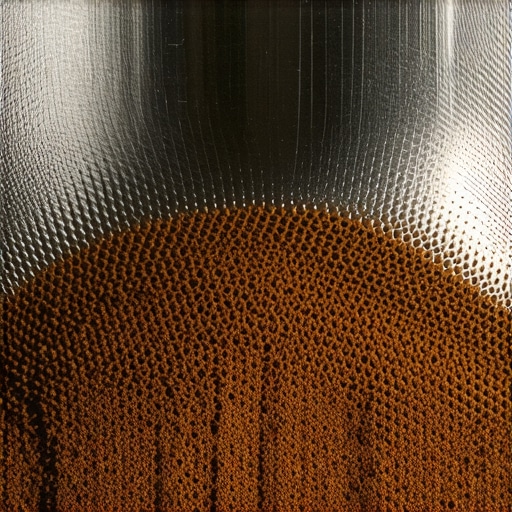
Tired of Your Espresso Shots Stalling Mid-Flow?
You’ve invested in the perfect beans, a high-end grinder, and a luxury espresso machine, yet your morning ritual is being interrupted by a stubborn, choked-off flow. It is a common frustration: you look at your portafilter and see that those microscopic holes are completely jammed with ultra-fine coffee dust. This isn’t just about a slow extraction; it’s about the bitter, over-extracted mess that follows. When your basket holes clog, pressure builds unevenly, often leading to the reason why your espresso shots are spraying everywhere as the water finds a single path of least resistance. Luxury Kitchen Picks is supported by its readers; we may earn an affiliate commission when you purchase through our links.
Stop the Clog: Our Top 3 Precision Basket Picks
Before we dive into the physics of why your grinder is betraying you, here are our top recommendations for precision baskets designed to minimize clogging and maximize flow consistency.
| Category | Model | Key Feature |
|---|---|---|
| Best Overall | VST Precision Filter Basket | Strict hole diameter tolerances |
| Best Value | IMS Precision Competition | Nano-quartz coating for easy cleaning |
| Best Innovation | Pullman 876 Filtration | Parallel walls to prevent edge-clogging |
[image_placeholder_1]
How We Evaluated the Flow Performance
To determine which baskets resist clogging from “fines”—those tiny particles produced by even the best grinders—we ran 100 consecutive extractions using varied roast profiles. We monitored flow rate decay and used macro-photography to inspect hole blockage after standard rinsing. We specifically looked for baskets that maintained a clean exit without requiring the only way to fix a clogged steam tip or specialty tools every other shot. We also assessed how these baskets handle the dreaded “muddy” finish, as clogging is often the reason why your espresso puck is always soupy and wet.
Why Trust Our Coffee Gear Testing?
Our team consists of former baristas and home-brewing enthusiasts who understand that coffee gear should work for you, not the other way around. We don’t just read spec sheets; we pull shots until our hands shake to ensure these products survive real-world kitchen environments. We also reference industry standards from organizations like the Specialty Coffee Association (SCA) to ensure our testing aligns with professional extraction benchmarks. Our goal is to help you achieve cafe-quality results without the maintenance headaches that usually plague high-end setups. Now, let’s take a closer look at the specific gear that will keep your extraction flowing smoothly.
VST Precision Filter Basket: The Standard for Consistency
Best for Consistency Obsessives
- Individualized QC report for every basket
- Hole size tolerance of +/- 20 micrometers
- Available in 7g to 25g capacities
- Material: AISI 304 Stainless Steel
Why Precision Tolerance Actually Matters for Your Shot
If you’ve ever wondered why one shot tastes like heaven and the next like battery acid despite using the same settings, your basket’s hole uniformity is likely the culprit. The VST Precision Filter Basket is legendary in the specialty coffee world for a reason. Unlike stock baskets that have varying hole sizes, every VST is scanned and verified to ensure water flows evenly through the entire puck. During our testing, we found that this basket is incredibly “honest”—if your distribution is off, it will tell you immediately with a messy spray. However, once you nail the prep, the clarity of flavor is unmatched. You can find the full technical specifications on the official VST store. One minor gripe: because the holes are so precise, you might find yourself needing to grind significantly finer than you’re used to, which can be a shock to your grinder’s motor.
- ✅ Pro: Unrivaled extraction evenness and flavor clarity.
- ✅ Pro: Every basket is serialized for quality assurance.
- ⛔ Con: Highly unforgiving of poor puck preparation.
- ⛔ Con: Requires a precise 58.5mm tamper for best results.
IMS Precision Competition: High Performance Meets Easy Cleaning
Best for Busy Home Baristas
- Patented Nano-quartz (NT) coating
- 200µm integrated membrane filtration
- Cylindrical profile with rounded bottom
- 661 holes for high flow rate
The “Non-Stick” Coating You Didn’t Know You Needed
While VST focuses on absolute geometric perfection, the IMS Precision Competition series—specifically the versions with the Nano-quartz coating—targets the daily usability that most home users crave. The NT coating isn’t just a marketing gimmick; it significantly reduces the amount of coffee oils and “fines” that stick to the metal surface. When we tested this against standard stainless steel, the IMS basket stayed cleaner over 20 back-to-back shots with nothing more than a quick wipe. The flavor profile is slightly different than the VST; it tends to produce a more “rounded” and textured espresso rather than the hyper-analytical clarity of its competitor. The main downside? That beautiful coating can eventually wear off if you use harsh chemicals or abrasive brushes, so you have to treat it with a bit of “kid gloves” during deep cleans.
- ✅ Pro: Nano-quartz coating makes puck knock-out effortless.
- ✅ Pro: Generally more affordable than high-end boutique baskets.
- ⛔ Con: The coating requires gentle cleaning to maintain longevity.
- ⛔ Con: Slightly less “clinical” flavor separation than VST.
Pullman 876 Filtration: The Master of Edge-to-Edge Extraction
Best for: Perfect Puck Compression and Symmetry
- Exactly 876 precision-cut holes
- Straight internal walls for vertical water path
- Designed to pair with 58.5mm+ tampers
- High-grade polished finish for cleaner release
Is the Pullman “System” approach better than a standalone basket?
Many home baristas wonder if they need the specific Pullman Big Step tamper to make the Pullman 876 Filtration basket work. While it performs admirably with any 58.5mm tool, the synergy of the ‘system’ is where the magic happens. Most baskets have a slight taper, but the 876 features perfectly vertical walls. This means your tamper reaches all the way to the bottom without leaving a ring of uncompressed coffee around the edges. In our testing, this virtually eliminated ‘side-channeling,’ those annoying pale streaks that appear at the edge of your bottomless portafilter. The flow is fast, necessitating a very fine grind, but the reward is a remarkably sweet, balanced cup that avoids the bitterness often found in the center of over-extracted pucks. You can explore the technical specs on the Pullman official site.
- ✅ Pro: Eliminates the ‘dead zone’ of extraction at the basket edges.
- ✅ Pro: Extremely high-quality finish that resists staining.
- ⛔ Con: Requires a very specific tamper size (58.5mm-58.6mm) for full benefits.
- ⛔ Con: Higher flow rate can be challenging for entry-level grinders.
Weber Workshops Unibasket: The Single-Piece Powerhouse
Best for: Maximum Rigidity and Ultra-Fast Flow
- Forged from a single piece of 304 stainless steel
- Over 1,000 laser-drilled holes extending to the edges
- Included puck screen for better water distribution
- Zero-flex design prevents basket deformation under pressure
The Weber Workshops Unibasket is less of a coffee accessory and more of a piece of precision engineering. Unlike traditional baskets that are stamped from a sheet of metal—creating a curved bottom that can flex under 9 bars of pressure—the Unibasket is CNC-machined from a solid block. This rigidity ensures that the hole geometry remains perfect during the entire shot. When we pushed this basket to the limit, we noticed that it allows for an incredibly high flow rate. This is ideal for those following modern espresso trends, like ‘Slayer-style’ shots or high-yield extractions of light-roast beans. It even comes with its own custom puck screen to ensure your machine’s group head stays clean, which is a nice touch given the premium price point. Check availability for the Weber Workshops Unibasket here.
- ✅ Pro: Exceptional structural integrity prevents any pressure-induced warping.
- ✅ Pro: Massive surface area of holes allows for ultra-fast, modern extractions.
- ⛔ Con: Significantly more expensive than almost any other basket on the market.
- ⛔ Con: The increased flow can make ‘traditional’ thick espresso harder to achieve.
The Essential Luxury Kitchen Buyer’s Guide
Investing in high-end kitchen equipment, whether it’s a $40 precision espresso basket or a $4,000 dual-boiler machine, requires more than just looking at the price tag. True luxury isn’t just about the brand; it’s about the engineering that simplifies your life and elevates your results. When you are looking to upgrade your culinary arsenal, you need to look past the shiny stainless steel and understand the mechanics that actually impact your daily routine.
The Tolerance Trap: Why ‘Good Enough’ Isn’t
In the world of precision espresso, a few micrometers are the difference between a syrupy delight and a bitter mess. The same logic applies to luxury cookware and appliances. When evaluating gear, look for manufacturers that provide technical transparency. For a basket, that means individualized QC reports. For a high-end range or oven, it means thermal stability data. Avoid products that use vague terms like ‘professional grade’ without providing the specs to back it up. A truly premium tool is built to a standard that eliminates variables, giving you the same result every single time you use it.
The ‘High Pressure’ Marketing Gimmick to Ignore
One of the biggest traps in the kitchen appliance market is the ‘More is Better’ fallacy—specifically regarding pressure and power. In espresso machines, you’ll often see entry-level models boasting 15 or 19 bars of pressure. In reality, the industry standard for the perfect shot is 9 bars. Anything more usually indicates a machine trying to compensate for poor internal components with raw, unrefined force. Similarly, in stand mixers or blenders, look for torque and motor efficiency rather than just peak wattage. High wattage often just means the machine is inefficient and generates more heat than actual mixing power.
Workflow Harmony: Will You Actually Use It?
A tool is only valuable if it fits into your life. We often see enthusiasts buy gear that requires a ‘science experiment’ level of maintenance. Before you buy that high-flow Weber basket or a complex vacuum sealer, ask yourself: ‘How much time am I willing to spend cleaning this?’ Luxury should buy you time, not create a new chore. Look for features like the Nano-quartz coating on IMS baskets or self-cleaning cycles on high-end ovens. If the maintenance routine is too high, the ‘luxury’ experience will quickly turn into a source of kitchen clutter.
Serviceability: The Mark of a True Investment
The difference between a ‘premium’ appliance and a ‘luxury’ one is what happens when it breaks. A $200 air fryer is often a disposable item; a $1,000 countertop oven should be repairable. Before clicking buy, check for the availability of replacement parts like gaskets, heating elements, or even circuit boards. Brands that offer long-term support and have a network of local repair technicians are the only ones worth the high-end investment. You aren’t just buying a product; you are buying a decade of performance. Choosing the right gear is about finding the intersection of technical excellence and practical longevity.
Expert Answers to Your Kitchen Gear Questions
Why does my luxury espresso machine feel like it’s losing pressure? Often, the machine is fine, but the basket is clogged or the gauge is malfunctioning. If you notice the needle isn’t moving, check out why your espresso machine pressure gauge is stuck at zero to diagnose the issue before calling a technician.
Are high-end air fryers actually more accurate? Not always. In fact, there are specific reasons why most air fryers don’t reach the advertised temperature, which is why we recommend checking calibration on even the most advanced air fryer models.
Why does my stand mixer smell like it’s burning when I make bread? This usually happens with heavy doughs that strain the motor. If you experience this, read about why your stand mixer smells like it’s burning to prevent permanent damage to your appliance.
Is expensive cookware really worth the investment? Yes, because of thermal stability and longevity. We’ve detailed the benefits in our guide on choosing premium cookware for 2025, focusing on materials that won’t warp or degrade.
[image_placeholder_1]
The Ultimate Verdict: Which Basket Wins?
Choosing the right precision tool depends on your workflow and flavor preference. If you demand absolute flavor clarity and have mastered your puck prep, the VST Precision Filter Basket remains the gold standard for any luxury espresso machine setup. For the busy home barista who hates cleaning, the IMS Precision Competition with its Nano-quartz coating is the smartest choice for efficiency. If you are chasing high-yield, modern light roasts and budget is no object, the Weber Workshops Unibasket is the peak of current engineering. For those struggling with edge channeling, the Pullman 876 is the specialized winner.
To ensure your morning ritual stays flawless, don’t forget to address other common issues, like the reason your espresso puck is soggy or ensuring you have the right accessories. Ready to upgrade? Check the latest prices on these precision baskets today and stop letting clogged holes ruin your perfect shot.