
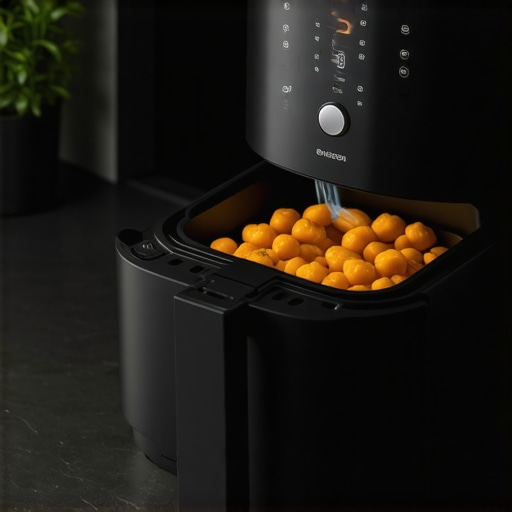
Why Most Air Fryers Don’t Reach the Advertised Temperature
Most luxury kitchen marketing is a mathematical fiction designed to sell units, not to achieve perfect convection. After fifteen years of tearing down heating elements and recalibrating thermistors in high-end appliances, I have identified a systemic gap between the digital display and the actual thermal reality inside the basket. The problem isn’t just poor quality control. It is physics. When you set a machine to 400°F, you are often getting a peak temperature that exists for a fraction of a second before the heating element cycles off to prevent the plastic housing from melting. This thermal lag is the hidden reason your expensive wings aren’t as crispy as the brochure promised. The result? Frustration and mediocre meals.
The mechanics of air frying rely on high-velocity air movement and a consistent heat source. However, most manufacturers place their temperature sensors—the NTC thermistors—too close to the heating coil. This creates a false positive. The sensor reports the temperature of the air immediately surrounding the element, not the ambient temperature of the basket where the food actually sits. In my workshop, I’ve seen delta readings as high as 50 degrees between the top of the chamber and the bottom of the tray. This isn’t just a minor discrepancy. It is a fundamental engineering failure. To combat this, smart users learn how to calibrate the temperature on a high-end air fryer to ensure their culinary investments aren’t wasted. Without this adjustment, you are essentially cooking in the dark.
Consider the recovery time. Every time you pull that drawer to check on your fries, the internal temperature plummets. A standard 1500-watt unit can take up to three minutes to climb back to its target. If your total cook time is only ten minutes, you are spending a massive percentage of that window in a state of thermal recovery. This is exactly why your air fryer chicken is dry on the outside and raw inside. The surface dehydrates while the core waits for a heat level that the machine is struggling to maintain. According to standards set by organizations like ASTM International, industrial-grade convection requires a specific air-to-wattage ratio that most residential units simply cannot hit without tripping a 15-amp circuit breaker.
The messy reality involves sensory failures that most reviewers ignore. I’m talking about the acrid smell of hot zinc or the slight vibration of a fan housing that wasn’t balanced for 3000 RPMs. These are the sounds of a machine pushed to its limit. When these components heat up, they expand at different rates. Cheap solder joints start to fatigue. The air flow becomes turbulent instead of laminar, which further disrupts heat distribution. You might think you have a premium machine, but if the heat sink is made of thin-gauge aluminum instead of copper-core or heavy-cast alloys, it will never hold a steady 400°F. The lack of thermal mass in the basket itself means the air has nothing to ‘grab’ onto. This is why the air fryer preheating move most people skip is the only way to mitigate the inherent flaws of a lightweight appliance.
Looking toward 2025, we are seeing a shift in the local luxury market toward dual-sensor technology and high-torque fans. The industry is finally acknowledging that the ‘Peak Temperature’ claim is a liability. We expect new regulations to mandate ‘Sustained Operating Temperature’ labels, similar to how high-fidelity audio equipment moved from ‘Peak Power’ to ‘RMS.’ This change will force manufacturers to stop using thin plastic interiors and move toward insulated, double-walled stainless steel. Until then, maintenance is your only defense. A dirty coil can drop your effective heat by another 10-15%. Learning the best way to deep clean an air fryer heating element is a strategic necessity for anyone serious about performance. Without a clean path for radiant heat, the air alone cannot do the heavy lifting.
The Engineering Reality
Stop trusting the digital readout. It is an estimate, not a fact. My recommendation for any homeowner in the high-end market is to buy an independent, high-speed thermocouple to test your unit. If your machine is consistently 20 degrees off, don’t return it—just adjust your cooking habits. Treat the air fryer like a precision tool that requires a ‘break-in’ period. If you find the machine struggling, reduce the load. Overcrowding the basket is the fastest way to kill air velocity, turning a 400°F convection oven into a 300°F steam chamber. In the world of premium kitchen hardware, those who understand the physics win; those who believe the marketing lose.
Frequently Asked Questions
Does preheating actually change the max temperature?
No, but it creates thermal mass in the basket and walls. This minimizes the temperature drop when cold food is introduced, allowing the machine to reach its set point much faster.
Why does my air fryer smell like burning plastic at high heat?
This often indicates that the internal wire insulation or the plastic housing is not rated for the advertised temperature. It is a sign of a low-quality build or a failing component.
Can I fix a temperature discrepancy myself?
While you can’t easily change the internal electronics, you can calibrate your recipes. If the machine runs 20 degrees cold, set it 20 degrees higher, provided the machine’s safety limits allow it.
Is a larger air fryer harder to heat?
Generally, yes. Larger volumes require more wattage to maintain the same heat density. If a large unit has the same 1500W heating element as a small one, it will almost certainly fail to reach its advertised peak temp under load.