
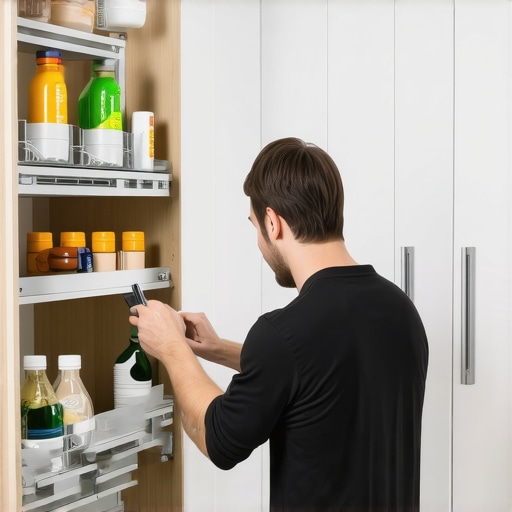
Why Your Pull-Out Pantry Keeps Jumping Off the Track
A pull-out pantry that jumps its track isn’t just a nuisance; it is a mechanical failure signaling an imbalance between load weight and hardware tolerance. After 15 years in high-end cabinetry, I have observed that most luxury homeowners treat these systems like static shelves. They aren’t. They are dynamic mechanical assemblies. When you load fifty pounds of canned goods or heavy le creuset cast iron onto a vertical tower, you change the center of gravity. If the slide is not rated for that specific torque, the rail will flex. The result? Avoidable failure. This isn’t about tugging too hard. It is about the physics of lateral deflection and the structural integrity of your kitchen architecture.
The stake here is significant. A derailed pantry can strip the internal wood of your custom cabinetry or, worse, send a collection of expensive oils and glass jars crashing to the floor. Most installers prioritize aesthetics over engineering. They use standard full-extension slides when the vertical height of the unit demands heavy-duty bottom-mount stabilizers. If your unit shudders or makes a metallic grinding sound, the ball bearings are already being crushed. You are operating on borrowed time. This happens because the cabinetry housing the unit has likely settled or was never perfectly plumb to begin with. Even a two-degree tilt creates a cumulative force that pulls the runner out of its groove.
The Engineering Reality of Slide Capacity
Static load capacity is the weight a slide holds when closed. Dynamic load capacity is what it handles while moving. Most premium kitchens use slides rated for 100 pounds, but that rating assumes even distribution. When you put your heavy stand mixer on the top shelf and light pasta boxes on the bottom, you create a top-heavy lever. Every time you pull the handle, the top of the pantry wants to tip forward. This puts immense pressure on the upper guide rail. If that rail isn’t perfectly synchronized with the bottom track, it pops. I have seen countless units where the drawer that wont stay closed issue is actually a symptom of this systemic misalignment.
Hardware manufacturers like Blum and Accuride provide specific tolerance charts. If your pantry is wider than 15 inches or taller than 60 inches, standard side-mount slides will fail. You need a central pylon system. This design utilizes a heavy-duty floor rail and a ceiling guide. The floor rail carries the weight, while the ceiling guide prevents side-to-side wobble. Without this dual-axis support, the torque generated by a fully loaded unit will eventually bend the steel runners. It is a slow-motion car wreck. You hear the clink of metal on metal, feel the resistance, and then—snap. The ball bearings spill out like silver rain.
Properly diagnosing the issue requires looking at the mounting screws. In high-end installs, these should be anchored into solid maple or birch frames. If they were driven into cheap MDF, the vibration of daily use has likely widened the holes. The slide then starts to sag. A sagging slide cannot maintain the necessary parallel orientation with its partner. This is why you should always verify the most durable finish for modern kitchen cabinets includes high-density plywood cores rather than particle board, as the latter lacks the screw-holding power for heavy pantry hardware.
Weight Distribution Failures and User Error
The messy reality of kitchen management often ignores the technical specs of the furniture. We see clients who organize your pantry like a professional chef but forget that professional chefs prioritize weight over frequency of use. Heavy items must reside at the bottom. This lowers the center of gravity and reduces the “pendulum effect” when the pantry is fully extended. If you feel the unit sway as it opens, your weight distribution is catastrophic. The sway creates lateral force that the bearings weren’t designed to absorb. They are designed for vertical load, not side-to-side shearing.
I remember a project where a client called because their $5,000 custom walnut pantry was “stuttering.” Upon inspection, the smell of fresh adhesive was still in the air—the unit was brand new. The problem? They had placed a 25-pound bag of flour and three cast-iron Dutch ovens on the very top shelf for “aesthetic symmetry.” The sheer weight had bowed the top rail by 4mm. That 4mm was enough to allow the carriage to skip the track. We moved the weight to the bottom, realigned the tracks, and the stuttering vanished. It was a simple fix, but the stress on the hardware had already shortened its lifespan by years.
Strategic Foresight for Kitchen Storage
The industry is moving toward electronic assistance and magnetic dampening. Over the next 24 months, we expect to see more integration of load-sensing technology in high-end cabinetry. These systems will provide haptic feedback or refuse to open if the load is dangerously unbalanced. Regulatory changes regarding cabinet safety and tip-over hazards are also tightening. This means the era of the “flimsy pull-out” is ending. If you are planning a renovation, do not settle for standard hardware. Demand industrial-grade telescopic runners with a minimum 200-pound dynamic rating. This is the only way to ensure the longevity of your investment.
According to reports from the National Kitchen & Bath Association (NKBA), the trend toward “hidden kitchens” has increased the depth of pantry units. Deeper units mean longer slides, and longer slides are more prone to deflection. You must account for the leverage of a 24-inch extension. If your contractor suggests skipping the upper stabilizer to save space, find a new contractor. That stabilizer is what keeps the unit from becoming a falling hazard. Additionally, ensure your flooring is perfectly level. Even a slight dip in the floor where the cabinet sits will translate into a major alignment issue at the top of a 7-foot pantry.
Executive Verdict
If your pantry is jumping the track, do not simply push it back in and hope for the best. You are destroying the hardware. Empty the unit immediately. Check the tracks for debris—even a single stray peppercorn can cause a derailment in high-precision systems. If the tracks are clear, check for plumb. If the unit isn’t perfectly vertical, it will continue to fail. For those in the middle of a build: invest in under-mount slides with synchronization rods. This hardware ensures both sides of the pantry move at the exact same speed, eliminating the