
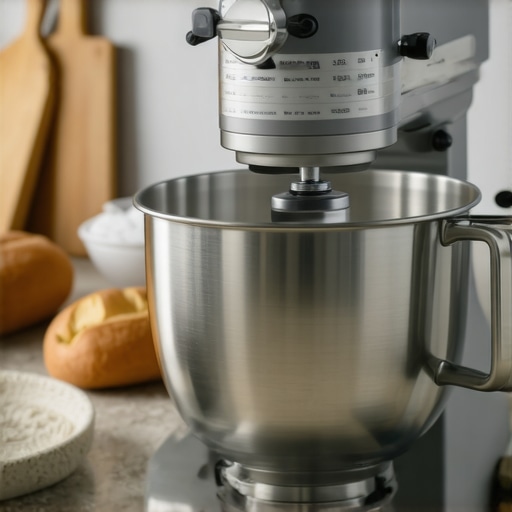
Why Your Stand Mixer Bowl Gets Stuck After Making Bread
A stuck stand mixer bowl is a mechanical failure of the interface, not a user error. After fifteen years of diagnosing gear failures and sheared pins in premium cookware, I can tell you that the culprit is usually a combination of thermal expansion and rotational friction-lock. When you knead heavy bread dough, you aren’t just mixing; you are applying sustained torque to a locking mechanism designed for intermittent loads. The result? Avoidable failure. The bowl refuses to budge, risking damage to the base or the motor itself. This phenomenon occurs because bread dough provides a unique resistance that lighter batters do not, effectively turning your kitchen appliance into a high-pressure mechanical press.
The Mechanics of the Planetary Wedge
Most luxury stand mixers utilize a bayonet-style base. You twist the bowl, the lugs slide under the base plate, and tension keeps it steady. Bread dough changes the variable. As the dough hook rotates, it creates a centrifugal force that pushes the dough against the side of the bowl. This creates a secondary rotational force. If your dough is low-hydration or you are using cheap flour that ruins your high-torque stand mixer through inconsistent gluten development, the resistance increases. This torque effectively screws the bowl into the lugs tighter than human hands can easily reverse. According to standards set by organizations like IEEE regarding motor torque, the energy must go somewhere; in this case, it translates into mechanical friction at the mounting point.
Thermal Expansion and Material Seizure
Heat is the enemy of precision. During a heavy kneading session, the motor generates significant internal heat. This warmth radiates down the drive shaft to the base of the machine. At the same time, the friction of the dough against the stainless steel bowl generates its own thermal energy. Stainless steel and the die-cast zinc of the base have different thermal expansion coefficients. They seize. The lugs expand at a different rate than the receiving plate. This creates a metal-to-metal binding known as galling. Research by ASM International on material science highlights that sliding contact under high pressure often leads to this type of surface damage. You aren’t just fighting a tight fit; you are fighting atoms that have essentially decided to share space.
The Flour Cement Effect
The sensory reality of a bakery is dusty. Flour particles are microscopic. When you are mixing, a fine cloud of starch often settles into the narrow gaps between the bowl and the locking lugs. Add a tiny amount of moisture from the dough or the humidity in the room, and you have created a structural adhesive. This flour-paste dries quickly under the heat of operation. It acts as a shim, filling the tolerances designed for movement. The smell of fresh dough is replaced by the sharp, metallic tang of stressed alloy. I have seen countless machines where the owners didn’t utilize proper stabilization techniques for high-hydration doughs, leading to a bowl that required a rubber mallet to dislodge. The mess is more than aesthetic; it is a mechanical obstruction.
The Risk of Excessive Force
What breaks? Everything. If you attempt to manhandle a stuck bowl, the first thing to go is usually the gear housing or the locking pin. The sound of a snapping gear housing is a sickening, metallic crack that signals an expensive replacement. Modern luxury machines often feature high-wattage motors that can output massive torque. If the bowl is locked, that torque is directed into the chassis. I once saw a professional-grade mixer with a hairline fracture in the neck because the user tried to leverage the bowl off with a pry bar. The implementation risk here is total machine loss. Use a warm compress instead. A damp, hot towel wrapped around the base of the bowl for two minutes often provides just enough expansion to break the friction-lock.
Market Shifts and Industry Foresight
The industry is moving toward electronic torque management. In the next 12 to 24 months, I expect more luxury kitchen brands to introduce sensors that detect when the bowl mount is under excessive lateral stress. These sensors will likely throttle the motor or alert the user through a haptic pulse in the handle. We are also seeing a move toward ceramic-coated lugs to reduce the friction coefficient. For the current owner, the strategy remains manual. You must ensure that bowl clearance is adjusted correctly to prevent the hook from driving the bowl downward. Neglect this, and you are simply waiting for the machine to fail. Regulatory changes regarding appliance repairability may also force manufacturers to make these locking plates easier to replace without a full teardown.
The Executive Verdict
Treat your mixer bowl as a mechanical interface. If you are baking bread more than twice a week, you must incorporate a maintenance routine. Apply a food-grade, dry lubricant to the lugs once a month. Never use vegetable oil; it becomes sticky and attracts debris. If the bowl sticks, do not force it. Apply heat to the bowl and ice to the base if possible. This creates a temperature differential that breaks the bond. If you are in a high-volume baking situation, invest in a bowl-lift model rather than a tilt-head, as the mounting system is significantly more robust against rotational torque.
Frequently Asked Questions
Can I use WD-40 on my mixer base?
Absolutely not. It is not food-safe and will attract flour dust, creating a grinding paste that will permanently ruin the locking lugs.
Why does my bowl only stick with sourdough?
Sourdough often requires longer kneading times and specific hydrations that maximize the friction between the dough and the bowl wall, increasing lateral torque.
Is a stuck bowl covered under warranty?
Usually, no. Most manufacturers view a stuck bowl as a result of improper cleaning or overloading the machine beyond its rated capacity.
Does the temperature of the room affect the locking?
Yes. In very humid environments, the flour-cement effect is accelerated as the starch absorbs ambient moisture and sets in the lug gaps.