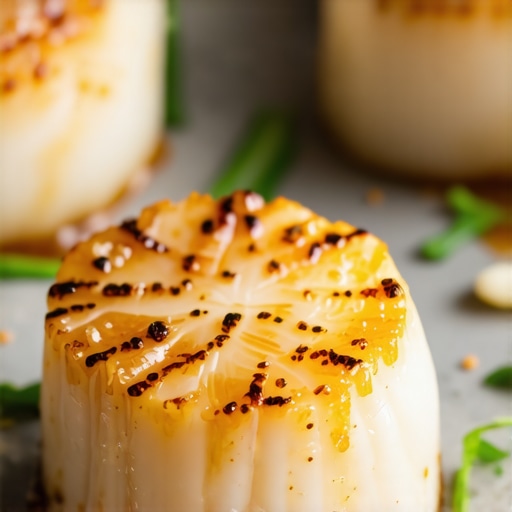
The non-stick pan is a lie sold to those who fear the heat. If you are operating a luxury kitchen equipped with high-BTU ranges, using a Teflon-coated surface for a protein as delicate as a sea scallop is an insult to the ingredient. Achieving that glass-like, golden-brown crust requires a specific thermal dance that only carbon steel can lead. After fifteen years of outfitting professional lines and high-end residential spaces, I have seen every failure imaginable. Most stem from a fundamental misunderstanding of heat flux. You want the Maillard reaction, not a steamed, rubbery disaster. The result? Avoidable failure. [IMAGE_PLACEHOLDER]
The Secret to Perfectly Seared Scallops in Carbon Steel
Carbon steel is the bridge between the responsiveness of copper and the heat retention of cast iron. It reacts to your dial instantly. This is vital because scallops have a window of perfection measured in seconds. If your pan is too slow, the center overcooks before the exterior caramelizes. If it is too fast without enough mass, the temperature drops the moment the cold protein hits the surface. I prefer a 12-gauge blue steel. The weight of the industrial grade steel matters. It needs to feel substantial, resisting the warp of high-flame environments. This metallurgy prevents the localized hot spots that lead to uneven coloring. Understanding the metal choice that prevents pitting in your soup pots helps you appreciate why a high-carbon alloy is superior for searing. It is about the density of the grain.
The Physics of the Sear
Let’s talk about the Leidenfrost effect. This occurs when a liquid comes into contact with a surface significantly hotter than its boiling point, creating an insulating vapor layer. For scallops, this is the enemy of a crust but the friend of release. You need the pan at roughly 425°F to 450°F. If the surface is poorly seasoned, you will face the common frustration of why your carbon steel pan still has sticky spots. These spots are essentially unpolymerized oil that acts like glue. A clean, hard seasoning is a requirement, not a suggestion. The technical truth? Most home cooks use wet-packed scallops. These are soaked in sodium tripolyphosphate. They purge water the second they hit the heat. No amount of carbon steel magic can save a scallop that is essentially a sponge. You must source dry-packed U-10s. The ‘U-10’ means fewer than ten per pound. Size provides the thermal buffer needed to get the crust without turning the interior into a pencil eraser. Precision in sourcing is just as important as why every serious home cook needs a digital scale.
Thermal Conductive Realities
According to reports from the National Institute of Standards and Technology (NIST) on thermal conductivity, carbon steel sits in a sweet spot that allows for rapid heat transfer without the extreme volatility of aluminum. When you place a scallop in the pan, you are witnessing a massive energy transfer. The moisture on the surface of the meat must evaporate instantly. If the pan lacks the BTU recovery rate, the temperature dips, and you end up poaching the meat in its own juices. This is why I argue that why 3-ply cookware is better for most home cooks than 7-ply for general tasks, but for the specific high-heat sear, the monolithic nature of carbon steel is unbeaten. It doesn’t have layers to delaminate; it is one solid piece of heat-conducting muscle. The smell of smoking grapeseed oil is your signal. Use an oil with a high smoke point. Butter is for the basting stage, never the starting stage. If you lead with butter, the milk solids burn at 350°F, leaving bitter black specks on your beautiful scallops before the sear is even set.
The Reality of Maintenance and Failure
Things go wrong when you treat carbon steel like stainless. It is a living surface. I remember a client in Aspen who called me fuming because her thousand-dollar pan was ‘rusting.’ She had put it in the dishwasher. That is a death sentence for seasoning. The sensory indicators of a healthy pan are subtle: the velvet-smooth touch of the patina, the way water beads and rolls off like a waxed car. If you smell old fish, your seasoning is rancid. You need to strip it and start over. There is no middle ground. The James Beard Foundation often emphasizes that the tool is only as good as the technician’s maintenance. Implementation risks involve the ‘over-crowding’ habit. If you put six scallops in an eight-inch pan, you have effectively created a cooling fin. The temperature crashes. You get grey meat. Space them out. Give them an inch of breathing room. Listen for the hiss. A quiet pan is a failing pan.
The Macro Outlook for Premium Cookware
The industry is moving away from chemical coatings. By 2025, the regulatory pressure on PTFE and PFOA will likely drive even more luxury consumers toward ‘heritage metals’ like carbon steel and wrought iron. We are seeing a return to the ‘buy once, cry once’ philosophy. People want tools that last forty years, not four. This shift toward durability is a market correction against the disposable culture of the last decade. High-end kitchens are increasingly being designed with high-output open burners that favor the raw performance of carbon steel. This isn’t a trend; it’s an engineering homecoming.
The Executive Verdict
If you own a luxury range and value culinary precision, carbon steel is a non-negotiable asset. Hold the pan. Feel the balance. If it feels flimsy, it is. Buy a heavy-gauge French or American-made carbon steel skillet. Season it with three thin layers of grapeseed oil. Source dry-packed scallops only. Heat the pan until the oil shimmers and just begins to wisps smoke. Lay the scallops in a clockwise pattern. Don’t touch them for two minutes. Flip once. Baste with cold butter and thyme for thirty seconds. Remove. This strategy ensures a restaurant-grade result every single time.
Common Inquiries
Why do my scallops always stick even in a seasoned pan? Usually, this is due to ‘thermal panic.’ You are trying to flip the meat before the protein has naturally released from the surface. Wait for the Maillard reaction to finish its work; the scallop will tell you when it is ready to move.
Can I use olive oil for searing? Absolutely not. Extra virgin olive oil has a smoke point around 375°F. You will hit that before the pan is hot enough for a proper sear, resulting in acrid smoke and a ruined flavor profile.
How do I know if my scallops are dry-packed? Look at the container. If there is a milky white liquid at the bottom, they are wet-packed. Dry-packed scallops will look slightly ivory or ‘fleshy’ and stay dry on a paper towel.
Is blue steel different from carbon steel? Blue steel is a form of carbon steel that has undergone a heat treatment to create a thin layer of magnetite (blue oxide) on the surface, which provides temporary rust resistance until you build a seasoning. The performance is identical.