
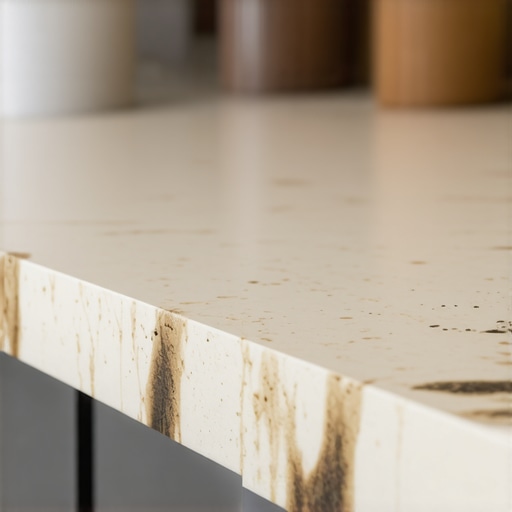
The Countertop Seam Mistake That Gathers Grime
Luxury kitchen investments often collapse at the finish line due to a single technical oversight. Most homeowners focus on the slab—the exotic veining of Calacatta marble or the sleek depth of Brazilian quartzite—but ignore the physics of the joint. After fifteen years of managing high-end installations, I can tell you that a poorly executed seam is more than an eyesore. It is a biological hazard and a structural failure point. If your installer treats a kitchen seam like a bathroom backsplash joint, they are setting you up for a decade of frustration. The stakes are simple: a failed seam absorbs moisture, traps organic debris, and eventually undergoes delamination. This is not a matter of if, but when.
Thermal Stress and Chemical Incompatibility
Precision engineering dictates that materials with different thermal expansion coefficients must be joined with specialized adhesives. Standard polyester resins, the industry default for decades, are brittle. When you place a high-heat appliance like an espresso machine or a heavy-duty air fryer near a seam, the stone expands. The resin does not. Over time, the bond breaks. This micro-fracture becomes a vacuum for liquids. If you have noticed that your granite countertop feels gritty suddenly, you are likely feeling the crystallization of trapped salts and old cleaning agents leeching back out of a failing joint. According to the Natural Stone Institute, the use of epoxy-based resins is mandatory for high-stress areas, yet many local contractors still cut corners with cheaper materials to save thirty minutes of curing time.
The Bacteriological Reality of Failed Joints
Imagine the smell of stagnant water and old coffee grounds trapped in a dark, humid crevice. That is the reality of a compromised countertop seam. When the adhesive fails, capillary action pulls moisture deep into the substrate. This is especially prevalent in zones where we prep food or maintain our espresso machines. Spilled milk, citrus juices, and oils find a permanent home in the gap. The result? A dark, stained line that no amount of surface scrubbing can reach. I once had to rip out a $12,000 island because the internal plywood substrate had rotted from the inside out, all because a single seam wasn’t properly sealed with RTV silicone at the sink transition. The weight of the stone had crushed the failing bond, creating a funnel for every spill.
Materials That Resist Failure
The solution lies in material science. For modern luxury kitchens, we now specify two-part acrylic or modified epoxy adhesives that color-match the stone perfectly while maintaining a degree of flexibility. This is essential for the countertop material that actually withstands heat. A flexible joint can absorb the vibration of a high-torque stand mixer without cracking. Furthermore, the National Kitchen & Bath Association (NKBA) standards suggest that seam placement should never occur over a dishwasher or directly under a heat-producing air fryer basket. If your designer puts a seam in the middle of your primary prep zone, fire them. It is a strategic error that ignores how humans actually use a kitchen.
The Shift in Surface Engineering
Looking at the next 24 months, the industry is moving toward ‘seamless’ ultra-compact surfaces like Dekton or large-format porcelain. These materials require even more technical precision. The adhesive must be UV-stable and chemically resistant to the harsh degreasers used in premium kitchens. We are also seeing a rise in regulatory scrutiny regarding food-contact surfaces. A cracked seam is a violation of NSF standards in commercial settings, and residential inspectors are beginning to take note during high-end resale valuations. A kitchen with visible ‘grime lines’ at the seams can shave thousands off a home’s appraisal value.
The Executive Verdict
If you are currently in the middle of a renovation, stop the work. Inspect the adhesive your fabricator brought to the site. If it is a generic polyester ‘knife-grade’ filler, demand an upgrade to a high-performance epoxy. The cost difference is less than fifty dollars, but the long-term ROI is measured in decades of cleanliness. Ensure all seams are placed in low-traffic, low-heat areas. If you are stuck with an existing failing seam, do not try to bleach it. You must have a professional rake out the old material and re-fill it with a non-porous resin. It is the only way to restore the integrity of your workspace.
Frequently Asked Questions
Why does my countertop seam look darker than when it was installed?
This is typically caused by oil absorption or bacterial growth within the adhesive. If the resin was porous or has cracked, it acts as a wick for organic matter.
Can I use a steam cleaner to clean my countertop seams?
Absolutely not. High-pressure steam can actually blow out the adhesive and force moisture deeper into the stone, accelerating delamination.
How many seams are acceptable in a luxury kitchen island?
Ideally, zero. For very large islands, a single seam is acceptable only if it is placed symmetrically and away from all heat sources and water basins.
Does the type of stone affect seam durability?
Yes. Porous stones like marble require much higher quality sealants and more frequent maintenance than dense materials like quartzite or engineered quartz.