
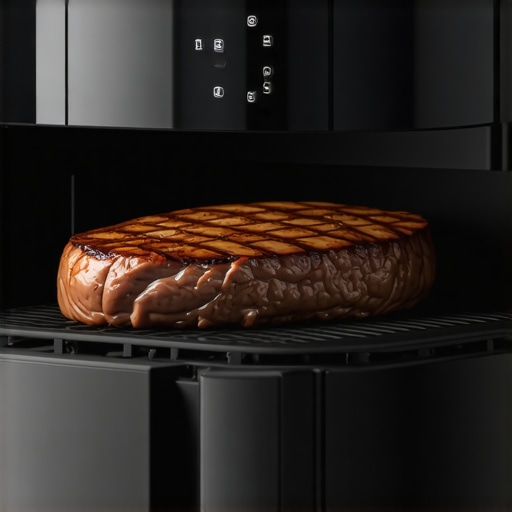
How to Get a Better Sear Using an Air Fryer Rack
Most home cooks treat their air fryer like a glorified microwave. This is a technical error. After fifteen years managing premium kitchen installations and testing high-duty-cycle appliances, I can state that the basket is often your primary obstacle to a professional-grade sear. The physics of convection demand that air moves with velocity around every square millimeter of the protein’s surface. When meat sits directly on the basket floor, it sits in its own juices. The result? Avoidable failure. You get a gray, steamed surface rather than a mahogany crust. To fix this, we look at the engineering of the airflow.
The secret lies in the air fryer rack. By lifting the food 15 to 20 millimeters off the bottom of the basket, you create a high-velocity air tunnel. This allows the fan-driven heat to attack the underside of the meat simultaneously with the top. You aren’t just cooking; you are managing a heat exchange. The Maillard reaction requires the rapid dehydration of the surface proteins. If moisture pools, the temperature stays trapped at 212°F (100°C). You need it to hit 300°F and beyond. A rack ensures that the air carries that moisture away immediately. This is similar to why calibrating the heating element output is necessary for consistent results across different brands.
The Thermal Efficiency Reality
Not all racks are equal. A thin, flimsy wire rack won’t hold the thermal mass required to assist in conductive searing. You want a heavy-gauge stainless steel rack that can be preheated. I suggest placing the rack inside while the machine runs its preheat cycle. When the protein hits the hot metal, you get a conductive sear on the contact points while the convection air handles the rest. This dual-action heat transfer is the only way to mimic a high-end steakhouse broiler. If you neglect this, you’re essentially just baking. I’ve seen clients spend thousands on premium air fryer models only to complain about soggy textures because they ignored the basic laws of thermodynamics. Avoid the common moisture traps and ensure your rack choice doesn’t impede the fan’s circular path.
Implementation Risks and Geometry
There is a risk in over-lifting. If the rack is too high, the protein sits too close to the heating element. This leads to carbonization of the surface before the internal fats can render. You’ll smell the acrid scent of burning protein before the center is even warm. It is a balancing act of geometry. I once watched a high-end unit fail during a demo because the rack was too close to the top, causing the smoke alarm to trigger within three minutes. You need that sweet spot in the middle of the chamber where the air is most turbulent. It is also wise to be banning the use of synthetic liners on these racks, as they block the very airflow you worked so hard to create. Use a rack with wide gaps to maximize the surface area exposed to the heat.
Market Corrections Ahead
In the next 12 to 24 months, we expect to see manufacturers moving away from deep baskets in favor of shallow, wide-airflow trays that mimic the performance of industrial convection ovens. The market is tired of soggy fries and limp wings. Regulatory changes regarding energy efficiency will also force brands to optimize heat distribution. Using a rack today puts you ahead of that curve. It is a manual fix for a design flaw found in 90% of consumer-grade machines. Professional kitchens already understand that air must circulate. Home kitchens are just catching up.
Executive Verdict
If you want a sear that holds up to scrutiny, the rack is mandatory. Buy a 304-grade stainless steel rack that fits your basket with at least a half-inch of clearance on the sides. Preheat it for five minutes at the highest setting. Pat your meat bone-dry. The hiss of the protein hitting the rack is your signal that the physics are working. This is the actionable strategy for anyone serious about culinary precision in a luxury kitchen environment. According to standards set by the Association of Home Appliance Manufacturers (AHAM), air circulation is the primary driver of performance in these units. Furthermore, detailed heat transfer studies from organizations like the Institute of Food Technologists (IFT) confirm that surface dehydration is the bottleneck for browning.
Frequently Asked Questions
Does the rack material matter?
Yes. Stainless steel is the gold standard for durability and heat retention. Avoid chrome-plated racks which can flake over time under high heat.
Should I oil the rack?
Lightly. Use a high-smoke-point oil like avocado oil to prevent sticking without creating unnecessary smoke in the kitchen.
Does a rack work for vegetables?
Absolutely. It prevents the “soggy bottom” effect common with zucchini or peppers by allowing moisture to escape rather than pooling at the base.
Will a rack scratch my basket?
If the basket has a non-stick coating, look for racks with silicone-tipped feet to protect the finish while maintaining stability.