
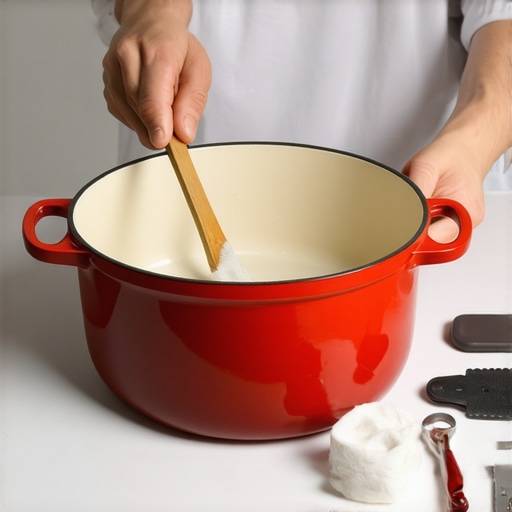
The Only Way to Fix a Scratched Enameled Dutch Oven
Accept a hard truth immediately: you cannot technically ‘repair’ a scratch in a vitreous enamel coating. After fifteen years in the high-end culinary hardware industry, I have watched thousands of home cooks ruin five-hundred-dollar pots trying to buff out micro-fractures. Enamel is not paint. It is a specialized form of glass fused to a cast iron substrate at temperatures exceeding 1,400 degrees Fahrenheit. When that glass-to-metal bond is compromised, the physics of your kitchen change. A scratch is rarely just a cosmetic line; it is often a precursor to spalling, where microscopic glass shards detach into your beef bourguignon. The result? Avoidable failure. If you see silver metal peeking through the enamel, the pot is technically retired from wet-heat cooking. However, for surface-level metal transfer—the marks people often mistake for scratches—there is a precise protocol involving chemical non-abrasives that can restore the finish to factory specifications.
The Engineering Behind the Glass Bond
The durability of premium cookware depends on the coefficient of thermal expansion. Manufacturers carefully match the expansion rate of the cast iron core to the enamel glass. When you drag a stainless steel spoon across the surface, you often leave ‘metal transfer’ rather than a true scratch. This is a deposition of softer metal onto the harder glass surface. To distinguish between the two, run a fingernail over the mark. If it catches, the glass is fractured. If it feels smooth, it is a transfer. For structural fractures, we look at the standards set by organizations like the ASTM International regarding porcelain enamel integrity. Understanding the difference between bonded and layered cookware metals is helpful here, as the stresses on a Dutch oven are far higher than those on a multi-ply stainless pan. You are dealing with massive thermal mass. If the glass surface has a true crack, the moisture from your food will eventually seep under the enamel, oxidize the iron, and cause the glass to ‘pop’ or flake off. This is why you must how to prevent white spots on your enameled cookware before they evolve into permanent structural weaknesses.
Why Standard Seasoning Methods Fail
I frequently see ‘internet experts’ suggesting you season an enameled pot like raw cast iron. This is technical malpractice. Raw cast iron is porous; it holds polymerized fats. Enamel is non-porous glass. Trying to season over a scratch in enamel creates a sticky, rancid layer of carbon that will eventually flake off. It does nothing to seal the iron underneath against rust. If you have a deep gouge, the only safe use for that vessel is as a bread baker, provided you line it with parchment paper to prevent glass-to-dough contact. The weight of the industrial grade steel used in modern ovens helps, but it won’t stop the chemical leaching if the barrier is gone. In my shop, I’ve seen the ‘smell of fresh adhesive’ from people trying to use epoxy to fix these pots. Never do this. No consumer-grade adhesive is food-safe at the 500-degree temperatures a Dutch oven reaches during a sear. The thermal shock will shatter the repair in minutes. You should also be aware that why quartz countertops still need coasters for hot coffee applies to your pots too; sudden temperature drops on hard surfaces can cause micro-fractures in the base of your enamel that you won’t see until the pot fails under pressure.
The Strategic Pivot for Aging Cookware
The luxury kitchen market is moving toward a ‘repair-by-replacement’ model, which is frustrating for those of us who value durability. Over the next 24 months, I expect more ‘premium’ brands to shift production to lower-cost glass frit, which is more prone to crazing. Crazing—the fine web of cracks on the surface—is a result of thermal fatigue. If your pot has reached this stage, it is no longer an heirloom; it is a liability. For those managing high-end kitchens, the economics of replacement far outweigh the risk of glass ingestion. We are seeing a regulatory trend in the EU regarding heavy metal leaching from chipped low-quality enamel, which will likely hit North American markets soon. If you must keep a pot with minor surface scratches, switch to silicone or wood tools exclusively. Stop the abrasion. The ‘clank of the manifold’ style sound when you tap the side of the pot should be a clear, resonant ring. If it sounds dull, the enamel is likely delaminating from the iron core internally.
The Executive Verdict
My professional recommendation is a tiered response based on the scratch severity. If the mark is a metal transfer, use a specialized enzymatic cleaner or a paste of baking soda and water; do not use steel wool. If the scratch is deep enough to see the iron but not yet flaking, retire the pot from soups and sauces and use it only for dry-heat applications with parchment. If there is any evidence of ‘popping’ enamel, dispose of it. The risk to your health and the quality of your luxury kitchen output is too high. Actionable Strategy: Perform a ‘fringe test’ once a month. Use a high-lumen flashlight to inspect the interior radius of the pot. Any dullness or ‘sandpaper’ texture is a sign the glass is failing. Replace the unit before it compromises a meal.
Frequently Asked Questions
Can I use Bar Keepers Friend on my enameled pot? Only use the liquid version and sparingly. The powder version is abrasive enough to dull the glass finish over time, leading to more frequent staining. Is a chipped exterior dangerous? Chipped enamel on the exterior is purely cosmetic. It won’t affect food safety, but you should rub a tiny amount of oil on the exposed iron to prevent rust from spreading under the remaining enamel. What tools are safest for enamel? High-heat silicone or olive wood. Even ‘soft’ metals like aluminum can leave permanent grey streaks that require chemical intervention to remove. How do I tell the difference between a stain and a scratch? A stain will vanish with a 24-hour soak in a 1:10 bleach/water solution. A scratch will remain visible and tactile after the soak.