
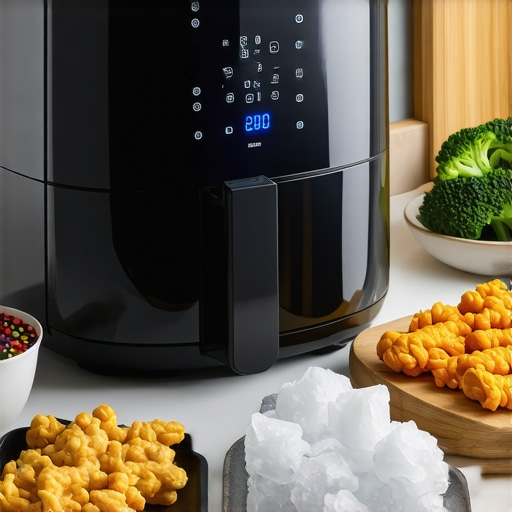
Starting a cooking cycle with a cold air fryer is the fastest way to turn a premium frozen product into a soggy, underwhelming failure. I have dismantled, tested, and calibrated hundreds of high-end appliances over the last decade, and the thermodynamic reality remains unchanged: thermal inertia is not your friend. When you dump frozen items into a cold basket, you are asking the machine to fight two battles simultaneously: raising the internal temperature of the chassis and overcoming the latent heat of fusion in the food itself. The result? A slow, steam-heavy ramp-up that destroys texture before the crisping even begins.
Why Air Fryer Preheating Is Not Optional for Frozen Foods
The physics of heat transfer in a convection environment rely on immediate air velocity and temperature differential. If your heating element is still warming up while your frozen fries are sitting in the basket, they aren’t frying; they are defrosting in a humid, low-heat chamber. This is exactly why your air fryer fries always come out soft instead of crispy. You need that initial thermal shock to flash-evaporate surface moisture. Without it, the starch granules on the exterior of the food hydrate and become gummy rather than forming the rigid, porous structure we associate with high-quality frying. I have seen the same principle apply to professional-grade equipment; skipping the preheat is simply cutting corners that the laws of physics do not allow.
Thermal Mass and Chassis Heat Soak
Every air fryer has a specific thermal mass consisting of the basket, the interior walls, and the heating element housing. When you initiate a cook, the air temperature might reach 400°F quickly, but the surfaces it touches do not. These surfaces act as a heat sink, pulling energy away from the air and the food. By preheating for at least five minutes, you ensure the entire cooking chamber is saturated with heat. This prevents the sharp temperature drop that occurs the moment the fan starts circulating air over a pile of ice-cold food. It’s the difference between a crisp bite and a soggy center. This is even more apparent when you are trying to find the secret to making perfect air fryer chicken wings every time. The skin requires an immediate blast of heat to render the fat; otherwise, it just sits there, absorbing moisture.
The Latent Heat of Fusion Barrier
Frozen food is essentially a block of ice mixed with organic matter. To turn that ice into steam—the process required for crisping—you must first hit the melting point and then the boiling point. This requires a massive injection of energy. If the air fryer is still climbing toward its target temperature, the food spends too much time in the ‘danger zone’ where moisture migrates from the center to the surface without evaporating. This creates a wet barrier that no amount of late-stage heating can fully fix. According to the USDA Food Safety standards, rapid transition through temperature zones is also a matter of safety, though for frozen snacks, the focus is usually on the sensory experience. You want a rapid transition to prevent the “clank” of frozen starch turning into the “mush” of failed convection.
The Engineering Reality of Heating Elements
Most luxury air fryers use Nichrome coils or halogen lamps. These elements take time to reach peak BTU output. When the unit is cold, the initial draw of electricity is high as it attempts to bridge the gap. In some older homes or poorly wired kitchens, this sudden surge can be problematic. Knowing how to stop your air fryer from blowing fuses every time often starts with understanding the load during this initial ramp-up. Preheating allows the machine to reach a steady state of cycling on and off before the additional load of cold food is introduced. It is a more stable way to operate the machinery and extends the lifespan of the internal sensors that are forced to compensate for extreme temperature fluctuations. I’ve seen cheap plastic units warp under the stress of these rapid shifts; stick to high-quality stainless steel interiors for better heat retention.
The Executive Verdict
If you are serious about the quality of your meals, preheating is a non-negotiable step in your workflow. Treat it like a cast-iron skillet or a professional oven. You wouldn’t throw a steak into a cold pan; don’t throw frozen mozzarella sticks into a cold air fryer. The five minutes you save by skipping the preheat will cost you the entire quality of the dish. My recommendation is a hard ‘preheat always’ policy for any frozen item. The crispness is worth the wait.
Frequently Asked Questions
Does preheating use more electricity?
Actually, the total energy consumption is often similar because the machine cooks more efficiently and often faster when starting from a hot state. The heating element isn’t struggling to catch up with a massive thermal load from the start.
Can I just add more time instead of preheating?
No. Adding time doesn’t fix the texture. The initial defrosting period in a low-heat environment causes the structural damage to the starch that more time later cannot reverse.
What is the ideal preheat time for frozen foods?
For most standard-sized luxury units, five minutes at the target cooking temperature is the gold standard. Larger toaster-oven style air fryers may require eight to ten minutes to fully heat-soak the interior racks and walls.