
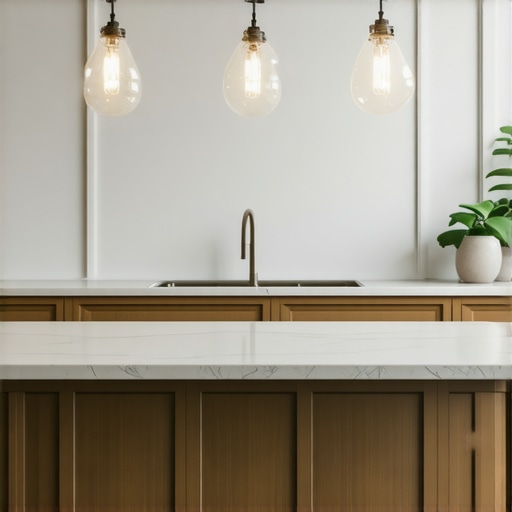
Why Most Kitchen Islands Are Built Three Inches Too High
The standard 36-inch kitchen island is a lie. It is an arbitrary industry average established in the mid-20th century, designed for a demographic that does not match the modern luxury homeowner. After 15 years of seeing clients struggle with back fatigue while prepping on multi-thousand-dollar slabs, I can tell you the stake is clear: a kitchen that looks perfect but performs like a cheap rental. If you are investing in a high-end space, sticking to the standard height is a technical failure. Standard cabinetry is built to 34.5 inches with a 1.5-inch stone top. This assumes a user height of roughly five-foot-six. If you are taller, or if you are performing tasks that require leverage, that height is actively working against your biomechanics. The result? Chronic discomfort and diminished utility of your most expensive room.
The engineering reality of kitchen ergonomics centers on the pivot point of the human elbow. For active prep work—chopping, kneading, or handling heavy premium cookware—the surface should be roughly six inches below your flexed elbow. When the counter is too high, your shoulders remain in a shrugged position, creating unnecessary tension in the trapezius muscles. This is specifically problematic when operating heavy machinery like stand mixers. The torque required to stabilize a mixer during a high-hydration dough run requires a lower center of gravity. According to the National Kitchen & Bath Association (NKBA) guidelines, while 36 inches is the baseline, custom heights are preferred for specialized zones. I have found that for homeowners over six feet tall, a 39-inch island is the sweet spot. Conversely, a dedicated baking station should often drop to 33 inches to allow for proper leverage when rolling pastry. It is about the physics of downward force.
The messy reality often hits during the installation of the sub-base. I remember a project in a high-end zip code where the designer insisted on a 39-inch height without accounting for the weight of the 3cm quartzite. The floor wasn’t perfectly level—most aren’t—and the installers had to shim the base so aggressively that the toe-kick looked like a slanted mess. We felt the weight of the industrial grade steel supports groaning under the lateral pressure. Beyond the aesthetics, a height mismatch affects your peripheral equipment. If your island height deviates from the standard, your range hood must be recalibrated. A hood set too high relative to the cooktop loses its capture velocity, allowing grease-laden vapors to coat your ceiling. This is an operational risk that most general contractors ignore until the first time the smoke alarm goes off during a sear.
Looking toward the next 24 months, we are seeing a shift toward ‘split-plane’ islands. This involves a single monolithic slab that transitions into different elevations to accommodate varied tasks. As the International Journal of Industrial Ergonomics points out, static posture is the enemy of long-term health. Modern luxury designs are incorporating hydraulic lifts or fixed multi-level surfaces to solve the 36-inch trap. We are also seeing a massive influx of integrated technology that requires deeper counter depths, which further complicates the height-to-reach ratio. If you fail to account for the depth of an espresso machine, you will find yourself reaching at an awkward upward angle, risking repetitive strain.
The executive verdict is simple: do not accept the 36-inch default. Measure your elbow height today. If you are in a renovation phase, demand a mockup of the island height using plywood before the stone is cut. For those with existing high counters, the fix often involves thicker footwear or specialized floor mats, but the real solution is custom cabinetry sizing at the blueprint stage. Along with the height, ensure you evaluate the most durable countertop material for your specific use case to ensure the investment lasts. Fix the height, and you fix the room’s entire utility.
What is the standard height for a luxury kitchen island?
While 36 inches is the industry standard, luxury builds often range from 34 to 39 inches depending on the primary user’s height and the intended use of the island.
How do I know if my counter is too high?
If you feel tension in your shoulders or have to lift your elbows away from your torso while chopping, your counter is likely too high for your biomechanics.
Can I change the height of my island after the stone is installed?
It is extremely difficult and expensive. It usually requires removing the stone, which risks cracking, and cutting down or shimming the cabinet bases.
Does island height affect the resale value of my home?
Deviating significantly from the 36-inch standard can be a risk, but a well-designed 38-inch or 34-inch station is often seen as a premium custom feature by savvy buyers.