
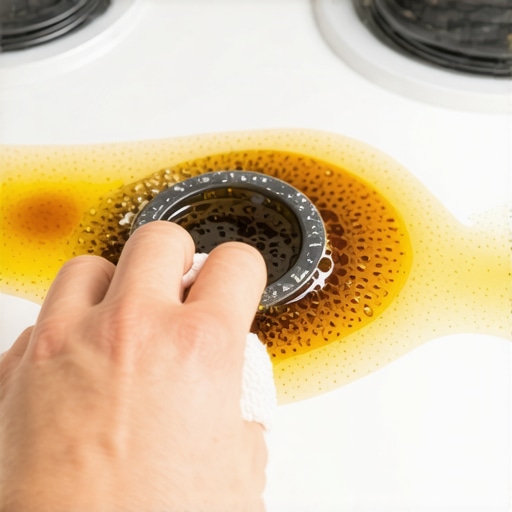
The Only Way to Get Burnt Sugar Off a Ceramic Hob
Burnt sugar is not a simple stain; it is a structural threat to the integrity of your lithium-aluminosilicate cooktop. When sucrose reaches its carbonization point on a glass-ceramic surface, it creates a high-energy molecular bond that, if left to cool, can result in pitting—a phenomenon where the sugar literally tears microscopic fragments out of the glass surface during thermal contraction. After fifteen years in the luxury appliance industry, I have seen five-figure kitchen installations compromised by a single spill of caramel. The industry reality is that chemical cleaners are insufficient for this level of bonding. You need to understand the mechanics of mechanical separation to save your appliance from permanent degradation.
The Physics of Carbonization and Surface Bonding
Sugar is a deceptive enemy. Unlike fats or oils that remain liquid and relatively easy to emulsify, sugar undergoes a rapid phase change into a solid carbon mass. This mass has a significantly different coefficient of thermal expansion compared to the ceramic-glass it sits upon. As the burner cools, the sugar contracts at a faster rate than the glass, creating immense localized tension. If you wait until the surface is cold to address the spill, the sugar will have already done its work, potentially leaving your hob with permanent pockmarks. This is not unlike the mechanical risks found when your induction cooktop is making a high-pitched whining noise due to resonance; ignore the physics, and the hardware suffers. To prevent this, you must intervene while the surface is still warm, utilizing a professional-grade ceramic scraper to shear the carbonized layer before the bond reaches peak tension.
The Engineering Reality of Mechanical Separation
Why do standard ‘natural’ cleaning methods fail? Because the chemical reaction between baking soda and vinegar does absolutely nothing to break a carbon-glass bond. It is a waste of time that allows the sugar more time to bake into the surface. The only effective strategy is the use of a razor-sharp scraper held at a strict 30-degree angle. This tool allows you to apply force parallel to the glass surface, utilizing shear strength to lift the sugar without penetrating the substrate. It is a tactile, sensory process—you can feel the ‘click’ of the blade meeting the resistance of the polymerized glucose and the satisfying ‘shave’ as it separates. This level of precision is mandatory for high-end kitchens, much like the careful selection process described in the most durable countertop material for heavy kitchen use. Using anything less than a specialized blade—such as a green scouring pad—will introduce micro-scratches that permanently dull the finish and create niches for future spills to hide.
The Stress Test: When Cleaning Goes Wrong
I recall a client in a high-rise development who tried to ‘burn off’ a sugar spill by turning the induction element to its highest setting. The result was a thermal shock event that cracked the entire cooktop. The smell of scorched sugar was acrid and thick, a sensory warning that the glass was failing. The mistake was treating a mechanical problem with thermal force. In the world of premium appliances, brute force is rarely the answer. Whether you are dealing with a spill or the only cleaning solution for brass kitchen handles, the key is understanding the material’s limits. Glass-ceramic is incredibly hard but lacks the ductility to handle localized, uneven heating caused by carbonized sugar acting as an insulator.
Strategic Foresight: The Future of Cooktop Maintenance
As we look toward 2025, the industry is shifting toward sacrificial coatings designed to take the brunt of these accidents. Manufacturers are experimenting with hydrophobic and oleophobic layers that prevent sugar from reaching the micro-pores of the glass. However, for the current generation of luxury hobs, the responsibility remains with the owner. We are also seeing a move toward ‘invisible induction’ where the surface is a single slab of stone. In these cases, the risk of sugar damage shifts from pitting to deep staining within the porous structure of the stone. Staying informed on how to choose a kitchen sink that wont show scratches and water spots is part of a larger trend of selecting materials that are maintainable, not just beautiful. The resale value of your property often hinges on these ‘immaculate’ details in the kitchen.
The Executive Verdict
If you have a sugar spill, do not panic, but do not wait. Turn off the heat, put on an oven mitt, and use a professional ceramic scraper immediately while the sugar is still in a semi-liquid or soft carbon state. Hold the blade at 30 degrees and work in short, decisive strokes. Once the bulk is removed, wait for the surface to cool and finish with a specialized cream cleaner to remove the haze. My recommendation is to ‘buy’ the specialized tools now—a $10 scraper is a cheap insurance policy for a $3,000 hob. ‘Hold’ on using any abrasive chemicals or DIY hacks that promise miracles without effort. ‘Sell’ the idea that a dirty hob is just part of cooking; it is a degradation of your asset.
FAQ
Can I use a standard utility knife? No. Utility blades are often not perfectly flat and can have burrs that scratch the glass. Use blades specifically marketed for ceramic hobs. Is the sugar-pitting permanent? Yes. Once the glass has been pulled away, it cannot be filled or polished out. Prevention is the only cure. Does this apply to induction hobs? Absolutely. Even though the hob doesn’t get as hot as a radiant electric stove, the heat from the pan is enough to carbonize sugar. What if the sugar is already cold? You can try to soften it with a very wet, hot cloth for 30 minutes, but you must still use a scraper for the final removal.