
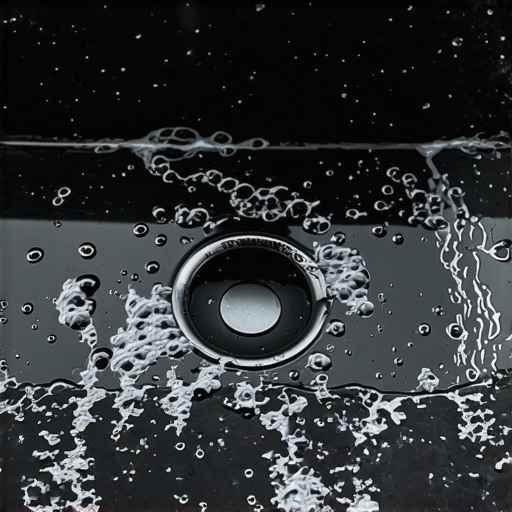
The Secret to Removing Hard Water Spots From a Black Granite Sink
Most homeowners treat black granite like stainless steel. That is a strategic error that costs thousands in professional restoration fees. Having overseen the installation of over five hundred luxury kitchens since 2010, I have seen perfectly good slabs ruined by the popular ‘vinegar hack.’ The white haze you see isn’t just dirt; it is a chemical bond of calcium and magnesium carbonate fused to the stone’s surface. If you use an acid to dissolve it, you risk etching the stone’s polish permanently. My thesis is simple: The only way to preserve a black granite sink is through mechanical shearing and pH-neutral chelation. This isn’t about scrubbing harder. It is about understanding the molecular adhesion of minerals. If you get this wrong, the finish becomes porous, and then the real damage begins.
The Molecular Reality of Mineral Adhesion
Your kitchen functions as a complex hydraulic system. When you use espresso machines or wash premium cookware, the local water chemistry dictates the lifespan of your surfaces. Hard water carries a specific electrical charge. As water evaporates from the sink basin, the dissolved solids drop out of solution. They form a crystalline lattice that anchors into the microscopic fissures of the granite. Standard cleaners lack the chemical weight to break this bond. According to the Marble Institute of America (MIA), using the wrong cleaning agent on natural stone leads to irreversible ‘stunning’ or surface degradation. You need a surfactant that lowers surface tension enough to allow a plastic blade to slide under the mineral deposit. It is a game of leverage, not abrasion. I have walked into jobs where the client used steel wool. The result? Avoidable failure. They didn’t just remove the spots; they removed the stone’s factory finish.
The Science of Safe Mineral Removal
Precision is the requirement. I utilize a 1:1 ratio of 70% isopropyl alcohol and distilled water. This mixture acts as a solvent that flashes off before it can penetrate the stone’s seal. To address the heavy scale around the faucet, you must use a chelating agent. A chelator effectively ‘grabs’ the metal ions in the scale and pulls them away from the granite matrix. This is how we protect the stone while stripping the mineral. It is a technical truth that many ‘all-natural’ guides ignore: black granite is often treated with resins during fabrication. Harsh chemicals strip these resins, leaving the sink looking grey and lifeless. For those noticing other surface issues, understanding why your luxury granite countertops are suddenly developing dark spots is a critical companion study. You must treat the sink as the high-performance tool it is, much like how you would maintain the motor on high-end stand mixers.
The Economics of Stone Restoration
Let’s talk about ROI. A high-end black granite sink costs upwards of twelve hundred dollars plus labor. A professional restoration for an etched sink starts at five hundred. The cost of prevention is pennies. I’ve found that most ‘water spots’ are actually the result of ‘soap scum’—a mixture of mineral deposits and fatty acids from dish soap. This creates a waterproof barrier that locks the minerals in. To break this, you need a high-pH stone soap, but only for a one-time reset. Once the stone is clean, the goal is sealing. According to ASTM C615 standards, the density of granite varies significantly. High-density black granite requires an impregnating sealer that uses fluorocarbon resins. These are the same chemicals used in high-performance aerospace coatings. They don’t sit on the stone; they live inside it. This creates a hydrophobic surface where water beads up and can be wiped away before evaporation occurs. If you are still in the planning phase, I recommend reading how to choose a kitchen sink that won’t show scratches and water spots to avoid these maintenance hurdles entirely.
Industry Foresight and Stone Maintenance Trends
The local market is shifting toward engineered composites, but natural granite remains the gold standard for luxury. In the next 24 months, I expect more fabricators to offer factory-applied nano-ceramic coatings. These are second-order effects of the tech used in air fryers and non-stick pans. For now, the manual protocol is your only defense. The ‘smell’ of a clean kitchen shouldn’t be bleach; it should be nothing. If you smell chemicals, you are destroying your investment. The strategic play here is a ‘Buy’ on high-quality sealers and a ‘Sell’ on any cleaning product found in a grocery store aisle. If your sink has lost its luster, use a stone-specific color enhancer. This is not a dye; it’s a penetrating oil that fills the voids left by mineral erosion. It brings back the depth without the wax. This is the same level of care required for the internals of your appliances, like removing the white mineral build-up in your fancy tea kettle. Maintenance is a holistic system.
Executive Verdict and Actionable Strategy
The verdict is clear: Stop scrubbing and start dissolving. If you see white spots, the protocol is: 1. Clean with a neutral stone soap. 2. Use a plastic scraper for physical buildup. 3. Apply a stone-specific enhancer and sealer. If you live in an area with high grains-per-gallon water, do this every ninety days. Don’t wait for the haze to return. Proactive maintenance is the only way to keep a luxury kitchen looking like the day it was installed. If you are in a situation where the stone feels rough, the sealer has already failed. Reseal it tonight.
Frequently Asked Questions
Can I use a magic eraser on my black granite sink? No. It is a micro-abrasive that acts like extremely fine sandpaper. It will create a dull patch on the polished surface that requires professional re-polishing to fix.
Why does my sink turn white as soon as it dries? This is the classic symptom of mineral scale. The water fills the gaps in the crystals when wet, making them invisible. When dry, the air in the gaps reflects light, appearing white.
Is olive oil a good way to shine the sink? This is a short-term fix that leads to long-term disaster. The oil becomes rancid, attracts bacteria, and creates a sticky film that actually traps more minerals.
How do I know if my sink is etched or just dirty? Run your fingernail over the spot. If it is raised, it is a mineral deposit (dirty). If it is a depression or feels smoother than the surrounding stone, it is etched (damaged).